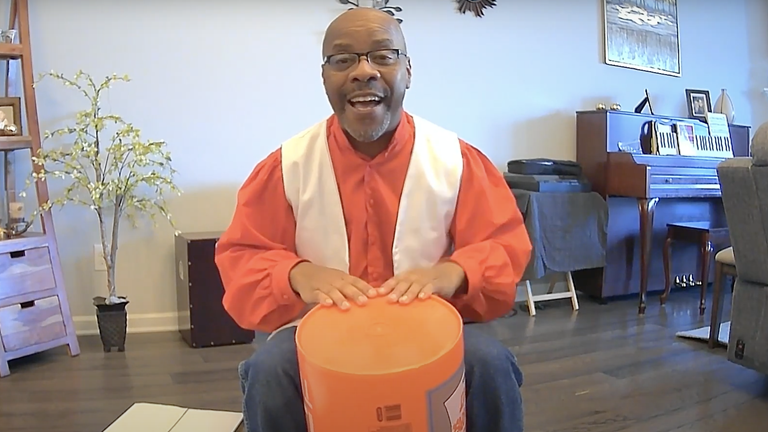
Introduction to Tap
with teaching artist Quynn Johnson

Teaching artist Quynn Johnson teaches several basic steps used in the percussive dance form known as tap, and then demonstrates a short dance sequence using the steps learned. 

Recommended for Grades 3-12

In this resource you will:

  • Learn about the percussive dance form known as tap
  • Practice several different steps used in tap dancing 
  • Combine several basic tap steps into a short dance sequence 

Explore our other video-based activities!

Getting Started

Vocabulary You Will Learn:

  • Tap dance - A percussive art form created by African Americans on the campuses of historically Black colleges and universities.

Materials You Will Need:

  • Nothing, just yourself! 

Watch the Video

Try It Yourself

How to Perform a Tap Routine

  1. First, we’re going to learn a few basic tap steps.
      • Shuffle - Slide your foot forward across the floor, lifting it off the ground at the end and then repeat this backwards. 
      • Toe-toe stomp - Lift one foot off the ground behind your other leg with your knee bent and tap your toe on the ground twice. Then place your foot back on the floor. 
      • Slide stomp - Take a large step to the side with one foot and slide the other foot on the ground to meet it then tap the ground with the sliding foot.  
  2. Next, we’re going to combine these steps into a short routine. Start on the right side by shuffling twice and then doing toe-toe stomp. Repeat on the left and then on the right again. Then slide stomp to the left and repeat to the right. 


  1. For the next step, shuffle with your right foot, hop on your left foot, and place your right foot back on the ground. Repeat on the left side then again on the right side. Then jump your feet wide apart and jump them back together again. 
  2. Next, take one step out with your right foot and cross over in front of it with your left foot. Step out again with your right foot and then step your left foot in so your feet are together. Repeat in the opposite direction and then clap twice. 
  3. Finally, practice combining the three steps we have learned and dancing them together. If you’d like to use the music that Quynn uses in the video, scroll to around 7:00. 

Think About

In this video, Quynn teaches several basic steps used in the percussive dance form known as tap and then demonstrates a short dance sequence. If you want to go even further, think about these questions: 

  • Using the moves you learned in this lesson, can you add some steps onto the sequence Quynn taught at the end of the video? What might come next?
  • Can you create your own original tap sequence using the steps you learned in this lesson? How can you mix the steps together to create your own unique routine?
  • How is tap different from other kinds of dance you are familiar with? How is it different? Do you find it to be harder? Easier?
  • Can you find a few friends or family members to teach the dance sequence from the lesson to? How does the dynamic of the routine change once you have multiple people performing? How does it look different? Sound different?

Accessibility

Don't forget that you can turn on "Closed Captioning" to view the YouTube video with English captions.


More about the Teaching Artist

Quynn Johnson, a graduate of Howard University in Washington, D.C., and native of Flint, Michigan, is an award-winning performing, teaching artist, and author. She has toured as the tap soloist in the Tony Award-winning production After Midnight (NCL) and performed both nationally and internationally. Highlights include featured 2020 recipient of the Kennedy Center Local Dance Commissioning Project, soloist in the Washington Ballet production of The Great Gatsby, Cirque du Soleil’s Mosaic production, the Festival Folclórico del Pacífico and in Buenaventura and Cali, Colombia, and member of/participant in the Festival Festival Internacional de Cajón Peruano in Peru. Quynn is the co-creator of the D.C.-based percussive dance company SOLE Defined with Ryan Johnson.


A National Credential Residency Teaching Artist with Young Audiences and a Wolf Trap T.A., she won the Individual Artist Award for Dance Choreography (MSAC) in 2014 and 2017. As a teaching artist, Quynn has reached over 9,500 youth from pre-k through 12th grade with assemblies, residencies, and workshops. Her arts-integrated residencies bridge tap dance with literacy, math, Social-Emotional Learning. In 2011, Quynn became a self-published author with her children’s book, Lucky’s Tap Dancing Feet.


Video Activity Credits

Resource Production: Kennedy Center Education

Additional Content: Laurie Ascoli

Copy Editing: Sandra Frey; Alyssa Kariofyllis

Revisions: Alice Doré

  • Teaching Artist

    Quynn Johnson

  • Curriculum & Media Development

    Kennedy Center Education

  • Content Editor

    Laurie Ascoli

  • Revised

    January 21, 2024

Related Resources

Media African Drumming

You can’t have African dance without music. The two are inseparable; the dancers are drumming and the drummers are dancing. Learn about two drums—the cajon and djembe —and how to play a rhythm called Funga.

  • World Music
  • Africa

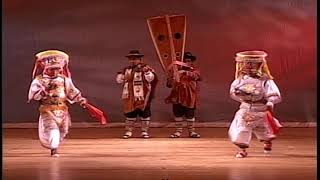
Los Danzaq de Ayacucho: Peruvian Scissor Dancers

Los Danzaq de Ayacucho, a folk ensemble of dancers and musicians from the Central-Southern Andes of Peru, present a breathtaking performance the ancient art form of scissor dancing.

  • Dance
  • Folk Music
  • World Dance
  • Latin America
  • International

Kennedy Center Education logo


Kennedy Center Education provides resources and experiences that inspire, excite, and empower students and young artists, plus the tools and connections to help educators incorporate the arts into classrooms and learning spaces of all types.

Connect with us!

spacer-24px.pngyoutube.png    facebook.png    twitter.png    instagram.png    email.png

Sign up to stay informed!

Generous support for educational programs at the Kennedy Center is provided by the U.S. Department of Education.

Gifts and grants to educational programs at the Kennedy Center are provided by The Paul M. Angell Family Foundation; Bank of America; Capital One; The Morris and Gwendolyn Cafritz Foundation; Carnegie Corporation of New York; The Ednah Root Foundation; Genesis Inspiration Foundation; Harman Family Foundation; William R. Kenan, Jr. Charitable Trust; the Kimsey Endowment; The Kiplinger Foundation; Laird Norton Family Foundation; Lois and Richard England Family Foundation; Dr. Gary Mather and Ms. Christina Co Mather; The Markow Totevy Foundation; Dr. Gerald and Paula McNichols Foundation; The Morningstar Foundation; Myra and Leura Younker Endowment Fund; The Irene Pollin Audience Development and Community Engagement Initiatives;

Prince Charitable Trusts; Dr. Deborah Rose and Dr. Jan A. J. Stolwijk; Rosemary Kennedy Education Fund; The Embassy of the United Arab Emirates; The Victory Foundation; The Volgenau Foundation; Jackie Washington; GRoW @ Annenberg and Gregory Annenberg Weingarten and Family; and generous contributors to the Abe Fortas Memorial Fund and by a major gift to the fund from the late Carolyn E. Agger, widow of Abe Fortas. Additional support is provided by the National Committee for the Performing Arts..

The content of these programs may have been developed under a grant from the U.S. Department of Education but does not necessarily represent the policy of the U.S. Department of Education. You should not assume endorsement by the federal government.