Music and Movement
with teaching artist Dr. Erica Glenn

Teaching artist Dr. Erica Glenn demonstrates how to move the body to different kinds of  music in order to explore different emotions, energies, and states of mind. 

Recommended for Grades K-12

In this resource you will:

  • Experiment with using your body to respond to different kinds of music. 
  • Explore different emotions through music and movement. 
  • Understand how composers use music to evoke different emotions and states of mind.

Explore our other video-based activities!

Getting Started

Vocabulary You Will Learn:

  • Tempo - How fast or slow music is.
  • Articulation - How music is played.
  • Phrasing - The way a musician plays a passage of music to allow expression.
  • Dynamics - How loud or soft music is.

Materials You Will Need:

  • Nothing, just yourself! 

Watch the Video

Try It Yourself

How to Use Music and Movement to Explore Different Emotions

  1. First, scroll to around 1:50 in the video. Listen to the music playing and move your body in any way that feels right to you. How does the music make you feel? Does the music sound quick or sustained, heavy or light? Is it fast or slow, loud or soft? Freeze when the music stops, and really listen to the silence. 
  2. Next, listen to the music that starts playing at around 2:40 in the video. How does the energy feel different in this piece? Is it calmer? Is it louder or softer than the piece we heard before? Is it choppier or smoother? Move your body in any way that feels right to you as you listen. When the music ends, freeze again and find calmness and stillness.
  1. Think about how you felt when listening and moving to the first piece. Did you feel angry or frustrated? Did your body move in ways similar to how it does when you are actually angry? What about the second piece? Did this music help you calm down? Was it difficult to transition from the angry music to the peaceful music?
  2. Next, scroll to around 5:10 in the video and listen to the song playing. How does it make you feel? Move your body in any way that feels right to you. When the music ends, freeze, take a breath, and reset your body.
  3. Finally, repeat step 4 to the music that starts playing around 5:55 in the video. How does this music make you feel? Move your body in any way that feels right to you. 

Think About

In this video, Erica shows us how to move our bodies to different kinds of music while exploring different emotions. If you want to go even further, think about these questions: 

  • Can you think of ways you use music to affect your emotions in your daily life? Do you use it to get excited for big events, to celebrate, or to calm down before you fall asleep? How else could you use music to impact your emotions?
  • Continue trying to explore your emotions with other pieces of music. Listen to some of your favorite songs and move your body while listening. How does this music make you feel? How do you think the musicians wanted you to feel while listening to the song? 
  • Can you think of any ways that artists use music to try to make their audience feel different things? Do movies, plays, or even commercials use music to make us feel a certain way? How so? 
  • If you were trying to make an audience feel joyful, can you think of a few songs that you might pick to play? Which ones? What about if you wanted to make an audience feel scared? Melancholy? Nervous? Excited?  

Accessibility

Don't forget that you can turn on "Closed Captioning" to view the YouTube video with English captions.


More about the Teaching Artist

Dr. Erica Glenn is an award-winning conductor, composer, pianist, and singer. She has led singers of all ages, most recently serving as the conductor for the Brigham Young University Hawaii Concert Choir and the International Virtual Children's Choir. Dr. Glenn believes in the power of the arts to develop critical skills of empathy and fuel lifelong learning. To learn more about her recent projects and research as a Fulbright scholar, visit www.ericakyreeglenn.com.
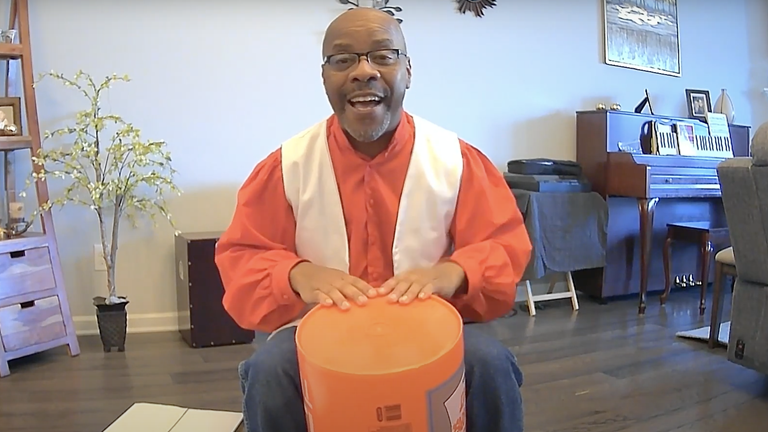

Video Activity Credits

Resource Production: Kennedy Center Education

Additional Content: Laurie Ascoli

Copy Editing: Sandra Frey; Alyssa Kariofyllis

Revisions: Alice Doré

  • Teaching Artist

    Erica Glenn

  • Curriculum & Media Development

    Kennedy Center Education

  • Content Editor

    Laurie Ascoli

  • Revised

    January 16, 2024

Related Resources

Media Dance Your Feelings

Teaching artist Erika Malone shows students how to use dance to explore their feelings, and demonstrates a choreographed dance that expresses four different emotions.

Media Music as Dance's Muse

See how four choreographers (Alvin Ailey, Robert Battle, Larry Keigwin, and Mark Morris) use music in different ways in their works.

  • Music Art
  • Dancing
  • Contemporary Dance
  • Choreographers

Media Your Brain on Music

Music has the power to motivate and soothe, no doubt about it. But how and why does it affect us? Why do certain songs trigger excitement or make us grin? Why do others bring relaxation, tears, or send shivers down our spines?

  • Music Art
  • Science

Kennedy Center Education logo


Kennedy Center Education provides resources and experiences that inspire, excite, and empower students and young artists, plus the tools and connections to help educators incorporate the arts into classrooms and learning spaces of all types.

Connect with us!

spacer-24px.pngyoutube.png    facebook.png    twitter.png    instagram.png    email.png

Sign up to stay informed!

Generous support for educational programs at the Kennedy Center is provided by the U.S. Department of Education.

Gifts and grants to educational programs at the Kennedy Center are provided by The Paul M. Angell Family Foundation; Bank of America; Capital One; The Morris and Gwendolyn Cafritz Foundation; Carnegie Corporation of New York; The Ednah Root Foundation; Genesis Inspiration Foundation; Harman Family Foundation; William R. Kenan, Jr. Charitable Trust; the Kimsey Endowment; The Kiplinger Foundation; Laird Norton Family Foundation; Lois and Richard England Family Foundation; Dr. Gary Mather and Ms. Christina Co Mather; The Markow Totevy Foundation; Dr. Gerald and Paula McNichols Foundation; The Morningstar Foundation; Myra and Leura Younker Endowment Fund; The Irene Pollin Audience Development and Community Engagement Initiatives;

Prince Charitable Trusts; Dr. Deborah Rose and Dr. Jan A. J. Stolwijk; Rosemary Kennedy Education Fund; The Embassy of the United Arab Emirates; The Victory Foundation; The Volgenau Foundation; Jackie Washington; GRoW @ Annenberg and Gregory Annenberg Weingarten and Family; and generous contributors to the Abe Fortas Memorial Fund and by a major gift to the fund from the late Carolyn E. Agger, widow of Abe Fortas. Additional support is provided by the National Committee for the Performing Arts..

The content of these programs may have been developed under a grant from the U.S. Department of Education but does not necessarily represent the policy of the U.S. Department of Education. You should not assume endorsement by the federal government.