Shapes, Space, and Doodles
with teaching artist Frekericko Alvarado

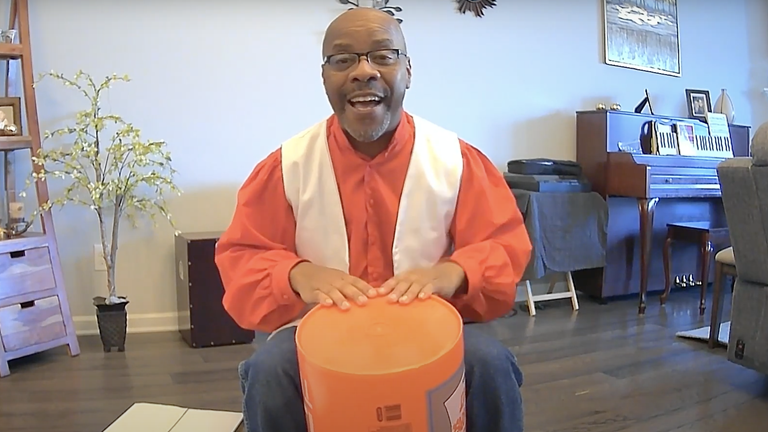
Teaching artist Fred Alvarado demonstrates how to take flat doodles and transform them into drawings that show depth and space!

Recommended for Grades 4-12

In this resource you will:

  • Learn how to create complex forms using traditional, simple shapes 
  • Play around with circles, squares, and triangles of various sizes 
  • Experiment with perspective and shading to add depth to your doodles

Explore our other video-based activities!

Getting Started

Vocabulary You Will Learn:

  • Form: An element of art made up of perspective, shapes, and doodles
  • Perspective: A way of making things three dimensional, or 3D. 
  • Shapes: Circles, squares, triangles, cylinders, etc. 
  • Doodles: A scribble, design, or sketch done often while thinking about something else. 
  • Shading: The process of adding value to create the illusion of form, space, and light in a drawing. 

Materials You Will Need:

  • A few pieces of paper
  • A pencil (preferred) or other drawing implement
  • An eraser (if using pencil)

Shapes, Space, and Doodles with Frekericko Alvarado

Shapes, Space, and Doodles with Frekericko Alvarado

Try It Yourself

How to Create Your Own Shapes 

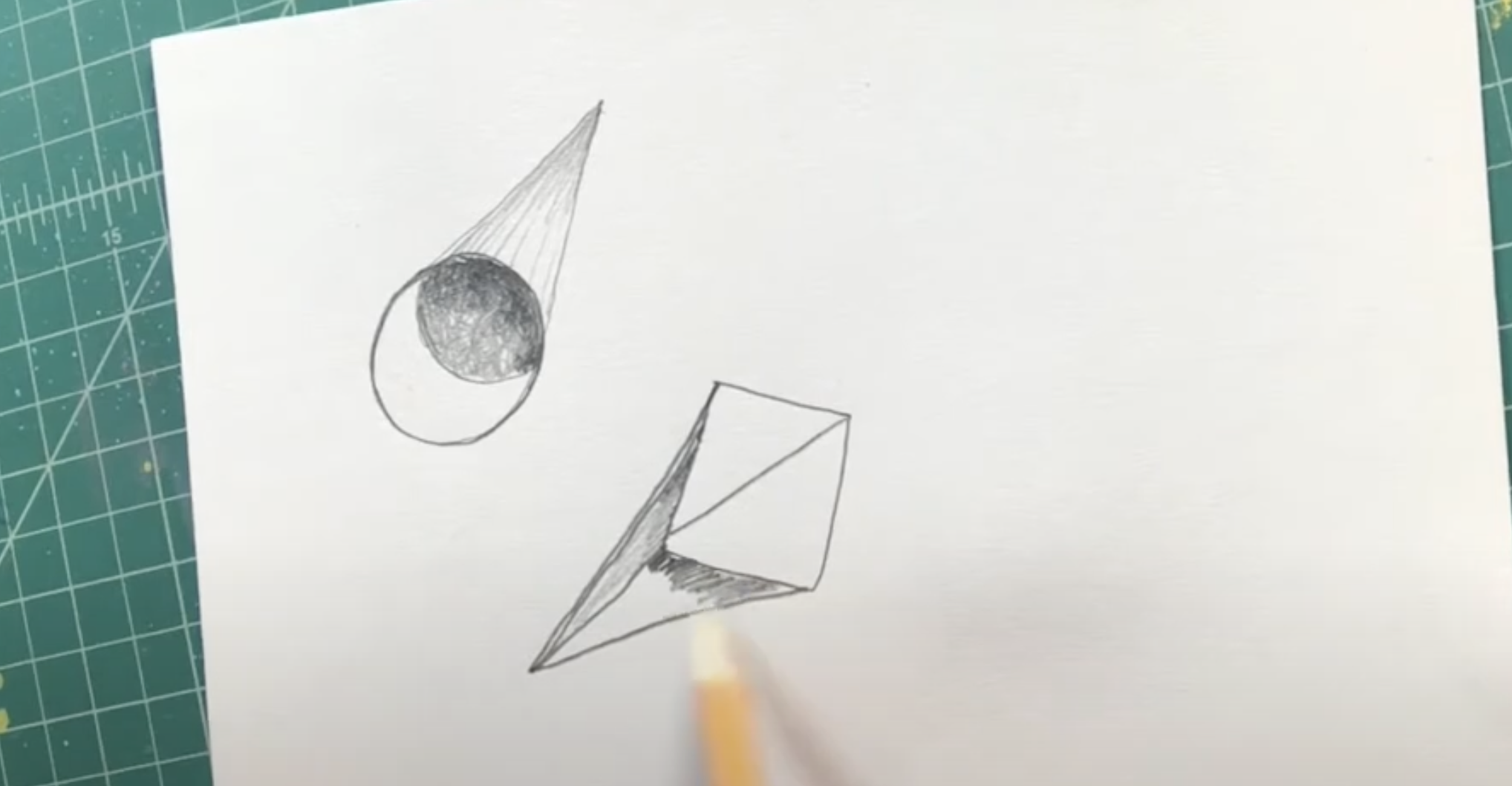
  1. “What’s Poppin?” Start by drawing some geometric shapes on your piece of paper, such as circles, squares, and triangles. You can look around to get some inspiration: what shapes do you see in the room around you? Use a one-point perspective to connect lines from the edge of a shape to a point on the page to make objects appear like they are stretching backwards into the distance. Note: the further your point is, the further it will look in space! To finish, draw lines from the edges of your shape to create a 3D form. 
  2. “Mucho Squares” Start by drawing 11-17 squares. Choose where you want your point, and then draw lines from each angle or corner to that particular line. If you need a ruler (or something else like the bottom edge of a box to create straight lines), go ahead and use one! In this exercise, you will experience with one point perspective, shape, form, and shading. Once your form is ready, it’s time to shade!
  1. “Lotsa Angles” Now it’s time to try the same exercise using triangles! Try repeating the use of small, medium and large triangles to create a larger form. Once you have established your shape and lines, you can start to render your color! With a pencil, try to play around with different amounts of pressure to create lighter or darker shading. 
  2. “Totally Tubular” Now, let’s try the same exercise using circles! Draw small, medium, and large circles, choose where you want your point, and draw lines from various points on the circles. 
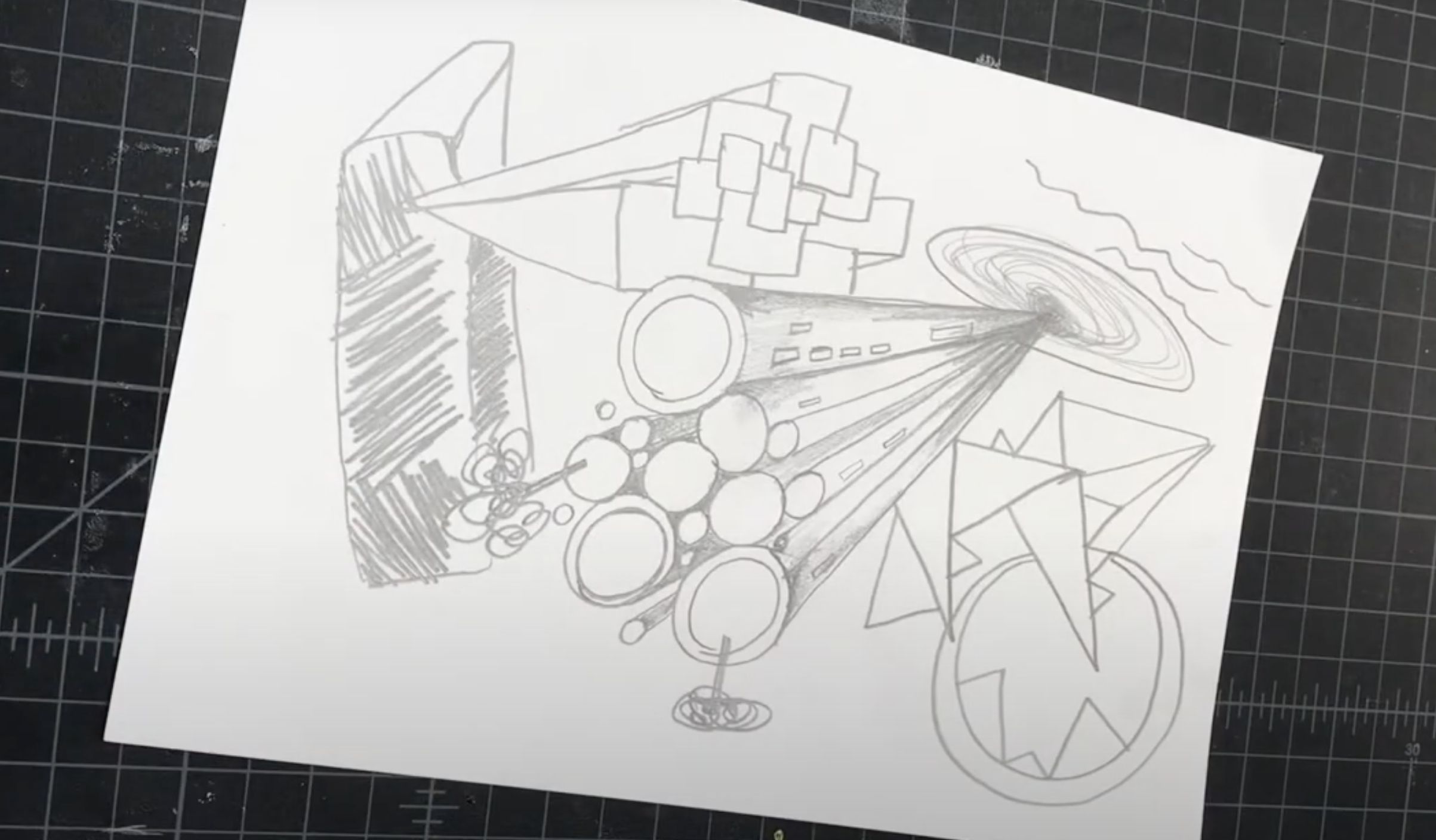
  3. “Level Up” Now that you’ve mastered one-point-perspective and shape, it’s time to level up! Using triangles, circles, and squares, create one massive doodle with multiple vanishing points, adding shading when possible. In the video, Fred creates trees, windows, portals, etc.

Think About

In the video, Fred teaches us about the elements that provide a foundation for creating a 3-dimensional work of art, or form. If you want to go even further, think about these questions:

  • When drawing on a flat piece of paper, how can you create the illusion of three-dimensional art?
  • What other shapes might you consider using besides circles, squares, and triangles? 
  • At the end of the video, Fred takes his form a step further and creates trees, windows, and portals. How can you develop these simple shapes to resemble other things? 
  • How can shading and perspective alter the depth of your drawing?

Accessibility

Don't forget that you can turn on "Closed Captioning" to view the YouTube video with English captions.


More about the Teaching Artist

Fredericko Alvarado (he/him) is a teaching artist focusing on visual arts, drawing, and painting. Diversity, equity, and inclusion are main themes that flow through the veins of his art and teaching practice. As an artist, he combines education and art in forms that highlight the resiliency of the communities he works with. For the past 15 years, a large focus in his work has been in the communities of Fruitvale in Oakland, North Richmond, and the Mission District in San Francisco, California. Fred is currently an adjunct faculty at Laney College Art Department in Oakland, California. Explore more of his work at https://www.zartstudios.xyz/.
  • Teaching Artist

    Frekericko Alvarado

  • Curriculum & Media Development

    Kennedy Center Education

  • Content Editor

    Laurie Ascoli

  • Revised

    February 13, 2025

Related Resources

Media Visual Trickery

Teaching artist Tad Sare shows students how to create their own two-way, or “lenticular,” image, which creates the optical illusion of one image turning into another.

Lesson Mandalas, Polygons, and Symmetry

In this 6-8 lesson, students will create mandalas using mathematical concepts and skills. They will explore symmetry as well as the natural and man-made shapes found in mandalas. They will design a mandala, then analyze other students’ creative work for style and message.

  • Grades 6-8
  • Visual Arts
  • Math
  • World Cultures

Lesson Creating AB Patterns

In this K-2 lesson, students will construct patterns using visual arts designs and math manipulatives. They will identify patterns existing in the natural and man-made world, art, math, and science.

  • Music Art
  • Visual Arts
  • Math
  • Grades K-2

Kennedy Center Education logo


Kennedy Center Education provides resources and experiences that inspire, excite, and empower students and young artists, plus the tools and connections to help educators incorporate the arts into classrooms and learning spaces of all types.

Connect with us!

spacer-24px.pngyoutube.png    facebook.png    twitter.png    instagram.png    email.png

Sign up to stay informed!

Generous support for educational programs at the Kennedy Center is provided by the U.S. Department of Education.

Gifts and grants to educational programs at the Kennedy Center are provided by The Paul M. Angell Family Foundation; Bank of America; Capital One; The Morris and Gwendolyn Cafritz Foundation; Carnegie Corporation of New York; The Ednah Root Foundation; Genesis Inspiration Foundation; Harman Family Foundation; William R. Kenan, Jr. Charitable Trust; the Kimsey Endowment; The Kiplinger Foundation; Laird Norton Family Foundation; Lois and Richard England Family Foundation; Dr. Gary Mather and Ms. Christina Co Mather; The Markow Totevy Foundation; Dr. Gerald and Paula McNichols Foundation; The Morningstar Foundation; Myra and Leura Younker Endowment Fund; The Irene Pollin Audience Development and Community Engagement Initiatives;

Prince Charitable Trusts; Dr. Deborah Rose and Dr. Jan A. J. Stolwijk; Rosemary Kennedy Education Fund; The Embassy of the United Arab Emirates; The Victory Foundation; The Volgenau Foundation; Jackie Washington; GRoW @ Annenberg and Gregory Annenberg Weingarten and Family; and generous contributors to the Abe Fortas Memorial Fund and by a major gift to the fund from the late Carolyn E. Agger, widow of Abe Fortas. Additional support is provided by the National Committee for the Performing Arts..

The content of these programs may have been developed under a grant from the U.S. Department of Education but does not necessarily represent the policy of the U.S. Department of Education. You should not assume endorsement by the federal government.