Six-Word Story
with teaching artist TAHIRA

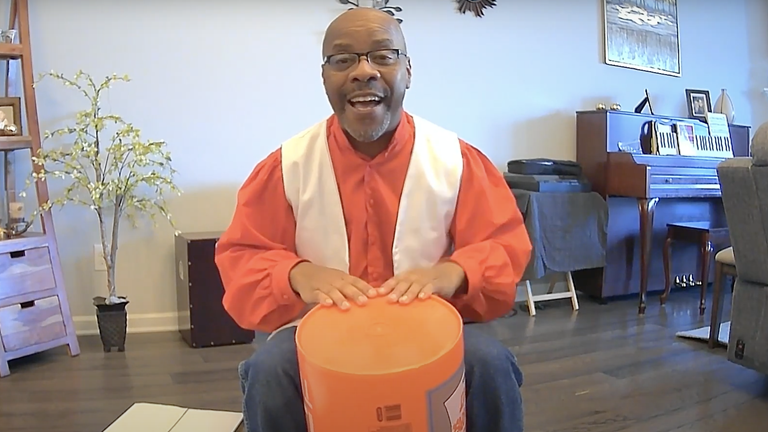
Teaching artist TAHIRA demonstrates how to create a six-word story and bring it to life using facial expressions, body movements, and vocal dynamics. 

Recommended for Grades K-12

In this resource you will:

  • Create an original six-word story
  • Bring a six-word story to life using facial expressions, body movements, and vocal dynamics
  • Play the Six-Word Story Game to help you create an original story 

Explore our other video-based activities!

Getting Started

Vocabulary You Will Learn:

  • Oral storytelling - A story that is told aloud. 
  • Pantomime - Using gestures to communicate and tell a story.

Materials You Will Need:

  • Nothing, just yourself!

Watch the Video

Try It Yourself

How to Tell a Six Word Story

  1. If you’d like to see TAHIRA’s example of a six-word story, scroll to around 1:30 in the video. How did she use facial expressions, body movements, and vocal dynamics to tell the story? What emotions did she seem to be feeling? 
  2. Next, you’re going to play the Six-word Story Game to create your own six-word story. Scroll to 5:00 in the video and look at the graphic there. To make your own six-word story, look at the table and choose two characters, one setting, one problem, and one solution. Now you have a six-word story! You can also forgo the table and come up with your own six words if you’d like to. 
  1. Now you’re going to try performing your six-word story. Remember to use facial expressions, body movements, and vocal dynamics to express the emotions your characters are feeling, and to make it clear to the audience what is happening! 

Think About

In this video, TAHIRA shows us how to create a six-word story and bring it to life using facial expressions, body movements, and vocal dynamics. If you want to go even further, think about these questions: 

  • How many different six-word stories can you come up with? After you’ve made a few using the Six-Word Story Game, can you try coming up with your own six words? 
  • How does using different facial expressions, body movements, and vocal dynamics change the meaning of your story? Can you make the same story first funny, and then sad, just by using different facial and vocal expressions? 
  • Can you build on your first six-word story with another six-word story? Can you create a short play about your characters just using six-word stories? 
  • If your six-word story has two characters, can you find a friend or family member to act it out with you? How can you both use facial expressions, body movements, and vocal dynamics to bring the story to life?

Accessibility

Don't forget that you can turn on "Closed Captioning" to view the YouTube video with English captions.


More about the Teaching Artist

Based out of Delaware, TAHIRA is a nationally-known storyteller, musician, and teacher. TAHIRA’s storytelling sparks joy and excitement in the young and young-at-heart while also empowering us to think critically, choose wisely, and believe fervently in our abilities. To find out more, visit her website at: https://tahiraproductions.com/.


Video Activity Credits

Resource Production: Kennedy Center Education

Additional Content: Laurie Ascoli

Copy Editing: Sandra Frey; Alyssa Kariofyllis

Revisions: Alice Doré

  • Teaching Artist

    Frekericko Alvarado

  • Curriculum & Media Development

    Kennedy Center Education

  • Content Editor

    Laurie Ascoli

  • Revised

    February 13, 2025

Related Resources

Media African Drumming

You can’t have African dance without music. The two are inseparable; the dancers are drumming and the drummers are dancing. Learn about two drums—the cajon and djembe —and how to play a rhythm called Funga.

  • World Music
  • Africa

Los Danzaq de Ayacucho: Peruvian Scissor Dancers

Los Danzaq de Ayacucho, a folk ensemble of dancers and musicians from the Central-Southern Andes of Peru, present a breathtaking performance the ancient art form of scissor dancing.

  • Dance
  • Folk Music
  • World Dance
  • Latin America
  • International

Kennedy Center Education logo


Kennedy Center Education provides resources and experiences that inspire, excite, and empower students and young artists, plus the tools and connections to help educators incorporate the arts into classrooms and learning spaces of all types.

Connect with us!

spacer-24px.pngyoutube.png    facebook.png    twitter.png    instagram.png    email.png

Sign up to stay informed!

Generous support for educational programs at the Kennedy Center is provided by the U.S. Department of Education.

Gifts and grants to educational programs at the Kennedy Center are provided by The Paul M. Angell Family Foundation; Bank of America; Capital One; The Morris and Gwendolyn Cafritz Foundation; Carnegie Corporation of New York; The Ednah Root Foundation; Genesis Inspiration Foundation; Harman Family Foundation; William R. Kenan, Jr. Charitable Trust; the Kimsey Endowment; The Kiplinger Foundation; Laird Norton Family Foundation; Lois and Richard England Family Foundation; Dr. Gary Mather and Ms. Christina Co Mather; The Markow Totevy Foundation; Dr. Gerald and Paula McNichols Foundation; The Morningstar Foundation; Myra and Leura Younker Endowment Fund; The Irene Pollin Audience Development and Community Engagement Initiatives;

Prince Charitable Trusts; Dr. Deborah Rose and Dr. Jan A. J. Stolwijk; Rosemary Kennedy Education Fund; The Embassy of the United Arab Emirates; The Victory Foundation; The Volgenau Foundation; Jackie Washington; GRoW @ Annenberg and Gregory Annenberg Weingarten and Family; and generous contributors to the Abe Fortas Memorial Fund and by a major gift to the fund from the late Carolyn E. Agger, widow of Abe Fortas. Additional support is provided by the National Committee for the Performing Arts..

The content of these programs may have been developed under a grant from the U.S. Department of Education but does not necessarily represent the policy of the U.S. Department of Education. You should not assume endorsement by the federal government.