Harriet Tubman: Secret Messages Through Song
How were secret messages conveyed through spirituals?
In this 3-5 lesson, students are introduced to spirituals sung by enslaved Black Americans and their use of a secret language to share information. Students will listen to and analyze spirituals, then write an original spiritual to share a secret message.
Apply call and response techniques and syncopated rhythms in a song.
Describe secret words and phrases in a spiritual.
Write an original spiritual that conveys a secret message.
Standards Alignment
MU:Cr1.1.3a Improvise rhythmic and melodic ideas, and describe connection to specific purpose and context (such as personal and social).
MU:Cr1.1.4a Improvise rhythmic, melodic, and harmonic ideas, and explain connection to specific purpose and context (such as social and cultural).
MU:Cr1.1.5a Improvise rhythmic, melodic, and harmonic ideas, and explain connection to specific purpose and context (such as social, cultural, and historical).
MU:Cr3.1.3a Evaluate, refine , and document revisions to personal musical ideas, applying teacher provided and collaboratively developed criteria and feedback.
MU:Cr3.1.4a Evaluate, refine, and document revisions to personal music, applying teacher-provided and collaboratively developed criteria and feedback to show improvement over time.
MU:Cr3.1.5a Evaluate, refine, and document revisions to personal music, applying teacher-provided and collaboratively developed criteria and feedback, and explain rationale for changes.
MU:Cn11.0.3a Demonstrate understanding of relationships between music and the other arts, other disciplines, varied contexts, and daily life.
MU:Cn11.0.4a Demonstrate understanding of relationships between music and the other arts, other disciplines, varied contexts, and daily life.
MU:Cn11.0.5a Demonstrate understanding of relationships between music and the other arts, other disciplines, varied contexts, and daily life.
ELA-LITERACY.RL.3.5 Refer to parts of stories, dramas, and poems when writing or speaking about a text, using terms such as chapter, scene, and stanza; describe how each successive part builds on earlier sections.
ELA-LITERACY.RL.4.5 Explain major differences between poems, drama, and prose, and refer to the structural elements of poems (e.g., verse, rhythm, meter) and drama (e.g., casts of characters, settings, descriptions, dialogue, stage directions) when writing or speaking about a text.
ELA-LITERACY.RL.5.2 Determine a theme of a story, drama, or poem from details in the text, including how characters in a story or drama respond to challenges or how the speaker in a poem reflects upon a topic; summarize the text.
ELA-LITERACY.L.3.5 Demonstrate understanding of figurative language, word relationships and nuances in word meanings.
ELA-LITERACY.L.4.5 Demonstrate understanding of figurative language, word relationships, and nuances in word meanings.
ELA-LITERACY.L.5.5 Demonstrate understanding of figurative language, word relationships, and nuances in word meanings.
Recommended Student Materials
Editable Documents: Before sharing these resources with students, you must first save them to your Google account by opening them, and selecting “Make a copy” from the File menu. Check out Sharing Tips or Instructional Benefits when implementing Google Docs and Google Slides with students.
Students should know historical details about enslaved people, the Underground Railroad, and African American history.
Accessibility Notes
Modify handouts and provide assistive technologies for students. Allow extra time as needed for task completion.
Engage
Without any introduction, play the song “Do You Want to Be Free?”During the chorus, model for students how to sing the “response” portion. Gesture to the students to join you in singing this part of the song.
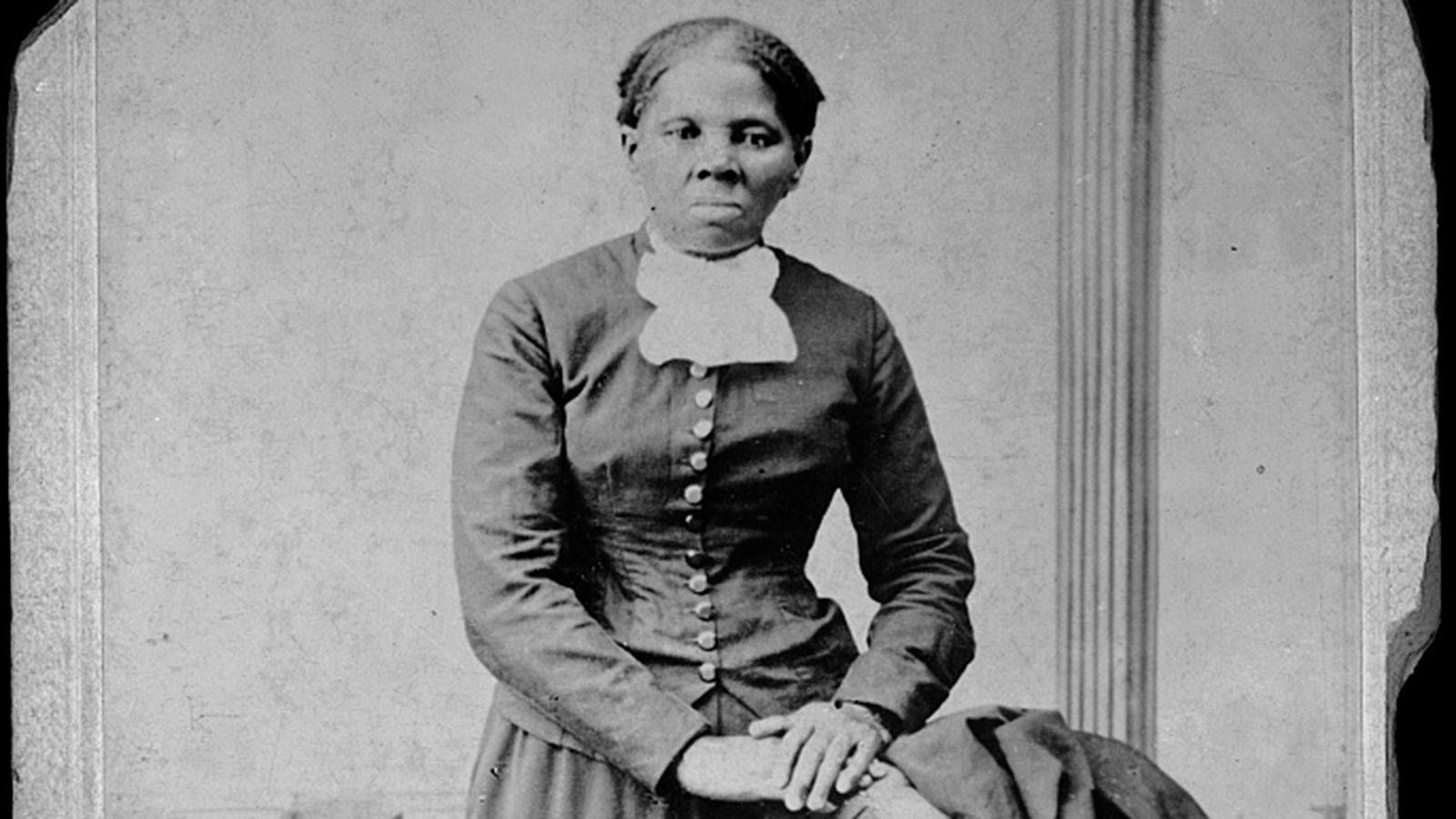
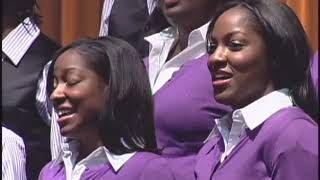
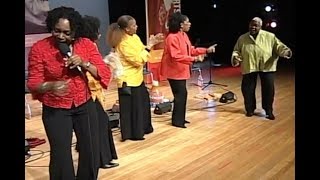
Introduce the song, “Do You Want to be Free” and give students a copy of the Song Lyrics: “Do You Want To Be Free?”Play the song again and have students sing along. Ask students: What are you hearing? (a song, a story about history using music, an African American spiritual, a children’s chorus) Who is this song about? (Harriet Tubman) Who is Harriet Tubman? (a leader in the Underground Railroad, she helped enslaved people escape the south and move north) From whose perspective is this song written? (Harriet Tubman’s) What format is used in the chorus? (call and response, sing and repeat, sing and echo) Who is performing the song? (an adult and children’s group)
Build
Introduce the history of African American spirituals to students. Ask students: Why did enslaved people sing songs? (to entertain themselves, for religious reasons, to communicate information, to pass the time, to make their work easier by moving to the beat, etc.) Explain to students that enslavers prohibited reading and writing. Since literacy was forbidden, enslaved people sang songs to remember things and to communicate information. Enslavers did not allow them to gather together to attend church, as they feared they might grow strong and revolt. Their songs often contained codes that enslaved people knew but enslavers did not.
Introduce the concept of codes in songs and communications. Ask students: What secret codes do you use that your parents or friends may not know? (lingo, jargon, text messaging abbreviations, etc.) Why do you use these codes? (it’s quicker, it can be secret, etc.) Why would enslaved people use codes to help them escape?
Watch the performance of “Wade in the Water.”Ask students: What did you hear? What do you think the song is about? What does “wade in the water” mean? Who is Moses? Who are “the children of the Israelites”? Why are some phrases repeated? (they are the primary message, they are the chorus’s “response”)
After you listen to the performance once, give students a copy of the Song Lyrics: “Wade in the Water.” Listen a second time to “Wade in the Water.” Ask students to underline repeated phrases and words in the song.
Give students a copy of the worksheet Codes and Phrases Used on Underground Railroad. Working in groups, ask students to try to decode the song. They may be able to find key words or parts of phrases to help them. Share interpretations of the song with each other. (They should find words like “Jordan,” “friends,” “water.”)
Show students “Wade in the Water” one more time. Ask students to listen to the “beat.” As the teacher, snap your fingers to the beat (syncopated rhythm). When the chorus starts to clap at the end, clap along. Encourage the students to join you with the finger snapping and hand clapping.
Define syncopation for students. Syncopation is a shifting of accents and stress from what are normally strong beats to weak beats. It often means playing one rhythm against another in such a way that listeners want to move, nod heads, clap hands, or dance. It is often on the “off” or “up” beat. Explain that syncopation is common in African American spirituals. It often gives the spiritual a jazz feeling.
Listen to “Do You Want to Be Free?” one more time. Ask students to snap their fingers or clap their hands on the syncopated beats.
Apply
Write an original African American spiritual. Divide the class into pairs or small groups. Have each group select a topic that was important to an enslaved person from the Underground Railroad. For example, a song about about following the North Star, hiding from those who want to capture you, leaving your family behind, surviving winter weather, looking for the Promised Land or freedom, or wondering what your new life will be like. Consider whose voice we might be hearing (such as Tubman’s in the first song). Use code words and phrases to communicate a secret message. Write an original spiritual to a known tune (such as one of the spirituals heard in this lesson) or to an original tune with two or more verses and a chorus. Encourage students to use the call and response technique and syncopation. Have students share the lyrics of the song with their classmates.
Perform the original spirituals for the class. Have students demonstrate any clapping or snapping that will go along with the performance.
Reflect
Assign each group a spiritual written by another group. Ask each group to decode the song. Ask students: What message did the group convey? What did you have to decode? Can a song have more than one interpretation? What did they do well? What emotions did you feel as you listened to the spirituals in this lesson (recorded and original)? How do you think enslaved people when they listened or sang spirituals?
In this 3-5 lesson, students will observe a dance performance to understand the emotional struggles Tubman faced as she helped enslaved people escape and travel north along the Underground Railroad. Students will create an original dance or drama production to the song, “Harriet Tubman.”
In this 3-5 lesson, students will conduct research on Harriet Tubman and explore impressionistic artwork depicting her life. Students will create original impressionistic artwork.
In this 3-5 lesson, students will explore Jacob Lawrence’s artistic collage technique from “The Migration Series.” Students will create original Lawrence-style collage artwork about the “conductor” of the Underground Railroad, Harriet Tubman.
The Fisk Jubilee Singers are considered a landmark of Tennessee's artistic heritage and are instrumental in preserving the musical tradition known today as Negro spirituals.
Join members of internationally renowned a cappella ensemble Sweet Honey In The Rock and learn how the ensemble uses their collective voice as an instrument along with a variety of percussion instruments.
The roots of blues can be found in slave songs, spirituals, and field hollers of the American South; its sound can be heard in early rock ’n’ roll, and in today’s alternative and Hip Hop landscapes. Journey with us to learn about the influences and impact the blues has had on musical cultures.
Geography
History
Jazz & Blues
Kennedy Center Education provides resources and experiences that inspire, excite, and empower students and young artists, plus the tools and connections to help educators incorporate the arts into classrooms and learning spaces of all types.
Generous support for educational programs at the Kennedy Center is provided by the U.S. Department of Education.
Gifts and grants to educational programs at the Kennedy Center are provided by The Paul M. Angell Family Foundation; Bank of America; Capital One; The Morris and Gwendolyn Cafritz Foundation; Carnegie Corporation of New York; The Ednah Root Foundation; Genesis Inspiration Foundation; Harman Family Foundation; William R. Kenan, Jr. Charitable Trust; the Kimsey Endowment; The Kiplinger Foundation; Laird Norton Family Foundation; Lois and Richard England Family Foundation; Dr. Gary Mather and Ms. Christina Co Mather; The Markow Totevy Foundation; Dr. Gerald and Paula McNichols Foundation; The Morningstar Foundation; Myra and Leura Younker Endowment Fund; The Irene Pollin Audience Development and Community Engagement Initiatives;
Prince Charitable Trusts; Dr. Deborah Rose and Dr. Jan A. J. Stolwijk; Rosemary Kennedy Education Fund; The Embassy of the United Arab Emirates; The Victory Foundation; The Volgenau Foundation; Jackie Washington; GRoW @ Annenberg and Gregory Annenberg Weingarten and Family; and generous contributors to the Abe Fortas Memorial Fund and by a major gift to the fund from the late Carolyn E. Agger, widow of Abe Fortas. Additional support is provided by the National Committee for the Performing Arts..
The content of these programs may have been developed under a grant from the U.S. Department of Education but does not necessarily represent the policy of the U.S. Department of Education. You should not assume endorsement by the federal government.