Hula Dance
How does hula dance tell a story?
In this 3-5 lesson, students will discover how hula dance tells a story through rhythmic patterns and gestures. Students will gather information about the history of hula. They will choreograph and perform a hula dance that tells a story.
Lesson Content
Learning Objectives
Students will:
- Locate Hawaii on a world map.
- Research and gather information on Hawaii and the hula dance.
- Create a lei with facts about Hawaii and the hula dance.
- Dance the gestures and movements to a traditional hula dance.
- Plan a story map of movements and gestures.
- Choreograph an original hula dance that tells a story.
- Perform a hula dance for an audience.
Standards Alignment
Recommended Student Materials
Editable Documents: Before sharing these resources with students, you must first save them to your Google account by opening them, and selecting “Make a copy” from the File menu. Check out Sharing Tips or Instructional Benefits when implementing Google Docs and Google Slides with students.
Websites
Videos
Additional Materials
- String
- Hole punch
- Construction paper
Teacher Background
Teachers should be familiar with the history of hula dance, movements, and gestures before teaching this lesson.
Student Prerequisites
Students should be familiar with story elements and basic dance movements and gestures.
Accessibility Notes
Modify and adapt movements as needed. Allow extra time and space for dance movements.
Engage
- Display a Map of Hawaii or explore the 3-D Hawaii Map. Discuss with students how Hawaii is a group of volcanic islands and is a state of the U.S.
- Have students brainstorm what they know about hula dance. Create a KWL Chart (what we Know, what we Want to know, what we Learned) and fill out the “K” section.
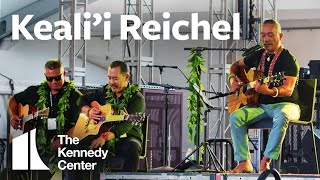
- Show students hula movements from the Keali'i Reichel video. Tell students that hula movements have meaning. As you watch the video clips, generate a class list of the movements and gestures observed from the dancers.
- Revisit the KWL Chart. Fill out the “W” section by asking students to list things they’d like to know about hula dance and about Hawaii.
Build
- Review the items in the “W” section of the KWL chart. Ask students: How can we learn the answers to our questions?
- Distribute the Capture Sheet: Hula Dance & Hawaii. Have students research and gather information from the History of Hula and Kiddle: Hawaii Facts. Share any additional books, media, or websites available.
- Create a lei featuring information about the hula. Divide the students into groups of two or three. First, distribute scissors, string, markers, and construction paper or the Flower Template. Students can use the flower template or free-hand draw onto construction paper. Next, write important facts from the Capture Sheet: Hula Dance & Hawaii onto the flower. Last, poke a hole or use a hole punch to string the flowers.
- Allow time for students to create their lei’s. Regroup and fill in the “L” section of the chart.
Apply
- Watch the hula tutorial, “I Kona”. Have students learn the steps and Hawaiian “I Kona” song lyrics. Encourage students to join in with the dancers on the video. Add the movements, gestures and their meaning to the list generated from the Keali'i Reiche video. Allow sufficient time for students to practice the steps.
- Create an original hula dance that tells a story. Divide the class into small groups and distribute the Hula Story Map. Review each step on the handout with your class, and clarify any questions they may have.
- Explain how to use the story map as a guide to plan the hula dance. Students should brainstorm ideas using the hula dance gestures. The next step is for students to write down their ideas. Encourage the students to discuss their ideas and work collaboratively to write their story.
- Have students create a story map. Tell the students to name or draw the hula gesture along with the words to the story that each gesture depicts.
- Distribute and review the Rubric: Hula Dance. Allow time for the students to choreograph and practice their dances using their story maps. Students can choose to narrate the dance or allow for interpretation.
Reflect
- Perform the hula dances for an audience. Ask the audience to interpret the story details. After the performances, have students ask questions about the story.
- Assess students’ knowledge of hula dance with the Rubric: Hula Dance. Have a follow-up discussion about how the dancers communicated their stories. Ask students: What was the mood of the story? What was the story about?
-
Adaptation
Rebecca Haden
-
Editor
JoDee Scissors
-
Updated
February 23, 2022
Related Resources
Collection Dance
What’s the difference between troika and hula? How can dance tell stories and preserve histories? Discover dance and its impact on culture by exploring Ancient Egyptian rituals and Native American legends. Learn how dance tells stories and poems through a language of movement and music, and pick up a few moves yourself.

Lesson Mountain Creation
In this 3-5 lesson, students will dramatize the ways a mountain can be formed. Students will analyze poems about mountain creation from the perspective of the Tohono O’odham People. Students will compare the poems to science-based descriptions of mountain formation.
Collection Storytelling
Lesson plans, activities, and other resources that focus on telling stories through theater, music, dance, writing, and visual arts.

Kennedy Center Education provides resources and experiences that inspire, excite, and empower students and young artists, plus the tools and connections to help educators incorporate the arts into classrooms and learning spaces of all types.
Connect with us!


Sign up to stay informed!
Generous support for educational programs at the Kennedy Center is provided by the U.S. Department of Education.
Gifts and grants to educational programs at the Kennedy Center are provided by The Paul M. Angell Family Foundation; Bank of America; Capital One; The Morris and Gwendolyn Cafritz Foundation; Carnegie Corporation of New York; The Ednah Root Foundation; Genesis Inspiration Foundation; Harman Family Foundation; William R. Kenan, Jr. Charitable Trust; the Kimsey Endowment; The Kiplinger Foundation; Laird Norton Family Foundation; Lois and Richard England Family Foundation; Dr. Gary Mather and Ms. Christina Co Mather; The Markow Totevy Foundation; Dr. Gerald and Paula McNichols Foundation; The Morningstar Foundation; Myra and Leura Younker Endowment Fund; The Irene Pollin Audience Development and Community Engagement Initiatives;
Prince Charitable Trusts; Dr. Deborah Rose and Dr. Jan A. J. Stolwijk; Rosemary Kennedy Education Fund; The Embassy of the United Arab Emirates; The Victory Foundation; The Volgenau Foundation; Jackie Washington; GRoW @ Annenberg and Gregory Annenberg Weingarten and Family; and generous contributors to the Abe Fortas Memorial Fund and by a major gift to the fund from the late Carolyn E. Agger, widow of Abe Fortas. Additional support is provided by the National Committee for the Performing Arts..
The content of these programs may have been developed under a grant from the U.S. Department of Education but does not necessarily represent the policy of the U.S. Department of Education. You should not assume endorsement by the federal government.