Article Developing an Artistic Eye for the Math Classroom
Middle school math teachers will unlock students’ “artistic mathematical eye” with arts objectives, lesson openings, essential questions, and student choice.
In this 9-12 lesson, students will explore the Fibonacci sequence in nature and art. Students will investigate the golden mean/ratio and golden spiral as an important concept in art history. Students will photograph architecture, art, nature, and personal cultural artifacts that include the Fibonacci sequence.
Students will:
Editable Documents: Before sharing these resources with students, you must first save them to your Google account by opening them, and selecting “Make a copy” from the File menu. Check out Sharing Tips or Instructional Benefits when implementing Google Docs and Google Slides with students.
Websites
Videos
Additional Materials
Teachers should familiarize themselves with the definition and examples of the Fibonacci sequence as it applies to art and the golden ratio. Previewing the TED Talk, The Magic of Fibonacci Numbers with Arthur Benjamin, to learn how mathematics can inspire the arts. Reference the lesson, Photography: From Theory to Practice for photography tips.
Students should be able to interpret functions and use of function notation.
Assistive tools such as stabilizers, mounts, voice control (“Hey Siri, take a photo), and accessible cameras (ex. Vtech Kidizoom cameras) are effective resources for camera adaptations. Provide preferential seating for visual presentations and allow extra time for task completion.
Adaptation
Jen Westmoreland Bouchard
Editor
JoDee Scissors
Updated
December 16, 2021
Middle school math teachers will unlock students’ “artistic mathematical eye” with arts objectives, lesson openings, essential questions, and student choice.
In this 6-8 lesson, students will examine works of art and learn tools to analyze and discuss photography. Students will apply what they have learned by using cameras to document daily life in their community. They will prepare artist statements and present their work.
Help students build techniques to interpret what they see into written words using art.
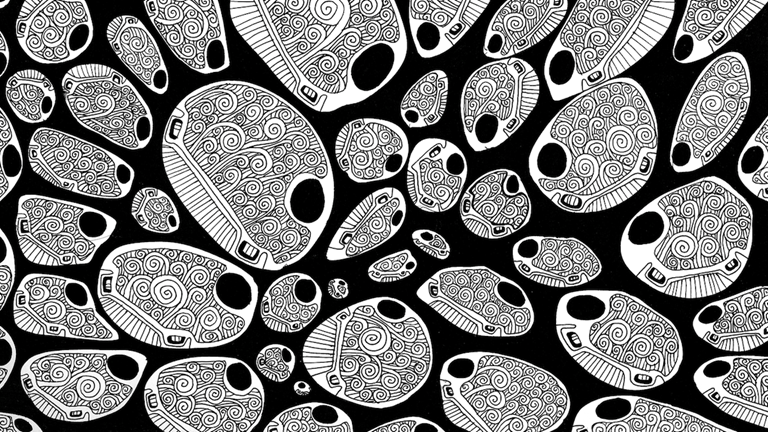
In this 6-8 lesson, students examine living cells to create original pattern art. Students will calculate cell divisions and find patterns in graphed results. They will further explore patterns and repetition in nature to generate ideas for their visual art piece.
In this 6-8 lesson, students will apply mathematical, science, and engineering concepts to experiment with balancing levers. They will learn to classify types of levers to design and build a simplified mobile. Students will explore suspended and standing mobiles by sculptor Alexander Calder and engage in class discussions about the effectiveness of his work.
In this K-2 lesson, students will construct patterns using visual arts designs and math manipulatives. They will identify patterns existing in the natural and man-made world, art, math, and science.
In this 6-8 lesson, students will create mandalas using mathematical concepts and skills. They will explore symmetry as well as the natural and man-made shapes found in mandalas. They will design a mandala, then analyze other students’ creative work for style and message.
A portrait is an image, usually of a person. A portrait tells the viewer a story about the person in the image by the choices the portrait’s creator makes. In this media activity, we'll explore the impact of those choices, focusing on the subject, setting, and story of your portrait.

Kennedy Center Education provides resources and experiences that inspire, excite, and empower students and young artists, plus the tools and connections to help educators incorporate the arts into classrooms and learning spaces of all types.


Generous support for educational programs at the Kennedy Center is provided by the U.S. Department of Education.
Gifts and grants to educational programs at the Kennedy Center are provided by The Paul M. Angell Family Foundation; Bank of America; Capital One; The Morris and Gwendolyn Cafritz Foundation; Carnegie Corporation of New York; The Ednah Root Foundation; Genesis Inspiration Foundation; Harman Family Foundation; William R. Kenan, Jr. Charitable Trust; the Kimsey Endowment; The Kiplinger Foundation; Laird Norton Family Foundation; Lois and Richard England Family Foundation; Dr. Gary Mather and Ms. Christina Co Mather; The Markow Totevy Foundation; Dr. Gerald and Paula McNichols Foundation; The Morningstar Foundation; Myra and Leura Younker Endowment Fund; The Irene Pollin Audience Development and Community Engagement Initiatives;
Prince Charitable Trusts; Dr. Deborah Rose and Dr. Jan A. J. Stolwijk; Rosemary Kennedy Education Fund; The Embassy of the United Arab Emirates; The Victory Foundation; The Volgenau Foundation; Jackie Washington; GRoW @ Annenberg and Gregory Annenberg Weingarten and Family; and generous contributors to the Abe Fortas Memorial Fund and by a major gift to the fund from the late Carolyn E. Agger, widow of Abe Fortas. Additional support is provided by the National Committee for the Performing Arts..
The content of these programs may have been developed under a grant from the U.S. Department of Education but does not necessarily represent the policy of the U.S. Department of Education. You should not assume endorsement by the federal government.