Media Japan: Arts & Culture
This is your passport to the arts and culture of Japan as experienced through the Kennedy Center's Japan! culture + hyperculture festival
In this 9-12 lesson, students will explore the history and evolution of the Japanese woodblock print. Students will study the ukiyo-e genre from its early beginnings to its height in the late 1800s. Students will also learn about the techniques and development of this process, view prints from the time period, and create original ukiyo-e prints.
Students will:
Videos
Websites
Additional Materials
Teachers should familiarize themselves with the Ukiyo-e Timeline and the process of Ukiyo-e Woodblock Printmaking with Keizaburo Matsuzaki.
Students should be familiar with basic art terminology: composition, gradation, flat, brilliant, subject, depth/dimension, etc. Students should have basic background knowledge of Japanese history and culture.
Provide assistive technologies during research and the art-making process. Allow sufficient space for movement around the room.
Two-color and three-color prints emerged during the mid-1800s, and full-blown multicolored prints became the norm soon after. The ukiyo-e print became commercialized during that time, with widespread production. Prints depicting characters from Kabuki plays were used as flyers to advertise performances in the cities and countryside. Other prints depicted beautiful women, birds, flowers, and landscapes.
Original Writer
Elna Eichenmuller
Adaptation
Jill Gerlman
Editor
JoDee Scissors
Updated
January 12, 2022
This is your passport to the arts and culture of Japan as experienced through the Kennedy Center's Japan! culture + hyperculture festival
Larger-than-life calligraphy, giant bamboo weaving, and robots both real and toy... experience the vibrant diversity of the arts across Japan.
In this 3-5 lesson, students will illustrate self-portraits to identify their senses. They will take a virtual field trip to the ocean to explore a sensory experience. Students will write a haiku poem about the ocean, bringing science and creative writing together as one.
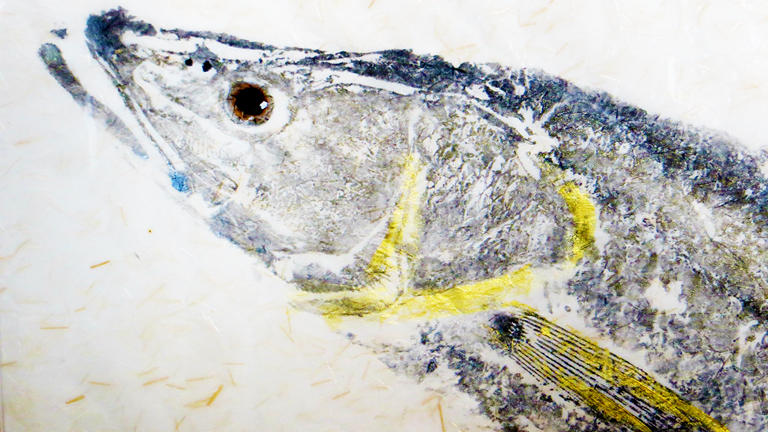
In this K-2 lesson, students will explore the historical and cultural qualities of Gyotaku, the traditional Japanese method of printing fish. Students will identify the external parts of fish, then create original Gyotaku prints.

Kennedy Center Education provides resources and experiences that inspire, excite, and empower students and young artists, plus the tools and connections to help educators incorporate the arts into classrooms and learning spaces of all types.


Generous support for educational programs at the Kennedy Center is provided by the U.S. Department of Education.
Gifts and grants to educational programs at the Kennedy Center are provided by The Paul M. Angell Family Foundation; Bank of America; Capital One; The Morris and Gwendolyn Cafritz Foundation; Carnegie Corporation of New York; The Ednah Root Foundation; Genesis Inspiration Foundation; Harman Family Foundation; William R. Kenan, Jr. Charitable Trust; the Kimsey Endowment; The Kiplinger Foundation; Laird Norton Family Foundation; Lois and Richard England Family Foundation; Dr. Gary Mather and Ms. Christina Co Mather; The Markow Totevy Foundation; Dr. Gerald and Paula McNichols Foundation; The Morningstar Foundation; Myra and Leura Younker Endowment Fund; The Irene Pollin Audience Development and Community Engagement Initiatives;
Prince Charitable Trusts; Dr. Deborah Rose and Dr. Jan A. J. Stolwijk; Rosemary Kennedy Education Fund; The Embassy of the United Arab Emirates; The Victory Foundation; The Volgenau Foundation; Jackie Washington; GRoW @ Annenberg and Gregory Annenberg Weingarten and Family; and generous contributors to the Abe Fortas Memorial Fund and by a major gift to the fund from the late Carolyn E. Agger, widow of Abe Fortas. Additional support is provided by the National Committee for the Performing Arts..
The content of these programs may have been developed under a grant from the U.S. Department of Education but does not necessarily represent the policy of the U.S. Department of Education. You should not assume endorsement by the federal government.