Media Wozzeck
A quick overview of Berg’s 1925 ground-breaking atonal opera.
Born
February 9, 1885
Died
December 24, 1935
Country
Austria
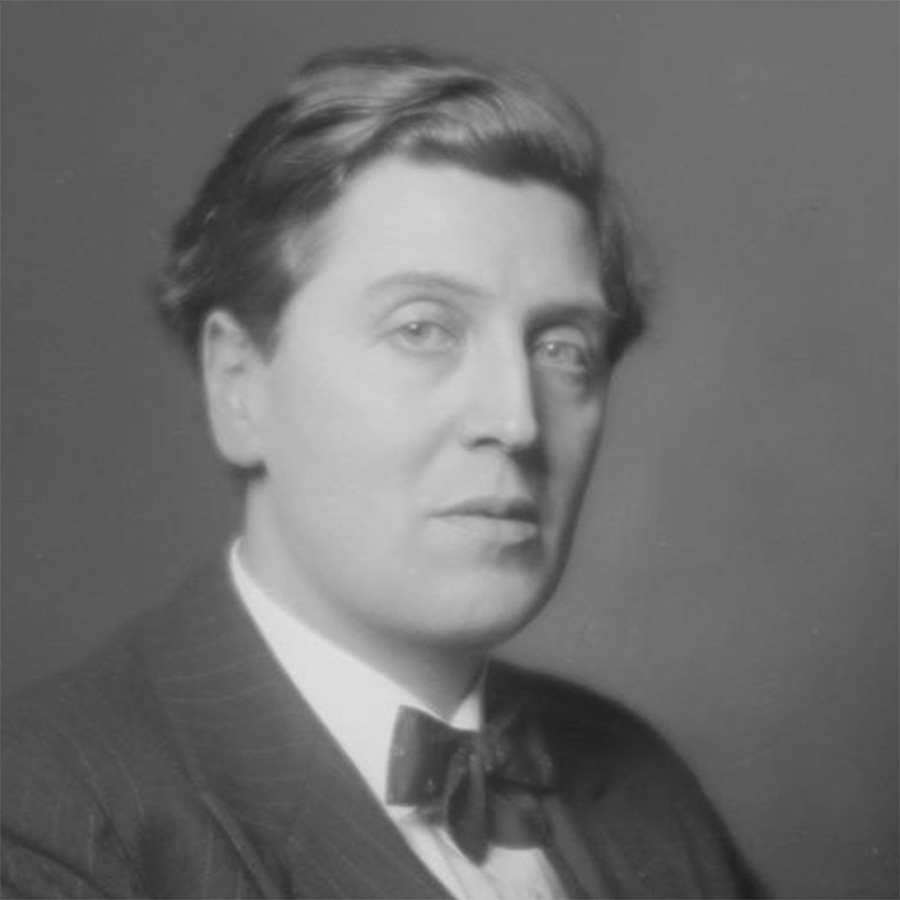
The son of a merchant, Alban Berg was born in Vienna on February 9, 1885. As a child, he studied piano. During his teen years he started to compose. He began studying with Arnold Schoenberg in 1904. Those studies came to an end when Berg was 25.
Thanks to an inheritance he received, Berg was able to devote the rest of his short life to composing. Along with Anton Webern, another of Schoenberg’s students, he deserves much of the credit for bringing to full fruition Schoenberg’s Second Viennese School. Their works developed the principles of atonality, known also as 12-note music or serialism.
As a result, their works heavily influenced classical music of the 20th century. Berg wrote two operas, Wozzeck and Lulu, which remained unfinished at his death.
He began work on Wozzeck in 1917 and completed it in 1922. Inspired by a Buechner play, the opera is a study of insanity. Berg used a number of devices in it, including both atonal and tonal passages, to indicate the sense of alienation the central characters felt from the world they inhabited. The opera premiered in Berlin in 1925 and brought much acclaim and financial success to Berg.
Aside from the operas, Berg composed orchestral and chamber music as well as a number of songs. He interrupted his work on Lulu to devote himself to two commissioned works; Der Wein (an orchestral aria based on poems by Baudelaire) and his Violin Concerto.
Berg died in a Vienna hospital on December 24, 1935. He suffered from an infection related to an insect bite on his back. He was 50 years old.
|
|
Video
A quick overview of Berg’s 1925 ground-breaking atonal opera.
Consider this opera’s “Chaotic Neutral” era. You’ll discover 20th-century operas don’t typically celebrate good or evil: they relish the madness and ambiguity of the in between. Which means their musical storytelling will feel and sound vastly different, depending on who’s doing the telling.
Get out your opera glasses and prepare to take a look at the history and evolution of an art form over four hundred years old. Learn how singers train and condition their voices, become familiar with some of the stage’s most tragic love affairs, and discover how theatre and music combined can tell epic stories in unforgettable ways.
Get inside the mind of a composer—from a popular song, to a Broadway musical, to a symphony, how does a composer write music?

Kennedy Center Education provides resources and experiences that inspire, excite, and empower students and young artists, plus the tools and connections to help educators incorporate the arts into classrooms and learning spaces of all types.


Generous support for educational programs at the Kennedy Center is provided by the U.S. Department of Education.
Gifts and grants to educational programs at the Kennedy Center are provided by The Paul M. Angell Family Foundation; Bank of America; Capital One; The Morris and Gwendolyn Cafritz Foundation; Carnegie Corporation of New York; The Ednah Root Foundation; Genesis Inspiration Foundation; Harman Family Foundation; William R. Kenan, Jr. Charitable Trust; the Kimsey Endowment; The Kiplinger Foundation; Laird Norton Family Foundation; Lois and Richard England Family Foundation; Dr. Gary Mather and Ms. Christina Co Mather; The Markow Totevy Foundation; Dr. Gerald and Paula McNichols Foundation; The Morningstar Foundation; Myra and Leura Younker Endowment Fund; The Irene Pollin Audience Development and Community Engagement Initiatives;
Prince Charitable Trusts; Dr. Deborah Rose and Dr. Jan A. J. Stolwijk; Rosemary Kennedy Education Fund; The Embassy of the United Arab Emirates; The Victory Foundation; The Volgenau Foundation; Jackie Washington; GRoW @ Annenberg and Gregory Annenberg Weingarten and Family; and generous contributors to the Abe Fortas Memorial Fund and by a major gift to the fund from the late Carolyn E. Agger, widow of Abe Fortas. Additional support is provided by the National Committee for the Performing Arts..
The content of these programs may have been developed under a grant from the U.S. Department of Education but does not necessarily represent the policy of the U.S. Department of Education. You should not assume endorsement by the federal government.


