Media What Makes a Portrait “Great”?
What makes a great portrait in the digital—or any—age? By looking at the works of Richard Avedon and Andy Warhol we learn that it's not enough to create just another pretty face.
Born
May 26, 1899
Died
February 2, 1979
Country
United States of America
“The father of African art.” “Dean of African American painters.” “Pioneering Africanist.” All of these honorifics have been applied to Aaron Douglas. His painting—typified by flat forms, hard edges, and repetitive geometric shapes—was strongly shaped by African motifs and culture, as well as by African American jazz music.
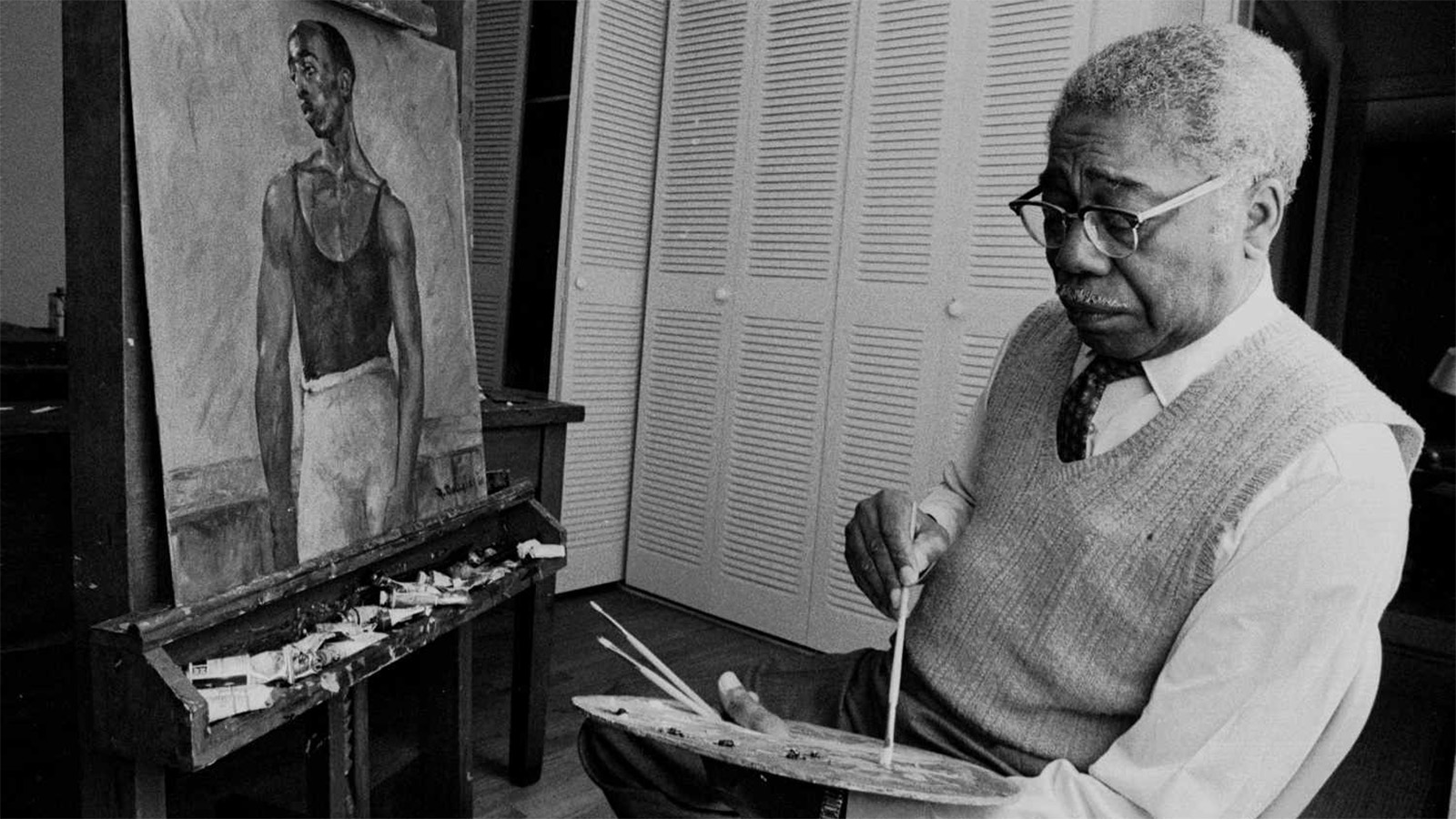
Douglas was drawn to Harlem from his native Kansas after hearing about the creative output of other Black artists.
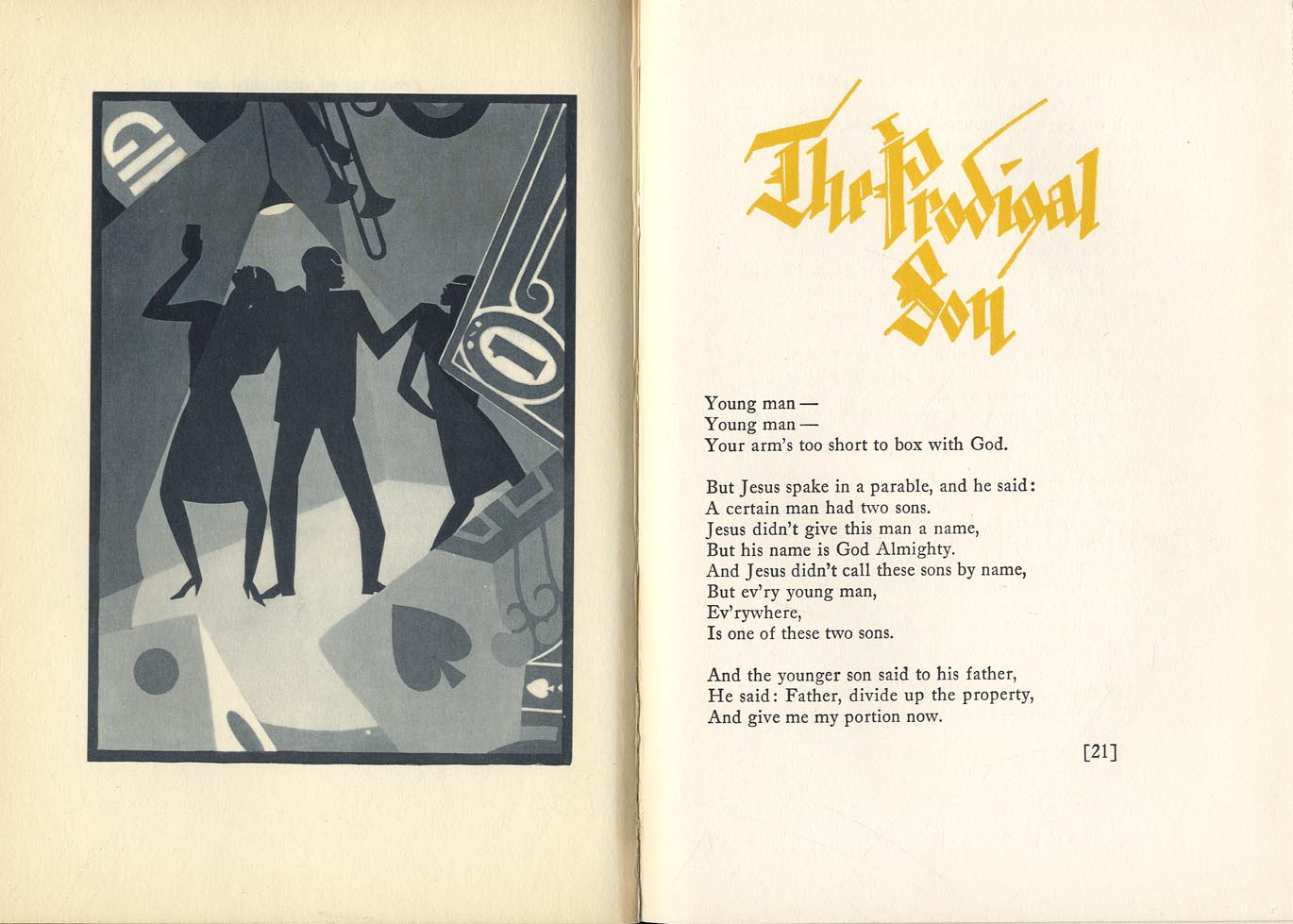
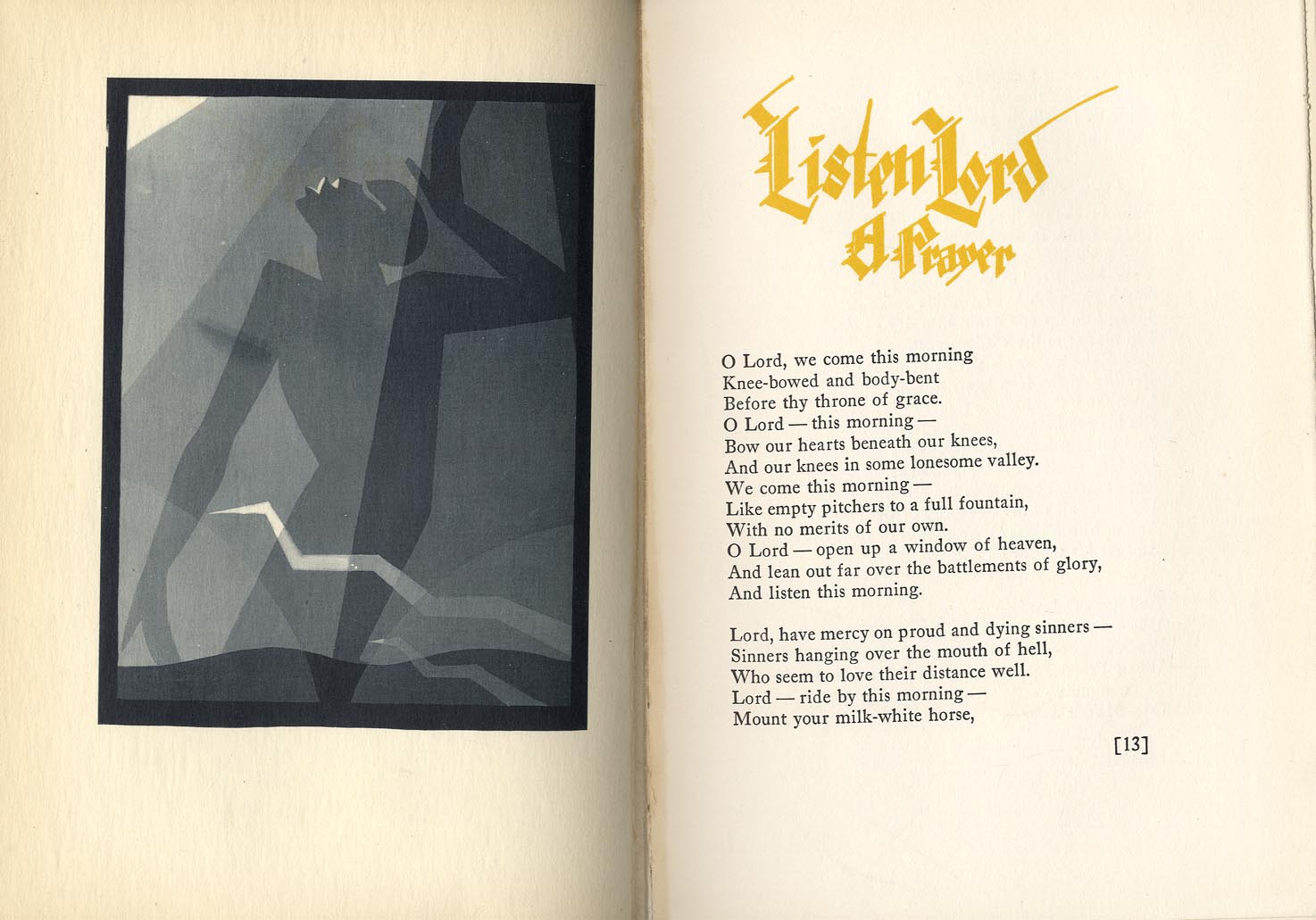
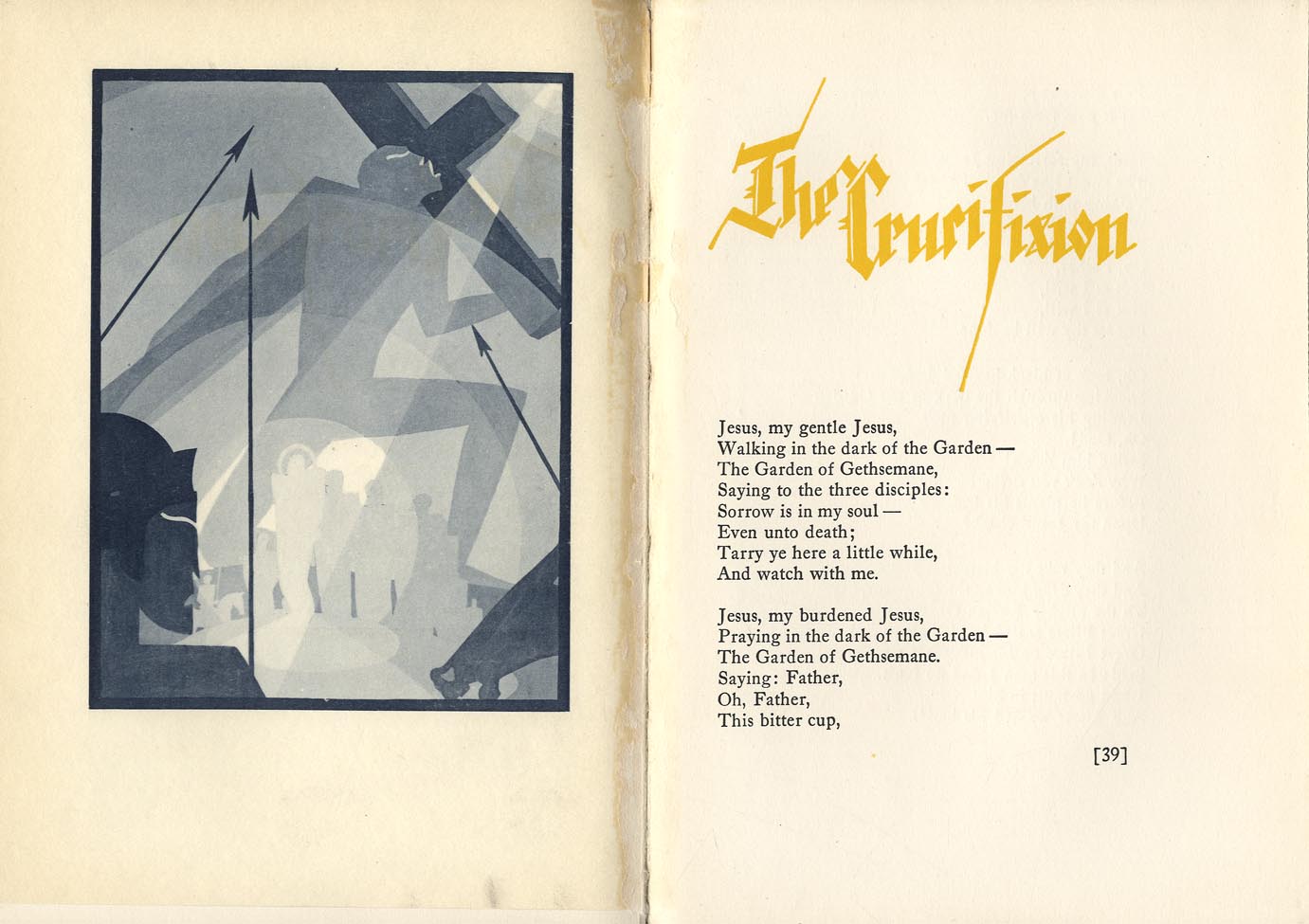
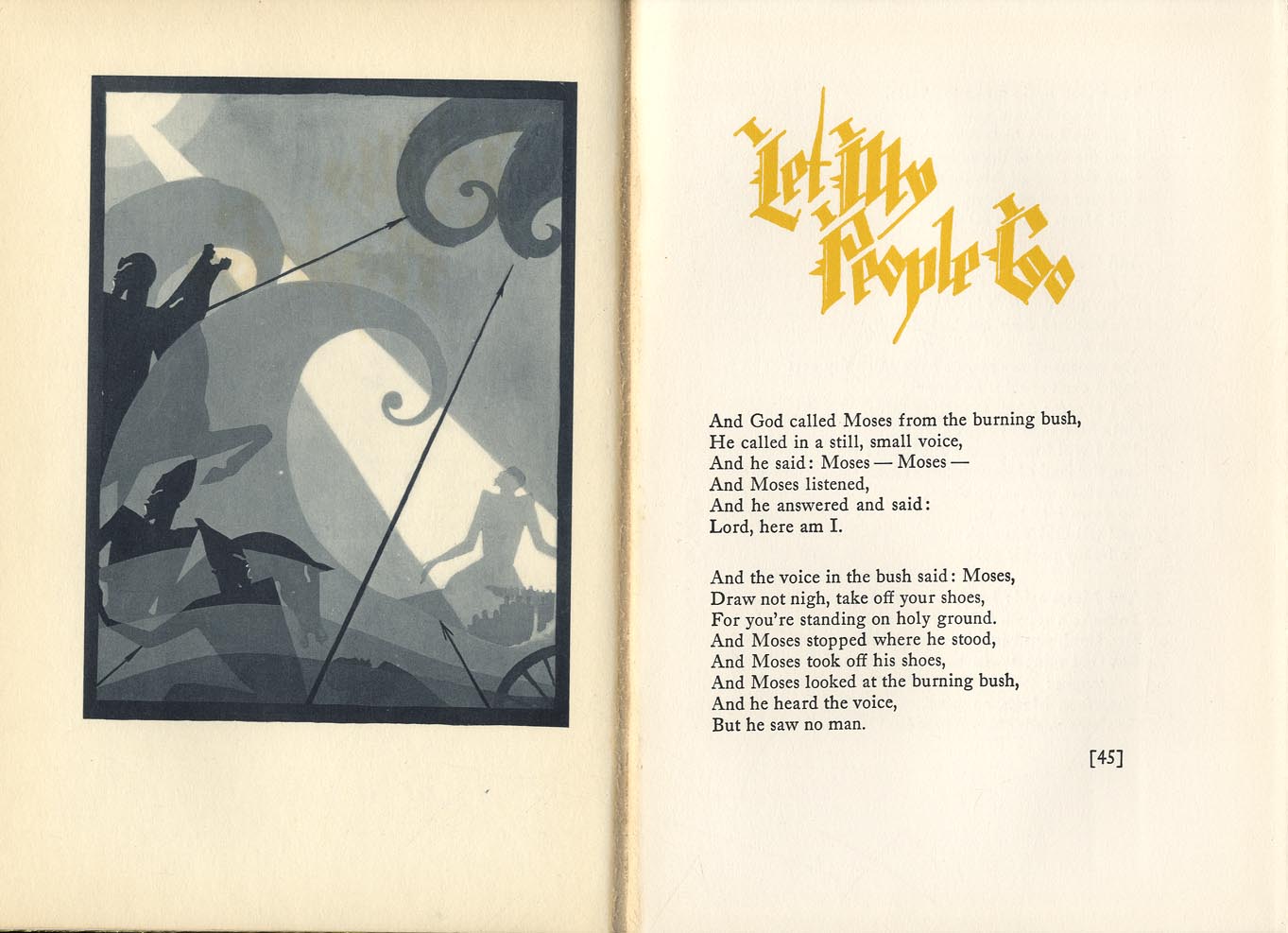
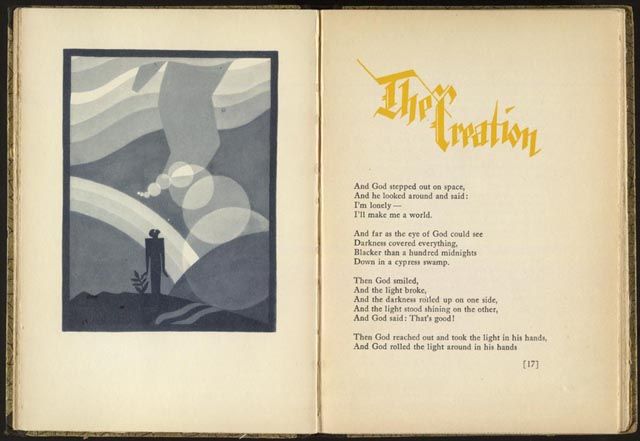
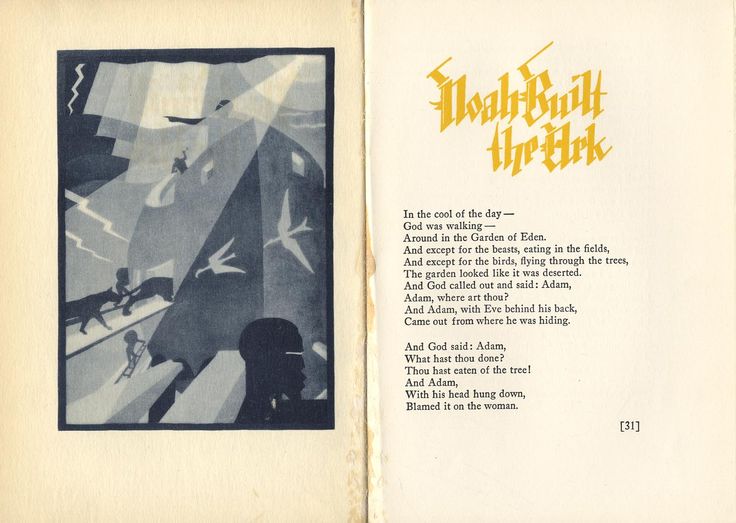
Scholars W. E. B. Du Bois and Alain Locke, who promoted the work of talented Black artists, admired Douglas’ designs and included his illustrations in leading publications. James Weldon Johnson asked Douglas to illustrate his book of poetic sermons, God’s Trombones (see below).
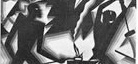
In 1934, the Works Progress Administration (WPA) commissioned Douglas to paint Aspects of Negro Life, a four-panel mural for the 135th Street Branch of the New York Public Library (see below). In the fourth panel, Song of the Towers, Douglas depicts three figures, each portraying a facet of the Black experience. The figure on the right represents the escape of formerly enslaved people, while the figure on the left symbolizes the economic hardships of African Americans. In the middle stands a saxophonist—an emblem of the new opportunities that art and music offered to Black artists during the Harlem Renaissance.
 I n t e r s e c t i o n s |
|
 |
Douglas illustrated The Negro Speaks of Rivers for Langston Hughes. |
 |
His mural, Aspects of Negro Life, was on display at the Harlem YMCA. |
 |
He illustrated James Weldon Johnson’s God’s Trombones. |
 |
His work was published in the magazine Opportunity. |
 |
His illustrations appeared in the Survey Graphic anthology of work by Black writers. |
 |
|

Aspects of Negro Life: 1. The Negro in an African Setting, 2. An Idyll of the Deep South, 3. From Slavery to Reconstruction, 4. Song of the Towers. Painted by Aaron Douglas, 1934. Schomburg Center for Research in Black Culture, Art and Artifacts Division, The New York Public Library.
What makes a great portrait in the digital—or any—age? By looking at the works of Richard Avedon and Andy Warhol we learn that it's not enough to create just another pretty face.
In Empress of the Blues, Romare Bearden takes inspiration from jazz to create one of his most famous works of art.
Learn why Norman Rockwell’s painting The Problem We All Live With became a symbol of the American civil rights movement.
Fasten your smock, get out your art supplies, and prepare to get your hands dirty. Examine the physics behind Alexander Calder’s mobiles, the symbolism in the botany rendered in renaissance paintings, and the careful patience used in weaving a wampum belt in this exploration of a wide range of arts.

Kennedy Center Education provides resources and experiences that inspire, excite, and empower students and young artists, plus the tools and connections to help educators incorporate the arts into classrooms and learning spaces of all types.


Generous support for educational programs at the Kennedy Center is provided by the U.S. Department of Education.
Gifts and grants to educational programs at the Kennedy Center are provided by The Paul M. Angell Family Foundation; Bank of America; Capital One; The Morris and Gwendolyn Cafritz Foundation; Carnegie Corporation of New York; The Ednah Root Foundation; Genesis Inspiration Foundation; Harman Family Foundation; William R. Kenan, Jr. Charitable Trust; the Kimsey Endowment; The Kiplinger Foundation; Laird Norton Family Foundation; Lois and Richard England Family Foundation; Dr. Gary Mather and Ms. Christina Co Mather; The Markow Totevy Foundation; Dr. Gerald and Paula McNichols Foundation; The Morningstar Foundation; Myra and Leura Younker Endowment Fund; The Irene Pollin Audience Development and Community Engagement Initiatives;
Prince Charitable Trusts; Dr. Deborah Rose and Dr. Jan A. J. Stolwijk; Rosemary Kennedy Education Fund; The Embassy of the United Arab Emirates; The Victory Foundation; The Volgenau Foundation; Jackie Washington; GRoW @ Annenberg and Gregory Annenberg Weingarten and Family; and generous contributors to the Abe Fortas Memorial Fund and by a major gift to the fund from the late Carolyn E. Agger, widow of Abe Fortas. Additional support is provided by the National Committee for the Performing Arts..
The content of these programs may have been developed under a grant from the U.S. Department of Education but does not necessarily represent the policy of the U.S. Department of Education. You should not assume endorsement by the federal government.


