Antonín Dvořák Composer


Born in a small town near Prague, Antonín Dvořák is known to be one of the greatest Czech composers, noted for his attractive melodic compositions and the brilliance of his orchestration. At the age of 16, he studied at the Prague Organ School. There, he was introduced to the works of past great masters as well as to composers such as Robert Schumann and Richard Wagner.

In 1861, Dvořák joined the National Theatre in Prague as a violist. During this time, he wrote many compositions, but not achieve recognition until 1873 with a performance of his grand patriotic work Hymnus for chorus and orchestra. Composer Johannes Brahms later prevailed upon his publisher to print some of Antonín Dvořák’s works. Always composing an apparently effortless output of music, including Slavonic Dances in 1878, Antonín Dvořák soon became a professor of composition at the Prague Conservatory.

In 1884, following a series of trips to London to conduct his own music, he earned a commission to compose The Spectre’s Bride. In 1891, he received an honorary doctorate degree from Cambridge University, the same year he composed the popular Carnival overture. Following successful tours to Russia and Germany, Dvořák accepted an invitation in 1892 to become director of the National Conservatory of Music in New York City. In 1893, while in the United States, he wrote what is probably his most famous work, the Symphony No. 9 in E Minor, “From the New World.”

He returned to Prague in 1895, where he would later complete Rusalka, the ninth of his ten operas, in 1900. In it, he tells the familiar story of a water nymph who falls in love with a human prince. The following year, he became the director of the Prague Conservatory. He devoted his last years to working on an opera, Armida.

Despite the international recognition he had achieved, Dvořák lived in relative poverty as a result of unfavorable contracts with his music publishers. He died on May 1, 1904. A national day of mourning was declared and Dvořák was honored with a burial in Vysehrad Cemetery, where many prominent Czechs are also buried.
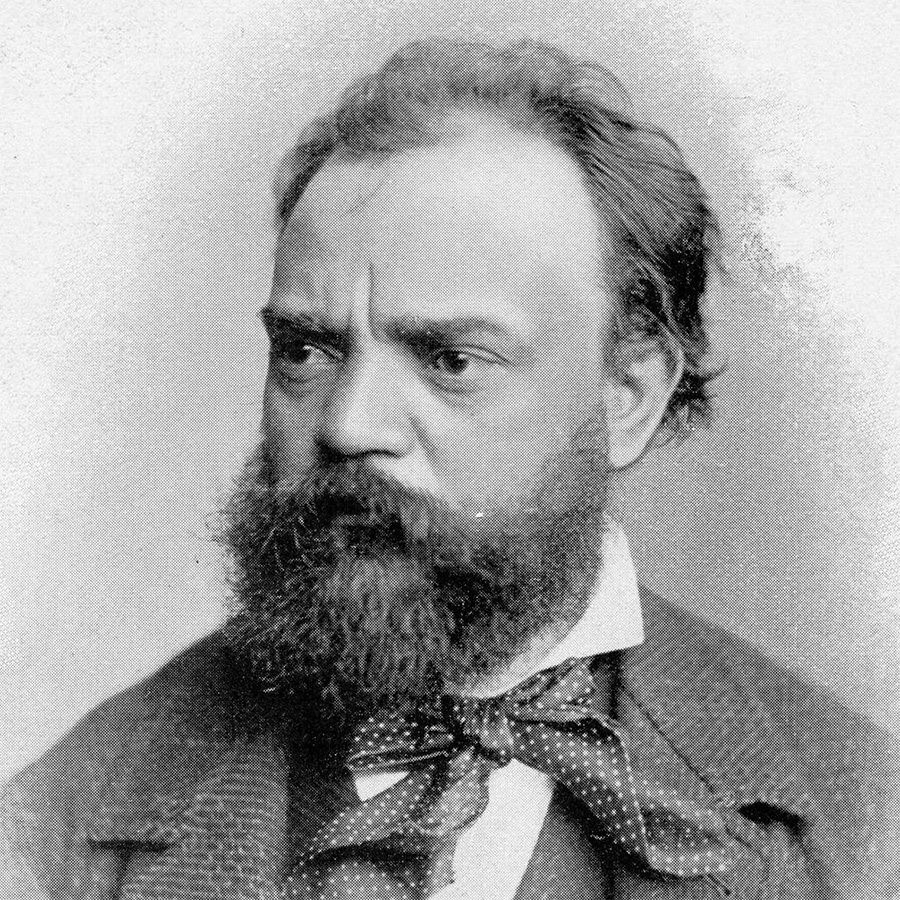
A black-and-white vintage image of Czech composer Antonin Dvorak. He is a white man with a thick beard and dark hair. He wears a dark jacket with a light stripe pattern, a matching vest, and a white dress shirt. He also wears a polka-dotted cravat or scarf tied into a bow underneath his dress shirt’s collar.


Video

Video

Related Resources

Collection Opera

Get out your opera glasses and prepare to take a look at the history and evolution of an art form over four hundred years old. Learn how singers train and condition their voices, become familiar with some of the stage’s most tragic love affairs, and discover how theatre and music combined can tell epic stories in unforgettable ways.

  • Opera Art

Collection Classical Music

Meet great composers, explore the vast musical world of the orchestra, study the science behind the instruments, and discover how classical music is anything but boring.

  • Orchestral Music
  • Chamber Music

Collection Great Composers

Get inside the mind of a composer—from a popular song, to a Broadway musical, to a symphony, how does a composer write music?

  • Composers

Media Instrument Spotter’s Guide

You might see some of these instruments when you come to the Kennedy Center, watch a performance by your school band, or at any other concert you attend! Click the slides to learn more about some of the most frequently spotted instruments in each family.

  • Music Art
  • Musical Instruments

Kennedy Center Education logo


Kennedy Center Education provides resources and experiences that inspire, excite, and empower students and young artists, plus the tools and connections to help educators incorporate the arts into classrooms and learning spaces of all types.

Connect with us!

spacer-24px.pngyoutube.png    facebook.png    twitter.png    instagram.png    email.png

Sign up to stay informed!

Generous support for educational programs at the Kennedy Center is provided by the U.S. Department of Education.

Gifts and grants to educational programs at the Kennedy Center are provided by The Paul M. Angell Family Foundation; Bank of America; Capital One; The Morris and Gwendolyn Cafritz Foundation; Carnegie Corporation of New York; The Ednah Root Foundation; Genesis Inspiration Foundation; Harman Family Foundation; William R. Kenan, Jr. Charitable Trust; the Kimsey Endowment; The Kiplinger Foundation; Laird Norton Family Foundation; Lois and Richard England Family Foundation; Dr. Gary Mather and Ms. Christina Co Mather; The Markow Totevy Foundation; Dr. Gerald and Paula McNichols Foundation; The Morningstar Foundation; Myra and Leura Younker Endowment Fund; The Irene Pollin Audience Development and Community Engagement Initiatives;

Prince Charitable Trusts; Dr. Deborah Rose and Dr. Jan A. J. Stolwijk; Rosemary Kennedy Education Fund; The Embassy of the United Arab Emirates; The Victory Foundation; The Volgenau Foundation; Jackie Washington; GRoW @ Annenberg and Gregory Annenberg Weingarten and Family; and generous contributors to the Abe Fortas Memorial Fund and by a major gift to the fund from the late Carolyn E. Agger, widow of Abe Fortas. Additional support is provided by the National Committee for the Performing Arts..

The content of these programs may have been developed under a grant from the U.S. Department of Education but does not necessarily represent the policy of the U.S. Department of Education. You should not assume endorsement by the federal government.