Media Iphigénie en Tauride
A quick overview of Gluck’s 1779 opera based on the stories of King Agamemnon’s family following the Trojan War.
Born
July 2, 1714
Died
November 15, 1787
Country
Germany
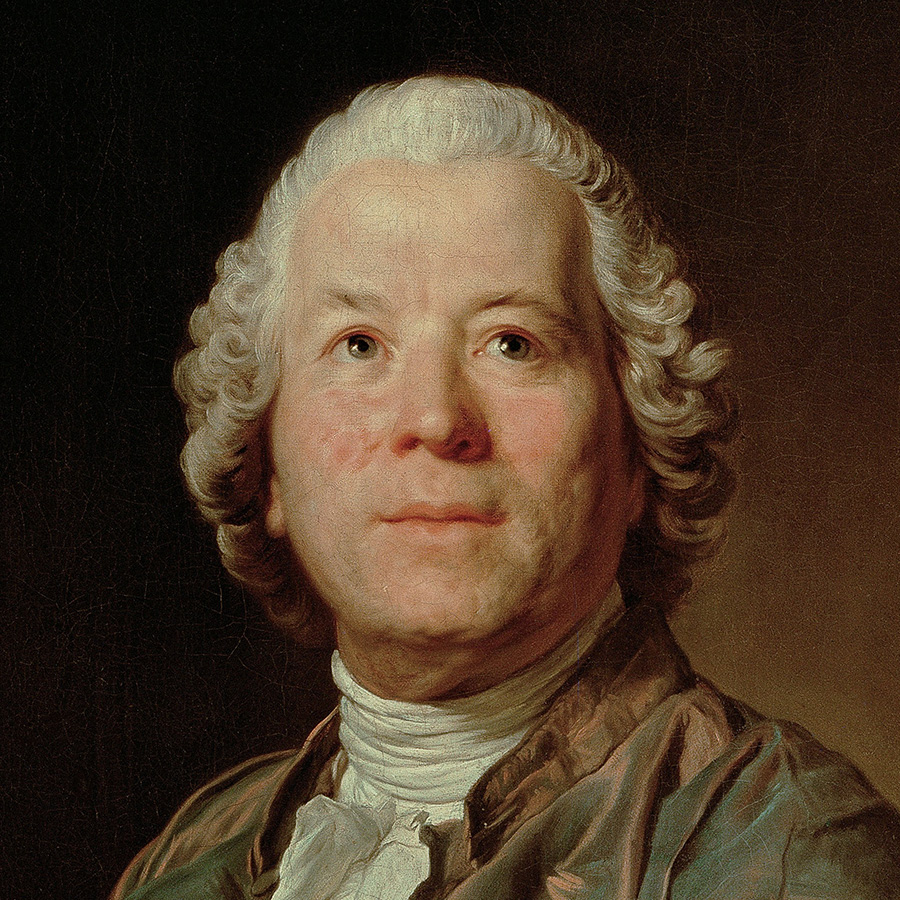
Christoph Willibald Gluck was a composer of Italian and French opera in the early classical period. Born in the Upper Palatinate and raised in Bohemia, both part of the Holy Roman Empire, he gained prominence at the Habsburg court at Vienna. There he brought about the practical reform of opera’s dramaturgical practices for which many intellectuals had been campaigning.
With a series of radical new operas in the 1760s, among them Orfeo ed Euridice and Alceste, Gluck introduced more drama to opera by using orchestral recitative and cutting the usually long da capo aria. His later operas are half the length of a typical baroque opera. Future composers like Mozart, Schubert, Berlioz, and Wagner revered Gluck.
The strong influence of French opera enticed Gluck to move to Paris in November 1773. Fusing the traditions of Italian opera with the rich choruses popular in France, Gluck wrote eight operas with a unique synthesis for the Parisian stage. Iphigénie en Tauride (1779) was a great success and is generally acknowledged to be his finest work. Though he was extremely popular and widely credited with bringing about a revolution in French opera, Gluck’s mastery of the Parisian operatic scene was never absolute. After the poor reception of his Echo et Narcisse (1779), he left Paris and lived out the remainder of his life in Vienna.
Wikipedia contributors, "Christoph Willibald Gluck," Wikipedia, The Free Encyclopedia, https://en.wikipedia.org/w/index.php?title=Christoph_Willibald_Gluck&oldid=1234013979 (accessed July 26, 2024).
|
|
|
|
Video
A quick overview of Gluck’s 1779 opera based on the stories of King Agamemnon’s family following the Trojan War.
Journey through opera’s second “phase”: the Classical era. Expect a review of how and why opera reinvented itself during the Enlightenment as well as an introduction to one of opera’s most enduringly famous composers. (Three guesses who it is…)
Meet great composers, explore the vast musical world of the orchestra, study the science behind the instruments, and discover how classical music is anything but boring.
Get inside the mind of a composer—from a popular song, to a Broadway musical, to a symphony, how does a composer write music?

Kennedy Center Education provides resources and experiences that inspire, excite, and empower students and young artists, plus the tools and connections to help educators incorporate the arts into classrooms and learning spaces of all types.


Generous support for educational programs at the Kennedy Center is provided by the U.S. Department of Education.
Gifts and grants to educational programs at the Kennedy Center are provided by The Paul M. Angell Family Foundation; Bank of America; Capital One; The Morris and Gwendolyn Cafritz Foundation; Carnegie Corporation of New York; The Ednah Root Foundation; Genesis Inspiration Foundation; Harman Family Foundation; William R. Kenan, Jr. Charitable Trust; the Kimsey Endowment; The Kiplinger Foundation; Laird Norton Family Foundation; Lois and Richard England Family Foundation; Dr. Gary Mather and Ms. Christina Co Mather; The Markow Totevy Foundation; Dr. Gerald and Paula McNichols Foundation; The Morningstar Foundation; Myra and Leura Younker Endowment Fund; The Irene Pollin Audience Development and Community Engagement Initiatives;
Prince Charitable Trusts; Dr. Deborah Rose and Dr. Jan A. J. Stolwijk; Rosemary Kennedy Education Fund; The Embassy of the United Arab Emirates; The Victory Foundation; The Volgenau Foundation; Jackie Washington; GRoW @ Annenberg and Gregory Annenberg Weingarten and Family; and generous contributors to the Abe Fortas Memorial Fund and by a major gift to the fund from the late Carolyn E. Agger, widow of Abe Fortas. Additional support is provided by the National Committee for the Performing Arts..
The content of these programs may have been developed under a grant from the U.S. Department of Education but does not necessarily represent the policy of the U.S. Department of Education. You should not assume endorsement by the federal government.


