Media Hansel and Gretel
A quick overview of Humperdinck’s 1893 opera based on the Grimm brothers fairy tale.
Born
September 1, 1854
Died
September 27, 1921
Country
Germany
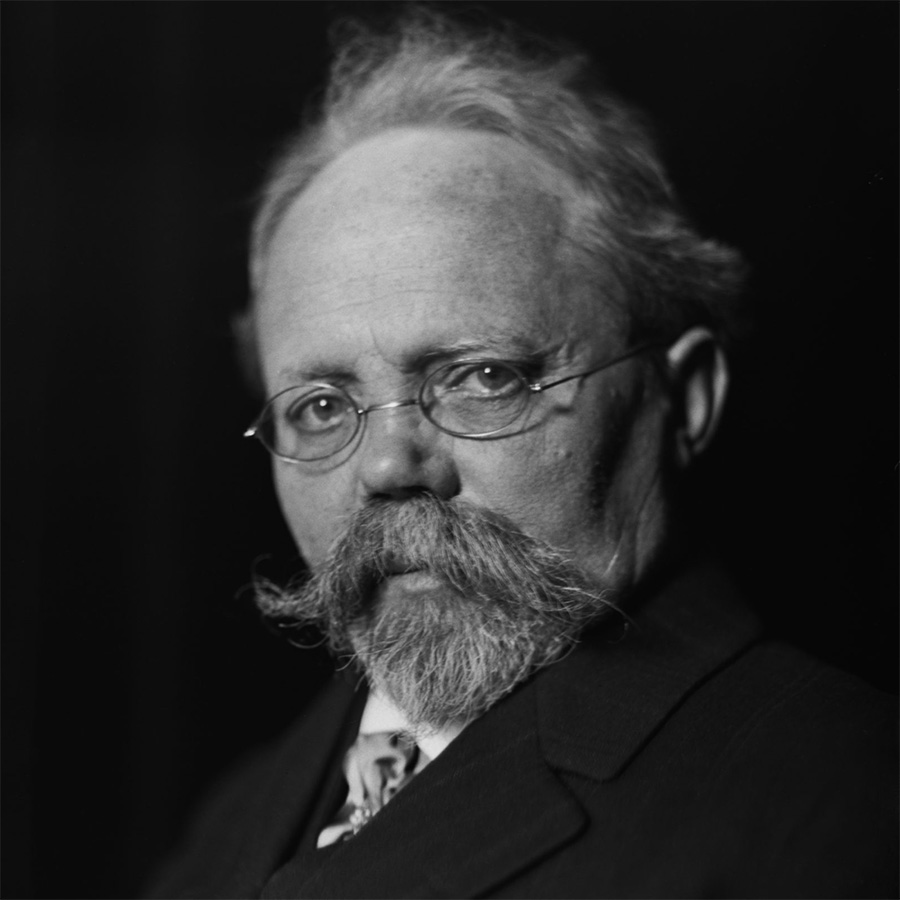
Engelbert Humperdinck was born at Siegburg in the Rhine Province in 1854. After receiving piano lessons, he produced his first composition at the age of seven. His first attempts at works for the stage were two singspiele written when he was thirteen. His parents disapproved of his plans for a career in music and encouraged him to study architecture.
But he began taking music classes under Ferdinand Hiller and Isidor Seiss at the Cologne Conservatory in 1872. In 1876, he won a scholarship that enabled him to go to Munich, where he studied with Franz Lachner and later with Josef Rheinberger. In 1879, he won the first Mendelssohn Award given by the Mendelssohn Stiftung (foundation) in Berlin.
He went to Italy, where he became acquainted with composer Richard Wagner in Naples. Wagner invited him to join him in Bayreuth; and during 1880 and 1881, Humperdinck assisted in the production of Parsifal. He also served as music tutor to Wagner’s son, Siegfried.
After winning another prize, Humperdinck traveled through Italy, France, and Spain. For two years, he taught at the Gran Teatre del Liceu Conservatory in Barcelona. In 1887, he returned to Cologne. He was appointed professor at the Hoch Conservatory in Frankfurt in 1890 and also teacher of harmony at Julius Stockhausen’s Vocal School. By this time, he had composed several works for chorus and a Humoreske for small orchestra, which enjoyed a vogue in Germany.
Humperdinck’s reputation rests chiefly on his opera Hänsel und Gretel, on which he began work in Frankfurt in 1890. He first composed four songs to accompany a puppet show his nieces were giving at home. Then, using a libretto and thematic suggestions by his sister Adelheid Wette that were rather loosely based on the version of the fairy tale by the Grimm Brothers, he composed a singspiel of 16 songs with piano accompaniment and connecting dialogue. By January 1891, he had begun working on a complete orchestration.
The opera premiered in Weimar on December 23, 1893, conducted by Richard Strauss. With its highly original synthesis of Wagnerian techniques and traditional German folk songs, Hänsel und Gretel was an instant and overwhelming success.
Hänsel und Gretel has always been Humperdinck’s most popular work. In 1923, the Royal Opera House (London) chose it for their first complete radio opera broadcast. Eight years later, it was the first opera transmitted live from the Metropolitan Opera in New York.
In 1896, Kaiser Wilhelm II made Humperdinck a Professor and he went to live at Boppard. Four years later, he went to Berlin, where he was appointed head of a Meister-Schule of composition. His students included Basque composer Andrés Isasi, Portuguese composer Luís de Freitas Branco and Kurt Weill.
|
|
|
|
Video
A quick overview of Humperdinck’s 1893 opera based on the Grimm brothers fairy tale.
Uncover the driving forces behind opera’s fiercest era, including Europe’s semi-unhealthy obsession with death, desire, and nationalist identity—all of which sparked a wild streak of artistic innovation and some truly iconic music for the stage.
Meet great composers, explore the vast musical world of the orchestra, study the science behind the instruments, and discover how classical music is anything but boring.
Get inside the mind of a composer—from a popular song, to a Broadway musical, to a symphony, how does a composer write music?

Kennedy Center Education provides resources and experiences that inspire, excite, and empower students and young artists, plus the tools and connections to help educators incorporate the arts into classrooms and learning spaces of all types.


Generous support for educational programs at the Kennedy Center is provided by the U.S. Department of Education.
Gifts and grants to educational programs at the Kennedy Center are provided by The Paul M. Angell Family Foundation; Bank of America; Capital One; The Morris and Gwendolyn Cafritz Foundation; Carnegie Corporation of New York; The Ednah Root Foundation; Genesis Inspiration Foundation; Harman Family Foundation; William R. Kenan, Jr. Charitable Trust; the Kimsey Endowment; The Kiplinger Foundation; Laird Norton Family Foundation; Lois and Richard England Family Foundation; Dr. Gary Mather and Ms. Christina Co Mather; The Markow Totevy Foundation; Dr. Gerald and Paula McNichols Foundation; The Morningstar Foundation; Myra and Leura Younker Endowment Fund; The Irene Pollin Audience Development and Community Engagement Initiatives;
Prince Charitable Trusts; Dr. Deborah Rose and Dr. Jan A. J. Stolwijk; Rosemary Kennedy Education Fund; The Embassy of the United Arab Emirates; The Victory Foundation; The Volgenau Foundation; Jackie Washington; GRoW @ Annenberg and Gregory Annenberg Weingarten and Family; and generous contributors to the Abe Fortas Memorial Fund and by a major gift to the fund from the late Carolyn E. Agger, widow of Abe Fortas. Additional support is provided by the National Committee for the Performing Arts..
The content of these programs may have been developed under a grant from the U.S. Department of Education but does not necessarily represent the policy of the U.S. Department of Education. You should not assume endorsement by the federal government.


