Media Dido and Aeneas
A quick overview of Purcell’s 1689 opera about fate.
Born
September 10, 1659
Died
November 21, 1695
Country
England
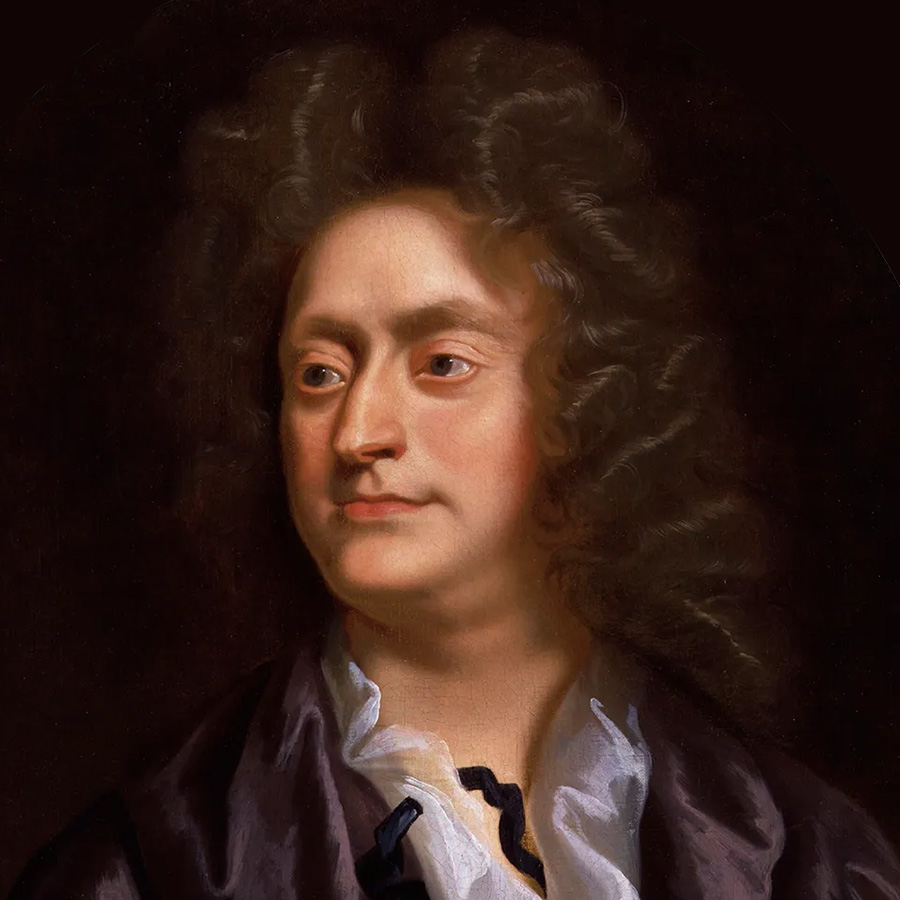
English composer and organist Henry Purcell was a great figure of English opera. He was born in 1659 in Westminster, England. Son of a Gentleman of the Chapel Royal and Master of the Choristers at Westminster Abbey, he learned the fundamentals of his art early on in life. The family lived near the Abbey until his father’s death in 1664.
Although little is known of Purcell’s schooling, he apprenticed in 1673 to John Hingeston, Royal Keeper and Repairer of the Instruments. He also was paid as a copyist and as a tuner for the organ at the Abbey. After the death of his mentor, Matthew Locke, in 1677, Purcell was appointed Composer in Ordinary for the Violins at the Chapel Royal. In 1679, he was named organist at the Abbey.
Purcell spent much of his talent in writing operas and incidental stage music. Most of Purcell’s theatre music was written during the last five years of his life and he supplied music for more than forty plays. Two years after his death, Purcell’s widow published a compilation of his instrumental music, Collection of Ayres, Compos’d for the Theatre, and upon Other Occasions.
|
|
|
|
Purcell Video Bio
A quick overview of Purcell’s 1689 opera about fate.
A brief overview of the dawn of opera, which was born in Italy—or what we now think of as Italy—at the turn of the 17th century. Expect some insight into opera’s many influences as well as a summary of the early genre’s notable features.
Meet great composers, explore the vast musical world of the orchestra, study the science behind the instruments, and discover how classical music is anything but boring.
Get inside the mind of a composer—from a popular song, to a Broadway musical, to a symphony, how does a composer write music?

Kennedy Center Education provides resources and experiences that inspire, excite, and empower students and young artists, plus the tools and connections to help educators incorporate the arts into classrooms and learning spaces of all types.


Generous support for educational programs at the Kennedy Center is provided by the U.S. Department of Education.
Gifts and grants to educational programs at the Kennedy Center are provided by The Paul M. Angell Family Foundation; Bank of America; Capital One; The Morris and Gwendolyn Cafritz Foundation; Carnegie Corporation of New York; The Ednah Root Foundation; Genesis Inspiration Foundation; Harman Family Foundation; William R. Kenan, Jr. Charitable Trust; the Kimsey Endowment; The Kiplinger Foundation; Laird Norton Family Foundation; Lois and Richard England Family Foundation; Dr. Gary Mather and Ms. Christina Co Mather; The Markow Totevy Foundation; Dr. Gerald and Paula McNichols Foundation; The Morningstar Foundation; Myra and Leura Younker Endowment Fund; The Irene Pollin Audience Development and Community Engagement Initiatives;
Prince Charitable Trusts; Dr. Deborah Rose and Dr. Jan A. J. Stolwijk; Rosemary Kennedy Education Fund; The Embassy of the United Arab Emirates; The Victory Foundation; The Volgenau Foundation; Jackie Washington; GRoW @ Annenberg and Gregory Annenberg Weingarten and Family; and generous contributors to the Abe Fortas Memorial Fund and by a major gift to the fund from the late Carolyn E. Agger, widow of Abe Fortas. Additional support is provided by the National Committee for the Performing Arts..
The content of these programs may have been developed under a grant from the U.S. Department of Education but does not necessarily represent the policy of the U.S. Department of Education. You should not assume endorsement by the federal government.


