Media Understanding Arabic Music
Master musician and composer Simon Shaheen, along with his ensemble Qantara, demonstrates the unique sounds in traditional/classical Arab music.
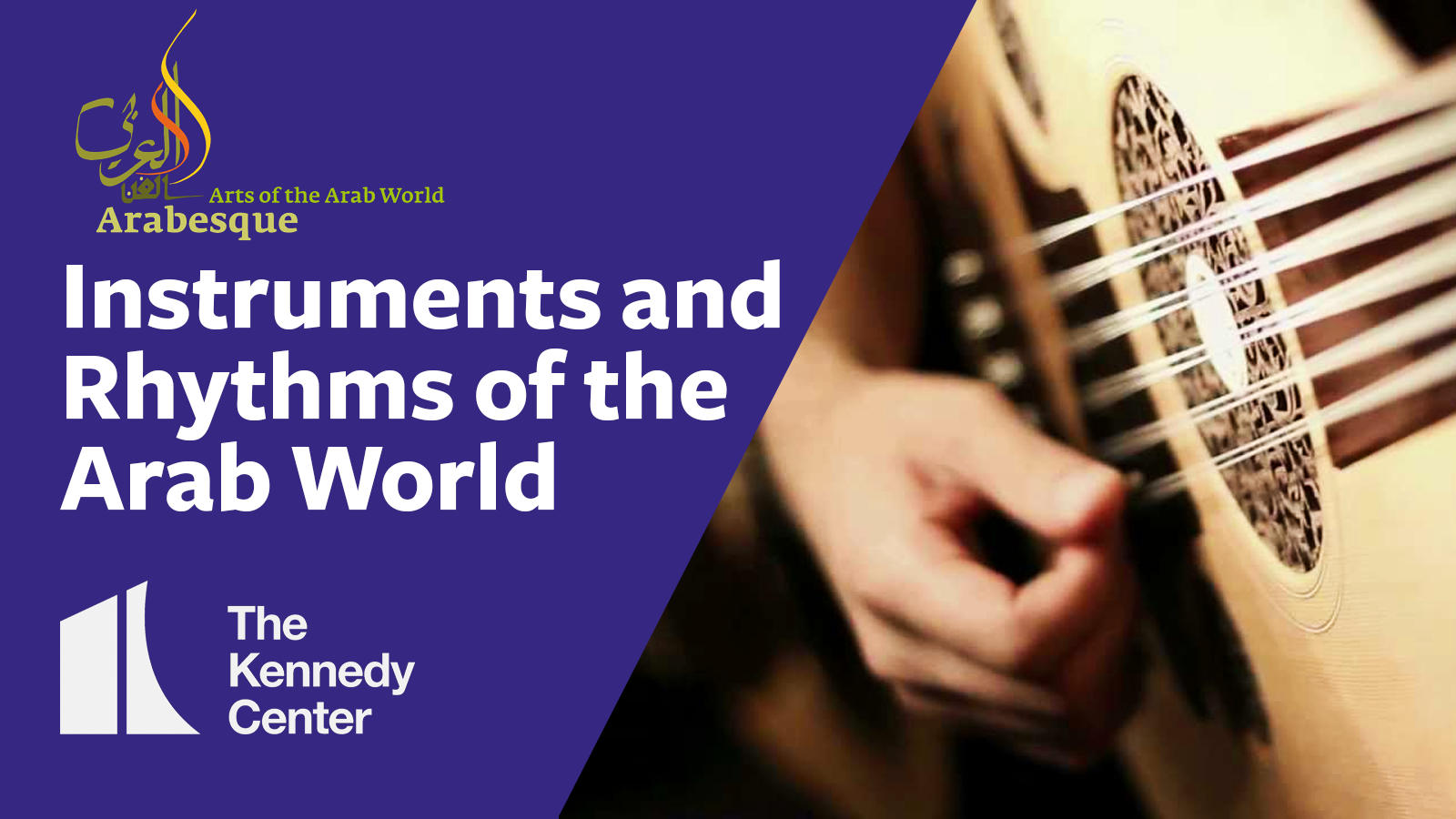
To western ears and eyes, musical instruments and of the Arab World may seem exotic. Host Georges Collinet (NPR’s Afropop Worldwide) is joined by scholars and musicians to explore the sounds and history of Arab musical instruments, such as the qanun, the oud, the rebab and the nay. The rhythms and musical tonality that help define the rich sound of Arabic music are explored in this informative podcast.
Much of what defines the music of the Arab World is the experience, not only for the musician, but also for the listener. In the Arab World, the audience is an active participant, responding to the ornamental and improvisatory offerings of the players, giving vocal feedback while in a state of “musical ecstacy.” Joined by Arabic music scholars and musicians, host Georges Collinet (NPR’s Afropop Worldwide) explores this important bond between musician and audience, and how it creates a unique musical relationship.
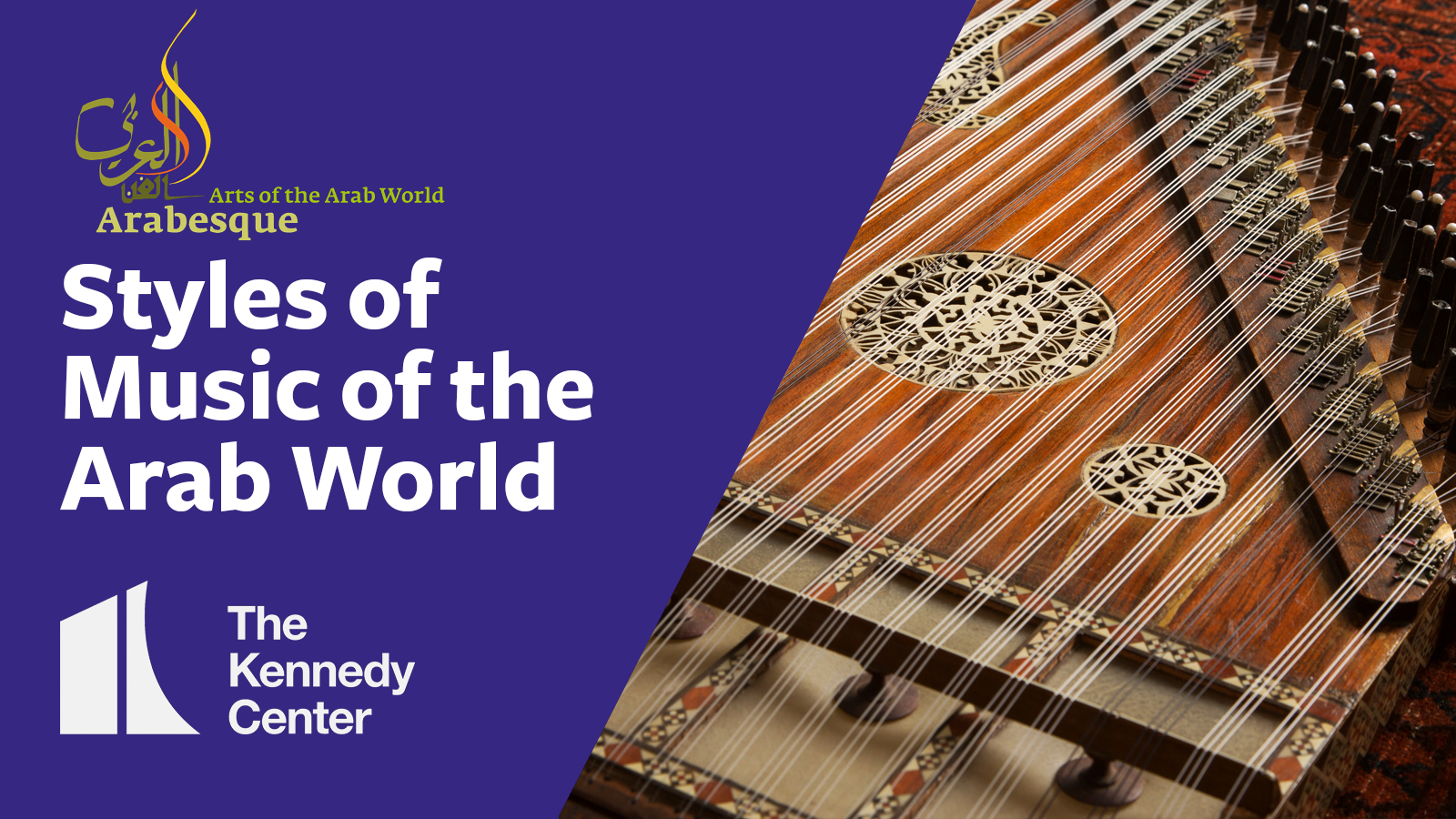
The Arab World spans the width of North African Maghreb, across the Arabian Peninsula and into the Levant. Centuries of indigenous and nomadic traditions have created a musical cultural tapestry of unique regional styles bound by common themes and ideas. In the 21st Century, Arabic folk music traditions have been confronted with increased globalization, from Egyptian mega-star Umm Kulthum, to the worldwide influence of Western media. Host Georges Collinet (NPR’s Afropop Worldwide) is joined by Arabic musicians to discuss the many styles and future of music of the Arab World.
Comprehension
Critical Thinking
Describe the state of “musical ecstasy.” Do other types of musical traditions from other parts of the world have this? Describe and then compare and contrast these practices.
Reflection
What are some of the predictions the musicians make about where Arab music is going? What are some of their reasons for this?
Think of music from your own cultural tradition. Do you see some of the same shifts occurring?
Listening Strategy
As you view, stay focused on your purpose for listening.
Allow students to listen online or to download the episodes in the series. For many students, this may be their first in-depth encounter with Arab music, and multiple listening sessions may be appropriate. Have students look over the accompanying vocabulary handout before listening to the audio tracks.
In part 1, explore the fascinating history and sounds of musical instruments of the Arab World, many of which are direct ancestors of modern Western musical instruments.
In part 2, scholars and musicians to explore unique elements of Arabic musical culture, including improvisation, ornamentation, audience participation, and the state of "musical ecstacy."
In part 3, musicians from across the Arab World join to discuss and demonstrate the diverse musical culture of Arab nations, their common musical roots, and where they believe Arabic music is headed.
For each audio story, engage in discussion around the similarities and differences between Western and Arab music-- the instruments, sounds and subject matter. Consider the traditional, classical and contemporary music of each culture.
Narrator
Georges Collinet
Audio Producer
Richard Paul
Producer
Kenny Neal
Published
September 9, 2019
Master musician and composer Simon Shaheen, along with his ensemble Qantara, demonstrates the unique sounds in traditional/classical Arab music.
Explore a rich tapestry of music, dance, drumming, and theater performances and conversations ranging across a number of countries and regions in Africa.
From the music, theater, and mythology of Ancient Greece, to traditional music of Chinese and Arab cultures, to the lore of Arthurian England, discover past and present civilizations through their arts.
Discover the influence of the ancient Greeks on classical music, opera and modern jazz; and join contemporary Greek musicians and scholars as they discuss cultural and historical influences on the music of Greece today
This 3-part audio series explores different aspects of Indian music: Indian musical instruments; the styles of music across India; and what makes Indian music unique—and where it is going
Chinese music dates back thousands of years and sounds different from Western music thanks to important differences in tone, musical scale, pitch, instrumentation, and individual instruments.

Kennedy Center Education provides resources and experiences that inspire, excite, and empower students and young artists, plus the tools and connections to help educators incorporate the arts into classrooms and learning spaces of all types.


Generous support for educational programs at the Kennedy Center is provided by the U.S. Department of Education.
Gifts and grants to educational programs at the Kennedy Center are provided by The Paul M. Angell Family Foundation; Bank of America; Capital One; The Morris and Gwendolyn Cafritz Foundation; Carnegie Corporation of New York; The Ednah Root Foundation; Genesis Inspiration Foundation; Harman Family Foundation; William R. Kenan, Jr. Charitable Trust; the Kimsey Endowment; The Kiplinger Foundation; Laird Norton Family Foundation; Lois and Richard England Family Foundation; Dr. Gary Mather and Ms. Christina Co Mather; The Markow Totevy Foundation; Dr. Gerald and Paula McNichols Foundation; The Morningstar Foundation; Myra and Leura Younker Endowment Fund; The Irene Pollin Audience Development and Community Engagement Initiatives;
Prince Charitable Trusts; Dr. Deborah Rose and Dr. Jan A. J. Stolwijk; Rosemary Kennedy Education Fund; The Embassy of the United Arab Emirates; The Victory Foundation; The Volgenau Foundation; Jackie Washington; GRoW @ Annenberg and Gregory Annenberg Weingarten and Family; and generous contributors to the Abe Fortas Memorial Fund and by a major gift to the fund from the late Carolyn E. Agger, widow of Abe Fortas. Additional support is provided by the National Committee for the Performing Arts..
The content of these programs may have been developed under a grant from the U.S. Department of Education but does not necessarily represent the policy of the U.S. Department of Education. You should not assume endorsement by the federal government.


