Recommended for Grades 6-12
In this resource, you will:
- Learn the opera’s background and synopsis
- Meet the opera’s composer
Part of the Opera Overviews collection. Explore the history of opera with our resource Understanding Opera.
In this resource, you will:
Part of the Opera Overviews collection. Explore the history of opera with our resource Understanding Opera.
Puccini was a little-known and destitute composer with only two operas to his credit—neither of them particularly successful—when he chose the Abbé Prévost’s famous novel as his next subject.
Although the work had already enjoyed considerable reknown on the opera stage as Jules Massenet’s 1884 masterpiece, Manon, Puccini was convinced that he had finally found a story and characters suited to his own particular strengths, famously declaring that while “[Massenet] feels the subject as a Frenchman, with the powder and the minuets, I shall feel it as an Italian, with desperate passion.” He was correct.
Working with no less than six successive librettists over a three-year period, Puccini consciously avoided duplication of Manon’s scenes (as much as possible), resulting in a more succinct, episodic and dramatic work.
Upon its 1893 premiere, Manon Lescaut was hailed as a critical and popular success, and quickly taken up by opera houses throughout the world. The royalties from Manon Lescaut brought him enormous wealth, and Puccini continued his success with La bohème, Tosca and Madama Butterfly.
An Inn outside of Amiens. The late 1770s, a few years before the French Revolution.
Young students and the staff of the Inn entertain themselves. The stagecoach arrives from Arras, among the passengers are Geronte de Revoir, who is the king’s ancient but incredibly wealthy tax collector, and the lovely young Manon Lescaut, accompanied by her card-sharp brother, Lescaut. A young writer, Renato Des Grieux, falls instantly in love with the girl. When they are momentarily left alone, he engages her in conversation and learns that she is to be locked up in a convent the next day by her father.
Meanwhile, Des Grieux’s friend Edmondo learns that the old Geronte, equally smitten, is planning to kidnap Manon and take her away to Paris with him. After declaring his love for her, Des Grieux persuades Manon to run away with him instead, and they hastily elope in the coach ordered by Geronte. When Geronte finds out, Lescaut convinces him that his sister, whom he believes will not long stand a life of poverty, will soon tire of life with the impoverished young writer and will then happily accept the protection of the wealthy old man.
Geronte’s palace in Paris
Manon has done as her brother predicted and is now Geronte’s mistress. Although she lives in incredible luxury in his Parisian home, she sadly reflects on her former happiness with Des Grieux= and admits that she is already tired of her empty lifestyle. Lescaut secretly arranges that Des Grieux will come to see her later in the evening. An entertainment is arranged by Geronte, during which she is presented for the approval of the royal court.
Afterwards, when she is momentarily alone, Des Grieux returns and Manon passionately begs his forgiveness for having abandoned him. Eventually, they fall into each other’s arms. When Geronte returns unexpectedly, he finds the lovers together and leaves furiously. Almost immediately, he returns with the royal guard. Though the lovers have attempted to escape, they are held up by Manon, who is trying to take with her some of the fabulous collection of jewels she has received from the old man. She is arrested for both theft and prostitution.
The port of Le Havre.
Manon is imprisoned near the port of Le Havre, waiting to be shipped off to a penal colony in Louisiana with other prostitutes. Lescaut and Des Grieux plot an escape for Manon. But, once it becomes clear that they are not going to be successful, Des Grieux desperately begs to be allowed on board. Moved, the captain agrees, and the lovers are together deported to America.
America: A desert
The lovers have escaped New Orleans but are now lost in a desert wilderness. Manon is near death and unable to go any further. Des Grieux tries to find some water for her, and Manon reflects on her life and its failures. When her beloved returns, she finally realizes that there is nothing in her life of any worth, except for her love of Des Grieux. She says her final goodbye and dies in his arms.
Watch

A quick overview of Puccini’s 1918 comic opera inspired by Dante’s Divine Comedy.
A quick overview of Puccini’s 1904 tragic opera.
A quick overview of Puccini’s 1895 passionate melodrama.
A quick overview of Puccini’s 1900 tragic opera.
A quick overview of Puccini’s 1926 unfinished final opera.
Uncover the driving forces behind opera’s fiercest era, including Europe’s semi-unhealthy obsession with death, desire, and nationalist identity—all of which sparked a wild streak of artistic innovation and some truly iconic music for the stage.
A beginner’s guide to some of opera’s most challenging female roles and a unique look at how opera does girl power.
Opera has always been addicted to love, and its romances can range from the hilarious to the dramatic. But don’t expect a standard “Boy Meets Girl” story when you take your seat at the opera house.

Kennedy Center Education provides resources and experiences that inspire, excite, and empower students and young artists, plus the tools and connections to help educators incorporate the arts into classrooms and learning spaces of all types.


Generous support for educational programs at the Kennedy Center is provided by the U.S. Department of Education.
Gifts and grants to educational programs at the Kennedy Center are provided by The Paul M. Angell Family Foundation; Bank of America; Capital One; The Morris and Gwendolyn Cafritz Foundation; Carnegie Corporation of New York; The Ednah Root Foundation; Genesis Inspiration Foundation; Harman Family Foundation; William R. Kenan, Jr. Charitable Trust; the Kimsey Endowment; The Kiplinger Foundation; Laird Norton Family Foundation; Lois and Richard England Family Foundation; Dr. Gary Mather and Ms. Christina Co Mather; The Markow Totevy Foundation; Dr. Gerald and Paula McNichols Foundation; The Morningstar Foundation; Myra and Leura Younker Endowment Fund; The Irene Pollin Audience Development and Community Engagement Initiatives;
Prince Charitable Trusts; Dr. Deborah Rose and Dr. Jan A. J. Stolwijk; Rosemary Kennedy Education Fund; The Embassy of the United Arab Emirates; The Victory Foundation; The Volgenau Foundation; Jackie Washington; GRoW @ Annenberg and Gregory Annenberg Weingarten and Family; and generous contributors to the Abe Fortas Memorial Fund and by a major gift to the fund from the late Carolyn E. Agger, widow of Abe Fortas. Additional support is provided by the National Committee for the Performing Arts..
The content of these programs may have been developed under a grant from the U.S. Department of Education but does not necessarily represent the policy of the U.S. Department of Education. You should not assume endorsement by the federal government.
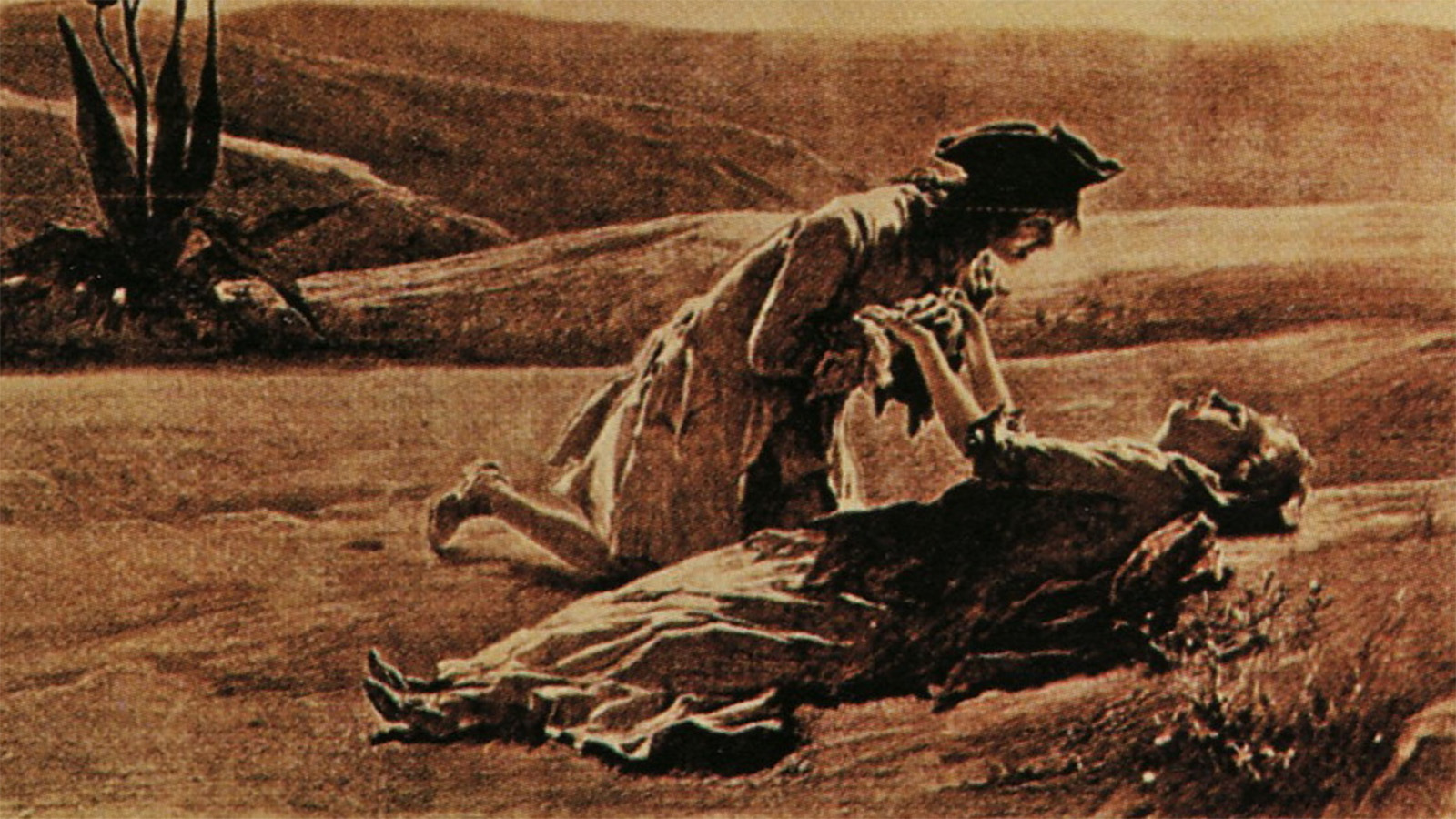 Vespasiano Bignami (1841-1929), Postcard taken from the poster from the premiere of Manon Lescaut, 1893. [


