Recycled Robots
with teaching artist Matt McGee

Teaching artist Matt McGee demonstrates how to craft a unique robot using recycled materials found in the home, along with a few basic art supplies. 

Recommended for Grades 3-12

In this resource you will:

  • Create a robot using recycled materials found in your home
  • Use paint, markers, tape, and other art materials to add details to your robot 
  • Make artistic decisions to determine the aesthetic of your robot as you craft it

Explore our other video-based activities!

Getting Started

Vocabulary You Will Learn:

  • Recycle
  • Sculpture

Materials You Will Need:

  • Found materials that you’d usually put in the recycling, such as cardboard boxes, bottles, and cans 
  • Hot glue (if you have adult assistance!) or strong tape (like duct or masking tape)
  • Scissors
  • Tin foil
  • Permanent markers
  • Paint brushes
  • Paint

Watch the Video

Recycled Robots with Matt McGee

Recycled Robots with Matt McGee

Try It Yourself

How to Create Your Own Recycled Robot

  1. Once you’ve gathered your materials, clean your containers thoroughly and remove the labels. 
  2. Next, start experimenting with how the containers you’ve gathered might fit together to create a robot. How can the various containers and lids you have connect to become a robot? You can experiment with putting them inside, on top of, or alongside each other. Be creative and use your imagination!
  3. Once you’ve decided how your pieces will fit together to create a robot, attach your pieces using hot glue (if you have adult assistance) or a strong tape, like masking or duct tape. 
  4. When the body of your robot is complete, think about how you can use some of the smaller materials you’ve gathered to add onto it. Does your robot have legs? Wheels? What about arms? You can use straws, old markers, or other tubing for this. If you don’t have any of that, you can use aluminum foil to craft any shape you like and attach it to your robot.
  1. If you’d like to make your robot even more detailed, look at some of the smaller pieces you have, like lids and bottle caps. You can also cut up cardboard or plastic to create smaller shapes. These materials can become buttons on a control panel, claws, treads, gears, eyes, or whatever other details you want to add to your robot!
  2. Once you’ve added all the details you want, you can give your robot an even more finished look by adding a coat of paint. You can make it look sleek and shiny, or old and dirty and rusty.
  3. Finally, be sure to clean up your materials!

Think About

In this video, Matt takes us through the process of creating our own robot using recycled containers and a few art supplies. If you want to go even further, think about these questions: 

  • What other materials in your house do you think you could use to create your robot? Do you have any old toys or other objects you don’t want anymore that you could take apart? What about pipe cleaners, or yarn, or glitter? 
  • Come up with a backstory for your robot. Is it brand new, or old and rusty? Does it live here on Earth, or on a distant planet? Does it have a job? How can you incorporate these details into how your robot looks?
  • Think about how your robot moves, what kinds of sounds it might make, and how it might perform a simple task. Can you use these details to act out a short scene with your robot?
  • Where does your robot live; what does its home look like? Can you use some of the leftover materials you have to create an environment for your robot?

Accessibility

Don't forget that you can turn on "Closed Captioning" to view the YouTube video with English captions.


More about the Teaching Artist

Matt McGee, a California native and longtime resident of Maryland, is an award-winning actor and puppet designer. Matt has taught students of all ages in schools, festivals, and summer camps to expand their creative abilities, stretch their imagination, and rely on greater resourcefulness through the process of craft-making. Whether it's puppets, props, masks, stop-motion animation, sculpture, or any other form of theatrical art, Matt's desire is to help others find the magic that can be made from the world around them to tell their own story. To learn more about Matt and his creations, visit his website at www.mattamagical.com.
Video Activity Credits

Resource Production: Kennedy Center Education

Additional Content: Laurie Ascoli

Copy Editing: Sandra Frey; Alyssa Kariofyllis

Revisions: Alice Doré

  • Teaching Artist

    Matt McGee

  • Curriculum & Media Development

    Kennedy Center Education

  • Content Editor

    Laurie Ascoli

  • Revised

    January 14, 2024

Related Resources

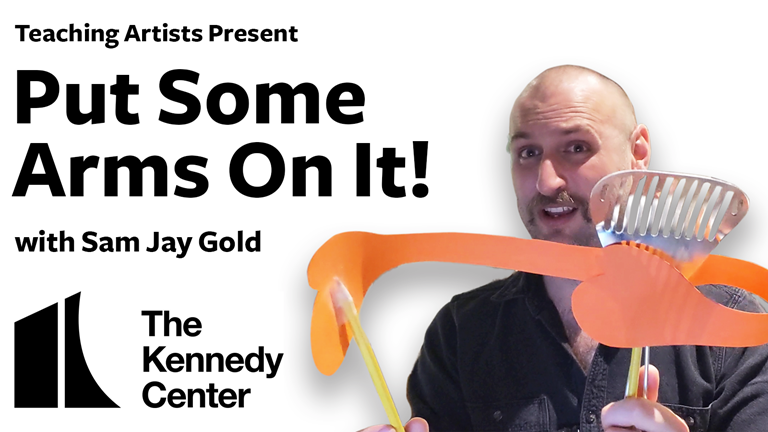
Media Put Some Arms on It!

Teaching artist Sam Jay Gold demonstrates how to create a rod puppet using a common object in your home and a few craft supplies.

JAPAN! culture + hyperculture: Robotopia Rising

Author of Loving the Machine: The Art and Science of Japanese Robots, Tim Hornyak and Japanese robot toy ("jumbo machinders") expert Matt Alt take students on a historical journey detailing anime, manga (including Tetsuwan Atomu's iconic Astro Boy), mechanical karakuri dolls, and the rise of robots and androids in Japan.

  • Discussion/Spoken Word
  • Technology
  • Japan

Lesson A Character Life Box

In this 6-8 lesson, students will analyze the unique characteristics, props, or features of characters from The Shakespeare Stealer. Students will collect props to create a “life box” as clues for interpreting the character’s identity.

  • Grades 6-8
  • Visual Arts
  • English & Literature

Kennedy Center Education logo


Kennedy Center Education provides resources and experiences that inspire, excite, and empower students and young artists, plus the tools and connections to help educators incorporate the arts into classrooms and learning spaces of all types.

Connect with us!

spacer-24px.pngyoutube.png    facebook.png    twitter.png    instagram.png    email.png

Sign up to stay informed!

Generous support for educational programs at the Kennedy Center is provided by the U.S. Department of Education.

Gifts and grants to educational programs at the Kennedy Center are provided by The Paul M. Angell Family Foundation; Bank of America; Capital One; The Morris and Gwendolyn Cafritz Foundation; Carnegie Corporation of New York; The Ednah Root Foundation; Genesis Inspiration Foundation; Harman Family Foundation; William R. Kenan, Jr. Charitable Trust; the Kimsey Endowment; The Kiplinger Foundation; Laird Norton Family Foundation; Lois and Richard England Family Foundation; Dr. Gary Mather and Ms. Christina Co Mather; The Markow Totevy Foundation; Dr. Gerald and Paula McNichols Foundation; The Morningstar Foundation; Myra and Leura Younker Endowment Fund; The Irene Pollin Audience Development and Community Engagement Initiatives;

Prince Charitable Trusts; Dr. Deborah Rose and Dr. Jan A. J. Stolwijk; Rosemary Kennedy Education Fund; The Embassy of the United Arab Emirates; The Victory Foundation; The Volgenau Foundation; Jackie Washington; GRoW @ Annenberg and Gregory Annenberg Weingarten and Family; and generous contributors to the Abe Fortas Memorial Fund and by a major gift to the fund from the late Carolyn E. Agger, widow of Abe Fortas. Additional support is provided by the National Committee for the Performing Arts..

The content of these programs may have been developed under a grant from the U.S. Department of Education but does not necessarily represent the policy of the U.S. Department of Education. You should not assume endorsement by the federal government.