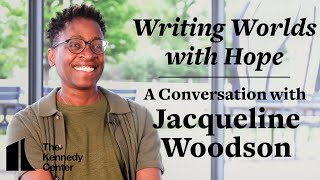
A Conversation with Jacqueline Woodson
We sat down for an inspiring conversation with Kennedy Center Education Artist-in-Residence Jacqueline Woodson about her inspirations, being a writer, and her goals for her residency.
Kennedy Center Education Learning Guide
Jan. 10 - 16, 2024
Genre
Education
 View Digital Program

Move above what divides us.
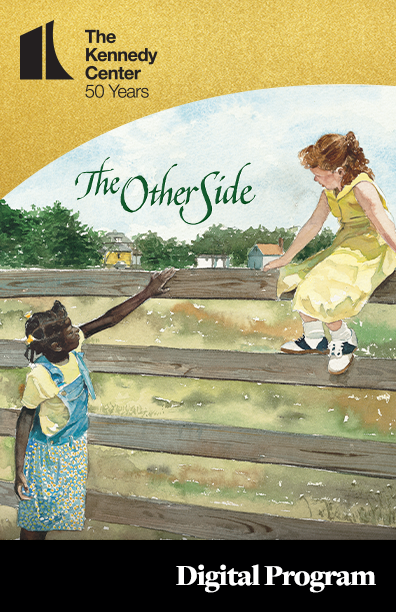
Clover’s mom says it isn’t safe to cross the fence that segregates their African American side of town from the white side where Anna lives. But the two girls strike up a friendship, and get around the grown-ups’ rules by sitting on top of the fence together. Education Artist-in-Residence Jacqueline Woodson’s simple yet powerful book The Other Side comes to life in a dance piece from choreographer and Kennedy Center Artistic Advisor for Dance Education Hope Boykin. When literal and figurative fences keep us apart, can we find the courage—and creativity—to knock them down? Adapted from the book by Jacqueline Woodson, illustrated by E.B. Lewis, directed and choreographed by Hope Boykin, and with original score by Ali Jackson.
January 10-12 & 16, 2024
This event is no longer available. Registration for this event has closed.
Family Theater, recommended for grades 2-8
Estimated duration is approximately 45 minutes.
Please see registration form for availability of sensory-friendly performance options.
Event image: Daisy Denicore and Tanasia Lane. Photo by Jati Lindsay.
CASEL Competencies (Social and Emotional Learning)
Performance
Performers
Sound
Lighting
What to Bring
Resources
The Other Side is a dance piece that tells the story of two young girls, and throughout the work, you’ll see the dancers playing some backyard games you might recognize like Red Rover, Patty Cake, and Double Dutch. How many games can you spot? How do they look different on stage in a performance than when you play them at home?
While watching the dancers perform, look for:
Annie and Clover decide to become activists and take steps toward making their world a better place. Think of something you (and your friends) can do to make the community you live in a better place. Think of an issue and make a plan for a small thing you can do to solve the problem. And then do it!
Trailer for The Other Side
Here are some links to other resources to help you continue exploring.
Claiming Personal Power: Resources to encourage youth self-empowerment
Youth Activism Project: This organization promotes and supports youth-led campaigns in the United States and globally.
Dosomething.org: A clearinghouse for teen activism—from disability rights to water conservation to positivity campaigns—that can link you to the causes closest to your heart and interests.
Writer: Kaitlyn Tureaud
Editor: Tiffany A. Bryant
Producer: Tiffany A. Bryant
Accessibility Consultant: Office of Accessibility
We’re thrilled that you’ve joined us for a performance this season! We would like to hear from your students and you about the experience. After the performance, follow these steps to share feedback:
Each survey will take approximately 5 minutes to complete. The results will be used to inform future Kennedy Center Education program planning. Thank you in advance for sharing your valuable perspective!
We sat down for an inspiring conversation with Kennedy Center Education Artist-in-Residence Jacqueline Woodson about her inspirations, being a writer, and her goals for her residency.
Award-winning author Jacqueline Woodson talks about the creation and adaptation of her book, Locomotion, for the stage.
They were rebels, they were American, and they dared to be different: the makers of modern dance.
Want to understand how dance works? Learn the five elements that make up the foundation of this art form: body, action, time, space, and energy.
In this video, experience a sample of the Dancing Wheels Company & School’s training methods in physically integrated dance, a method that allows those with and without disabilities to learn and perform dance together. Learning physically integrated dance focuses on translation, the way we make movements between “stand-up” and “sit-down dancers.” Join professional dancers Mary Verdi-Fletcher and Sara Lawrence-Sucato as they demonstrate how to do a brush, a turn, and a jump, offering instruction for a dancer who uses a wheelchair and a dancer who is standing.
Whether you’re feeling happy, angry, peaceful, or any mix of emotions, you can use dance as a tool for self-expression. Join dance teaching artist Erika Malone as she explores feelings and uses them as inspiration for moving your body. In just 10 minutes, you can choreograph a dance that expresses your emotions, both big and small!
What’s the difference between troika and hula? How can dance tell stories and preserve histories? Discover dance and its impact on culture by exploring Ancient Egyptian rituals and Native American legends. Learn how dance tells stories and poems through a language of movement and music, and pick up a few moves yourself.
Lesson plans, activities, and other resources that focus on telling stories through theater, music, dance, writing, and visual arts.
Professional development for educators. Summer intensives for young artists. Teaching artist guided activities. Performances for young audiences. Classroom lesson plans. Arts-focused digital media.
Kennedy Center Education offers a wide array of resources and experiences that inspire, excite, and empower students and young artists, plus the tools and connections to help educators incorporate the arts into classrooms of all types.
Our current teaching and learning priorities include:
A robust collection of lesson plans, articles, and activities that allow students and educators of all ages to explore and learn about the arts and arts integration.
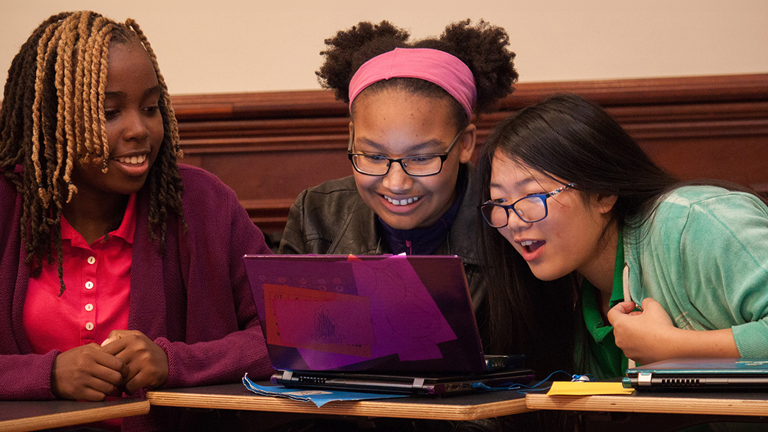
In-person and virtual performances, along with supporting educational content to help guide learning.
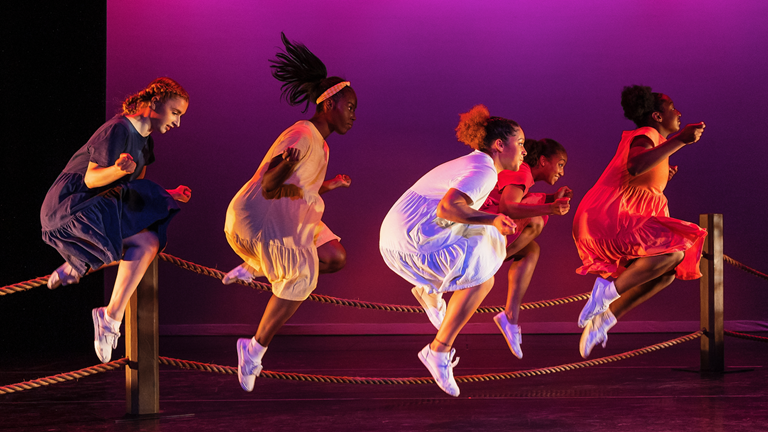
Current approaches to arts integration in the classroom, inclusion, rigor, and adopting an arts integration approach at the school and district level.

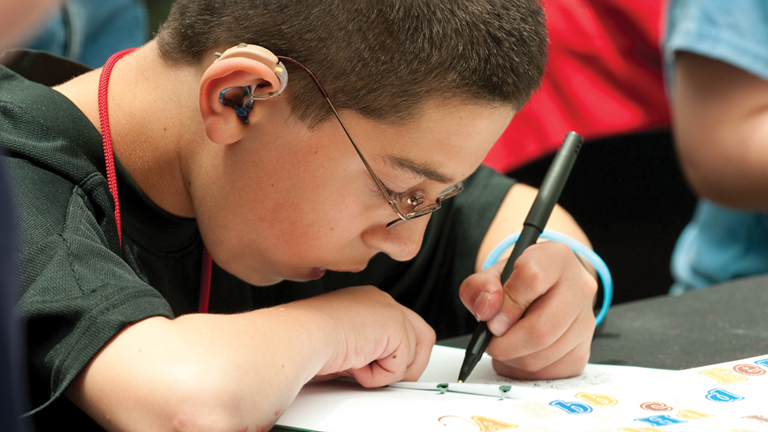
An asynchronous online course that invites educators and administrators to think about our students’ disabilities as social and cultural identities that enrich our classrooms and communities.

The Vice President of Education is generously endowed by the A. James & Alice B. Clark Foundation.
Generous support for educational programs at the Kennedy Center is provided by the U.S. Department of Education.
Gifts and grants to educational programs at the Kennedy Center are provided by The Paul M. Angell Family Foundation; Bank of America; Capital One; The Morris and Gwendolyn Cafritz Foundation; Carnegie Corporation of New York; The Ednah Root Foundation; Genesis Inspiration Foundation; Harman Family Foundation; William R. Kenan, Jr. Charitable Trust; the Kimsey Endowment; The Kiplinger Foundation; Laird Norton Family Foundation; Lois and Richard England Family Foundation; Dr. Gary Mather and Ms. Christina Co Mather; The Markow Totevy Foundation; Dr. Gerald and Paula McNichols Foundation; The Morningstar Foundation; Myra and Leura Younker Endowment Fund; The Irene Pollin Audience Development and Community Engagement Initiatives;
Prince Charitable Trusts; Dr. Deborah Rose and Dr. Jan A. J. Stolwijk; Rosemary Kennedy Education Fund; The Embassy of the United Arab Emirates; The Victory Foundation; The Volgenau Foundation; Jackie Washington; GRoW @ Annenberg and Gregory Annenberg Weingarten and Family; and generous contributors to the Abe Fortas Memorial Fund and by a major gift to the fund from the late Carolyn E. Agger, widow of Abe Fortas. Additional support is provided by the National Committee for the Performing Arts..
The content of these programs may have been developed under a grant from the U.S. Department of Education but does not necessarily represent the policy of the U.S. Department of Education. You should not assume endorsement by the federal government.