Article Process Drama: Taking a Walk in Someone Else's Shoes
Process drama is an imaginative tool for non-arts teachers and students to explore issues and solve problems.
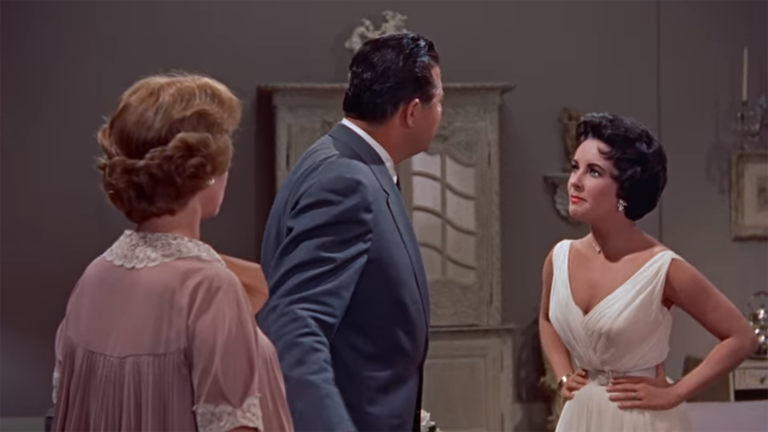
In this 9-12 lesson, students will analyze the setting, plot, and character development of Tennessee Williams’s play, A Streetcar Named Desire. They will discuss Williams’s craft as a playwright and his impact on American theater. Students will participate in a group reading and analysis of the play.
Students will:
Editable Documents: Before sharing these resources with students, you must first save them to your Google account by opening them, and selecting “Make a copy” from the File menu. Check out Sharing Tips or Instructional Benefits when implementing Google Docs and Google Slides with students.
Books
Teachers should obtain copies of the play, A Streetcar Named Desire from their school collection or a local library. Preview the play by reading A Streetcar Named Desire Excerpt, and exploring the following resources: PBS American Masters: Tennessee Williams and The Tennessee Williams Annual Review, The Setting of A Streetcar Named Desire.
Students should read the Tennessee Williams: Themes and Forms, which introduces characteristics of Williams’s works as well as those of American playwrights in the mid-20th century. Have students read and discuss Tennessee Williams’ Compelling Characters and Tennessee Williams Biography.
Modify handouts, text, and utilize assistive technologies as needed.
Original Writer
Jayne Karsten
Adaptation
Jen Westmoreland Bouchard
Editor
JoDee Scissors
Updated
November 20, 2021
Process drama is an imaginative tool for non-arts teachers and students to explore issues and solve problems.
How theater and visual arts can help to engage your students to read.
Tennessee Williams’ play The Glass Menagerie used unconventional techniques to get to what he said was “a closer approach to the truth.”
Take a peek behind the red curtain and discover the artistry and history behind the world of theater. Explore the playwriting process first-hand, learn about the cultural impact of performance, and read and perform some of the most influential works of the 20th century.

In this 9-12 lesson, students will examine the complicated dynamics of families inCat on a Hot Tin Roof, by Tennessee Williams, andLong Day’s Journey into Night, by Eugene O’Neill. Students will apply their understanding of thematic relationships to write a one-act play or play script.
In this 9-12 lesson, students will examine the impact of living in an early 20th century industrialized society through Eugene O’Niell’s play, The Hairy Ape. Students will analyze O’Neill’s portrayal of a world in which spiritual, communal, and behavioral values of the past have been displaced by the lure of technology, materialism, and patterns of cultural barbarism.

Kennedy Center Education provides resources and experiences that inspire, excite, and empower students and young artists, plus the tools and connections to help educators incorporate the arts into classrooms and learning spaces of all types.


Generous support for educational programs at the Kennedy Center is provided by the U.S. Department of Education.
Gifts and grants to educational programs at the Kennedy Center are provided by The Paul M. Angell Family Foundation; Bank of America; Capital One; The Morris and Gwendolyn Cafritz Foundation; Carnegie Corporation of New York; The Ednah Root Foundation; Genesis Inspiration Foundation; Harman Family Foundation; William R. Kenan, Jr. Charitable Trust; the Kimsey Endowment; The Kiplinger Foundation; Laird Norton Family Foundation; Lois and Richard England Family Foundation; Dr. Gary Mather and Ms. Christina Co Mather; The Markow Totevy Foundation; Dr. Gerald and Paula McNichols Foundation; The Morningstar Foundation; Myra and Leura Younker Endowment Fund; The Irene Pollin Audience Development and Community Engagement Initiatives;
Prince Charitable Trusts; Dr. Deborah Rose and Dr. Jan A. J. Stolwijk; Rosemary Kennedy Education Fund; The Embassy of the United Arab Emirates; The Victory Foundation; The Volgenau Foundation; Jackie Washington; GRoW @ Annenberg and Gregory Annenberg Weingarten and Family; and generous contributors to the Abe Fortas Memorial Fund and by a major gift to the fund from the late Carolyn E. Agger, widow of Abe Fortas. Additional support is provided by the National Committee for the Performing Arts..
The content of these programs may have been developed under a grant from the U.S. Department of Education but does not necessarily represent the policy of the U.S. Department of Education. You should not assume endorsement by the federal government.