• Theater Art
  • Plays
  • Playwrights

Tennessee Williams + The Glass Menagerie
Meet the artist through one of their most important works

During the 1930s, American theater was changing into a serious art form. In 1945, Mississippi native Tennessee Williams traveled to New York City with his lyrical, poetic The Glass Menagerie and changed how American plays looked and sounded. Williams created a colorful cast of outcasts and escapists—characters who invent beautiful fantasy worlds to survive their difficult and sometimes ugly lives. He also used unconventional techniques to get to what he said was “a closer approach to the truth.”

Recommended for grades 6-12

In this resource, you’ll:

  • Explore how Tennessee Williams’ path and historical context led him to create The Glass Menagerie
  • Discover 1930/40s America and what American culture looked like at that time
  • Unpack the elements of The Glass Menagerie and how they contribute to the play’s timelessness and impact

Part of the Artist + Work collection.

Son of the South

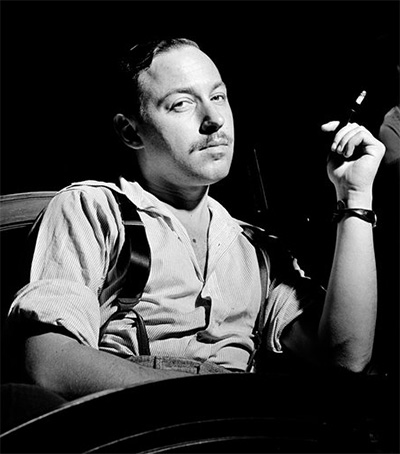
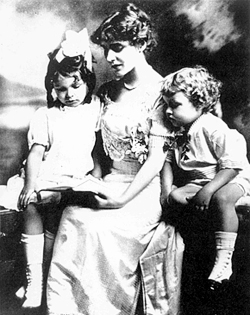
Tennessee WilliamsThomas Lanier Williams was born in 1911 in Columbus, Mississippi. His father traveled frequently for a shoe company, leaving Williams, his older sister Rose, and his younger brother Dakin, to be raised by their overprotective mother, Edwina. Only 16 months apart, Williams bonded strongly with the shy, reclusive Rose.

When the family moved to urban St. Louis, Missouri, Williams felt like an outcast in school and suffered from bouts of depression. It was difficult for him to adjust to the city and he began to write because, he said, “I found life unsatisfactory.” In truth, life was hard for the entire family. His parents’ marriage was rocky, and Rose—suffering from schizophrenia—eventually underwent a lobotomy, an invasive brain operation that was thought to be a cure at the time. Rose was never the same after the procedure.

As Williams got older, he studied poetry, worked odd jobs, attended several different colleges, and wrote plays—several of which were produced at the University of Iowa. A southerner by birth, he naturally set most of his plays in the American South. Basing his characters on his life and the lives of his family, the “outsider” Williams turned his sense of isolation and pain into crushing words. Then at 28, he decided to move to New Orleans and essentially reinvent himself, changing his first name from Thomas to Tennessee.

Throughout his life, Williams struggled to fit in and find some kind of emotional peace. He turned to alcohol and drugs to dull his pain—even after he had become a successful playwright. Williams once said that “success and failure are equally disastrous.” Sadly, he never enjoyed his fame and wealth. 

Over the course of his long career, this 1979 Kennedy Center Honoree won nearly every major theater award for drama including the Pulitzer Prize—and was awarded the Presidential Medal of Freedom in 1980.  He remains one of America’s most popular and frequently produced playwrights. Tennessee Williams died of complications from drug and alcohol abuse on February 25, 1983.
“Truth in the Pleasant Disguise of Memories”   

glass_menagerie-4-169.jpg

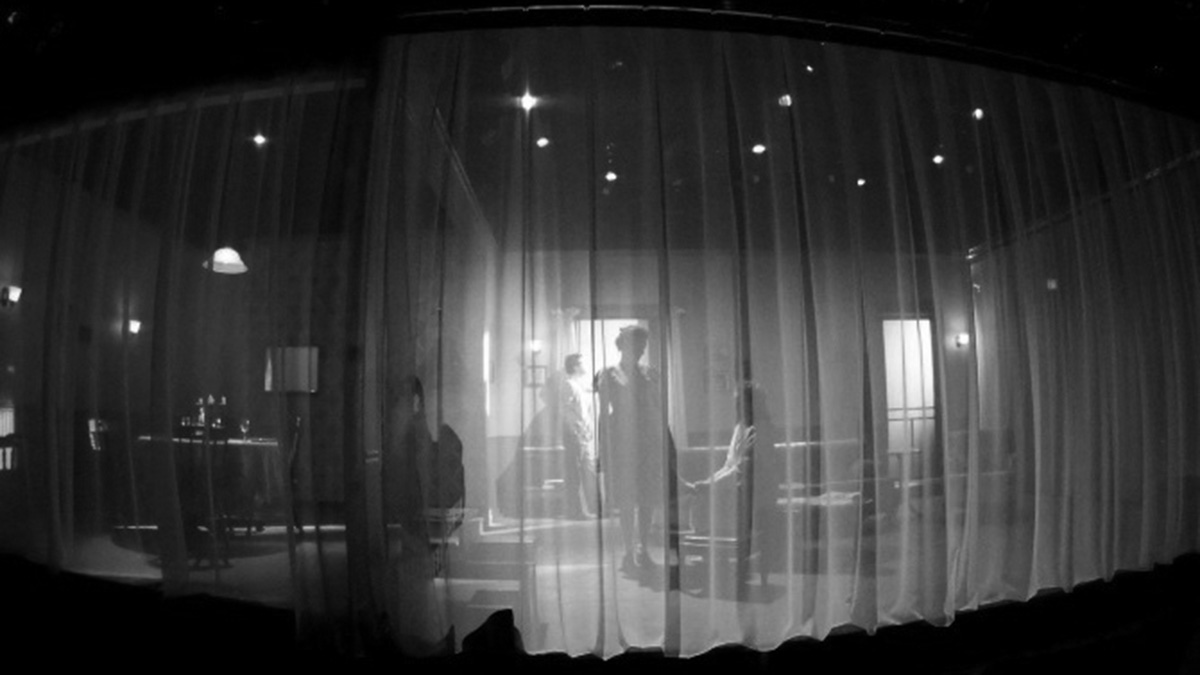
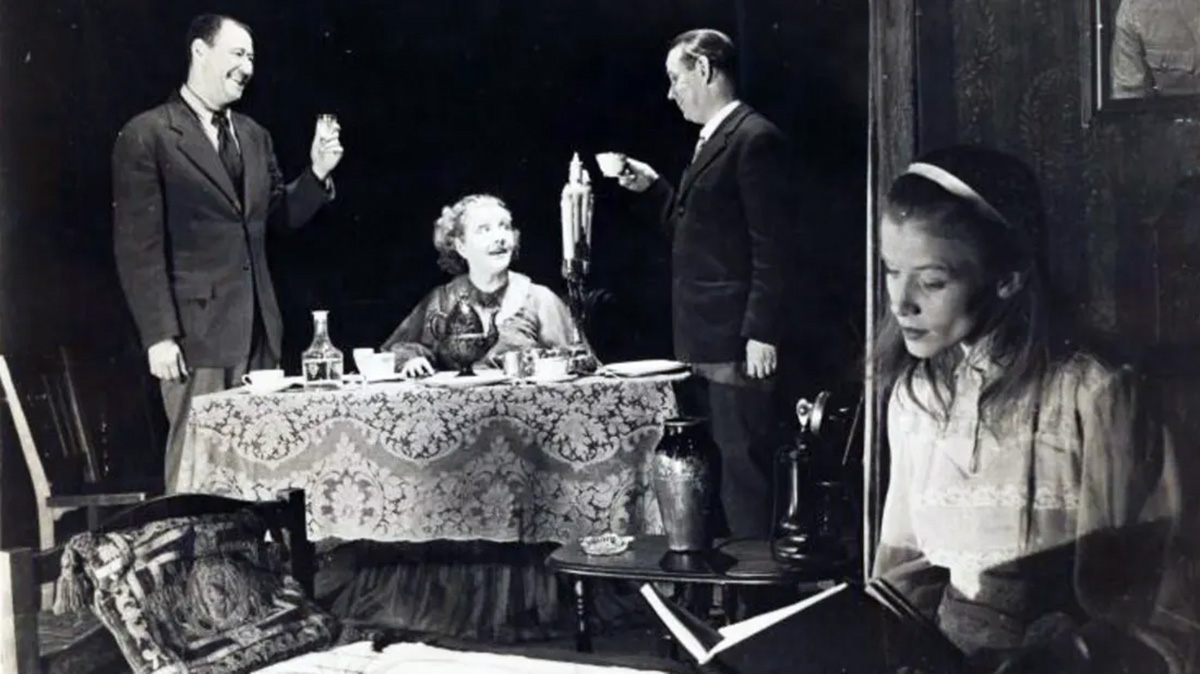
In The Glass Menagerie, the gritty story of a Depression-era family is told with poetic language, dreamlike music, and nonrealistic set design. Nothing is exactly real. The audience watches much of the onstage action through a thin, semi-transparent curtain called a scrim. Williams intended that the curtain depict “an atmosphere of memory.” In fact, Williams lets us know immediately that the play will be dreamlike—and then tells us exactly how the play works.

The play opens with Tom Wingfield—the narrator and Williams’ alter ego—telling us:  "Yes, I have tricks in my pocket, I have things up my sleeve. But I am the opposite of a stage magician. He gives you illusion that has the appearance of truth. I give you truth in the pleasant disguise of illusion." With these words, Williams clues us into his writing process.

Meet the Real Williams Family

Williams FamilyWilliams’ autobiographical play is set during the Depression in a lower-middle class St. Louis neighborhood, similar to the neighborhood in which Williams grew up. The Wingfield family—mother Amanda, son Tom, and daughter Laura—live in a dim, cramped apartment that faces an alley, as did the Williams family.

But the similarities between the real Williams family and fictional Wingfield family don’t end there:

  • The fictional Tom—like the young Williams—dreams of being a writer, but works at a dreary shoe warehouse and longs to escape. (Interestingly, Williams worked for a shoe company, just like his father did).
  • Williams’ father was absent much of the time. The fictional Mr. Wingfield has abandoned his family and appears onstage only as a portrait.   
  • Like Williams’ mother Edwina, Amanda runs the household and clings to memories of her Southern youth in order to escape the reality of her life.
  • Both Edwina and Amanda were from wealthy families and proud of their Southern heritage.
  • Both women married men who came from less wealthy families. Both men were salesmen.
  • Edwina was overprotective of her children—just like Amanda.
  • Williams’ sister Rose was shy, in poor health, and had a glass collection—just like the fictional Laura.

The comparison between Rose and the fictional Laura is particularly heartbreaking. It was Rose’s schizophrenia that haunted Williams and comes up time and again in his plays. He wrote The Glass Menagerie soon after Rose was forced to have a lobotomy. The operation left her barely functional and she spent the remainder of her life institutionalized. Williams never forgave himself for not protecting Rose from having the operation. His guilt clearly runs deeply through The Glass Menagerie—especially at the end of the play when Tom says: “Oh, Laura, Laura, I tried to leave you behind me, but I am more faithful than I intended to be!”

Why the Play Endures: Story

glass_menagerie-3-169.jpgAnthony RossLaurette TaylorEddie Dowling and Julie Haydon in the Broadway production of The Glass Menagerie (1945)

The Glass Menagerie unfolds as Tom Wingfield remembers his past, his mother Amanda, and sister Laura. There is no father in the play, as Amanda’s husband deserted the family years before. In fact, the only sign of Tom’s long-absent father is an enormous portrait of him that hangs in the Wingfield apartment.

Amanda longs for her youth and constantly talks about the string of gentlemen callers who would frequently visit her when she was a young Southern belle. And she is obsessed with finding a suitor for Laura, her crippled, insecure daughter. In order to expose Laura to the wider world, Amanda has enrolled her in a business college. But Laura, self-conscious about her limp, wants nothing more than to stay home and spend time with her collection of small glass animals—her glass menagerie. 

Amanda learns that Laura has dropped out of business college and has been wandering the city, too shy to continue her studies. Alarmed, Amanda decides that Laura’s last hope for a successful life is to get married. She tells Tom to find a suitable young man for Laura. He makes plans to bring home Jim, an acquaintance from work. Amanda is thrilled and plans a dinner for the four of them. Laura quickly realizes that Jim is the boy whom she loved in high school—though Jim never even noticed her. After dinner, Jim and Laura are left alone in the living room, talking intimately. They dance, and Jim accidentally knocks over and breaks one of Laura’s glass animals—a unicorn. Jim kisses Laura, then admits that he has a serious girlfriend. Laura is devastated, but gives Jim the broken unicorn as a souvenir of their evening together.

Amanda blames Tom for introducing Laura to an engaged man. As Amanda comforts Laura, Tom steps onto the fire escape to watch them. Will he finally leave his family once and for all? Will Amanda and Laura continue to live in their suffocating dream-world? Will this family ever tell their secrets and truths to each other?

Or are they doomed to continue to delude each other—and themselves?

Why the Play Endures: Production

The Glass Menagerie is considered to be Williams’ masterpiece not only for its story and characters, but also because of its inventive, theatrical elements including:

  • The play’s form and structure. Tom, the play’s narrator, directly addresses the audience at the beginning of the play. (This is sometimes called “breaking the fourth wall.”) He also directs some action from the stage. For example, just before Amanda delivers a monologue about her gentlemen callers, Tom “motions for music and a spot of light on Amanda.”
  • Language. The characters speak in lyrical, poetic language. The characters are so self-deluded that they can only speak in a heightened, elaborate way. At one point, Amanda tells Tom, “I know your ambitions do not lie in the warehouse, that like everybody in the whole wide world—you've had to—make sacrifices, but—Tom—Tom—life's not easy, it calls for—Spartan endurance!”
  • Metaphor. The fire escape outside the Wingfield apartment is a metaphor (or a symbol) for something else. In his stage directions, Williams tells us that the fire escape is “a structure whose name is a touch of accidental poetic truth, for all of these huge buildings are always burning with the slow and implacable fires of human desperation.” Tom often goes on the fire escape to smoke, foreshadowing his final escape. Another metaphor is Laura’s unicorn. It’s unusual, rare, and delicate—just like Laura. After Jim accidentally breaks the unicorn, it looks just like an ordinary horse—and Laura has no use for it anymore. She gives the ordinary-looking horse to the ordinary Jim and retreats into her fantasy world of the glass menagerie.
  • Visuals. Williams makes use of projections—of both photos and words—that comment on much of the action as it happens. The projections were included in the play’s 1944 Chicago premiere, but were not used in the original Broadway production in 1945. Descriptions of the projections appear in the published script.
  • Lighting. Williams is very particular about the lighting design used in the play. In the play’s opening, Tom tells us, “Being a memory play, it is dimly lighted, it is sentimental, it is not realistic.”
  • Music. A particular tune (called “The Glass Menagerie”) recurs throughout the play. The piece was written specifically for the play. Sometimes the characters hear the music…and sometimes they don’t. In the play’s original production notes, Williams says that the music “serves as a thread of connection and allusion between the narrator with his separate point in time and space and the subject of his story.” And as Tom says in the opening of the play, “In memory, everything seems to happen to music.”

Learn More

The Glass Menagerie has been produced for the stage numerous times, but also for the screen. Below are some of the more notable productions.

Top 10 Notes: The Glass Menagerie

Top 10 Notes: The Glass Menagerie

The Glass Menagerie - Act One (1964)

The Glass Menagerie - Act One (1964)

Starring Jessica Tandy, Montgomery Clift, Julie Harris and David Wayne. Directed By Howard Sackler. Recorded in 1964 by Caemdon Records for the Theatre Recording Society.

The Glass Menagerie - Act Two (1964)

The Glass Menagerie - Act Two (1964)

Starring Jessica Tandy, Montgomery Clift, Julie Harris and David Wayne. Directed By Howard Sackler. Recorded in 1964 by Caemdon Records for the Theatre Recording Society.

CBS Playhouse: The Glass Menagerie (1966)

CBS Playhouse: The Glass Menagerie (1966)

Shirley Booth ... The Mother
Hal Holbrook ... Her Son
Barbara Loden ... Her Daughter
Pat Hingle ... The Gentleman Caller

Interpreting Tennessee Williams (Working In The Theatre #331)

Interpreting Tennessee Williams (Working In The Theatre #331)

A remarkable one-time-only meeting of cast members from two concurrent Williams revivals on Broadway—Natasha Richardson, John C. Reilly and Chris Bauer of A Streetcar Named Desire and Jessica Lange and Christian Slater of The Glass Menagerie. Originally taped - April, 2005

Kennedy Center Logo

Related Resources

Collection Theater

Take a peek behind the red curtain and discover the artistry and history behind the world of theater. Explore the playwriting process first-hand, learn about the cultural impact of performance, and read and perform some of the most influential works of the 20th century.

  • Theater Art

Media August Wilson + Fences

August Wilson was one of America’s most significant and successful playwrights, known for his accurate portrayal of the experiences of Black Americans in the mid-20th century. Learn more through this overview of his play Fences.

  • Theater Art
  • Plays
  • Playwrights
  • African-American History

Media It's Not Just a Stage

Here’s a handy guide to some basic stage directions, the most common parts of a theater, and different types of theater spaces

  • Theater Art
  • Technical Theater
  • Backstage

Media Ellipsoidal Reflector Spotlights

One of the jobs of a lighting designer is to be an illusionist; to convince the audience they’re somewhere special. This video series will show you some of the tricks and gear used to make that happen.

  • Theater Art
  • Technical Theater
  • Backstage

Media Samuel Beckett + Waiting for Godot

Get to know Samuel Beckett, existentialism, and the theater of the absurd through this overview of his 1953 play Waiting for Godot.

  • Theater Art
  • Plays
  • Playwrights

Lesson Fractured Families in American Drama

In this 9-12 lesson, students will examine the complicated dynamics of families inCat on a Hot Tin Roof, by Tennessee Williams, andLong Day’s Journey into Night, by Eugene O’Neill. Students will apply their understanding of thematic relationships to write a one-act play or play script.

  • Theater Art
  • Literary Arts
  • Grades 9-12
  • Sensitive Themes

Lesson Memory Play in American Drama

In this 9-12 lesson, students will explore structural and technical devices of memory play through Tennessee Williams’s play, The Glass Menagerie. Students will apply the concept of memory play to write and dramatize original scripts.

  • Theater Art
  • History
  • Grades 9-12
  • Sensitive Themes

Lesson Uncivil Civilization in The Hairy Ape

In this 9-12 lesson, students will examine the impact of living in an early 20th century industrialized society through Eugene O’Niell’s play, The Hairy Ape. Students will analyze O’Neill’s portrayal of a world in which spiritual, communal, and behavioral values of the past have been displaced by the lure of technology, materialism, and patterns of cultural barbarism.

  • Theater Art
  • English & Literature
  • Grades 9-12
  • Sensitive Themes

Lesson Broken Worlds

In this 9-12 lesson, students will conduct a comparative analysis of Eugene O'Neill's Hairy Ape and Tennessee Williams’s A Streetcar Named Desire. Students will debate the themes between scripts and culminate their understanding by integrating visual and aural expressionistic devices into a script.

  • Theater Art
  • English & Literature
  • Grades 9-12
  • Sensitive Themes

Lesson Southern Puritanism and Tennessee Williams

In this 9-12 lesson, students will examine the works of Tennessee Williams. Students will analyze themes, characterization, and the influence of Puritanism in modern American drama and culture.

  • Theater Art
  • English & Literature
  • Grades 9-12
  • Sensitive Themes

Kennedy Center Education logo


Kennedy Center Education provides resources and experiences that inspire, excite, and empower students and young artists, plus the tools and connections to help educators incorporate the arts into classrooms and learning spaces of all types.

Connect with us!

spacer-24px.pngyoutube.png    facebook.png    twitter.png    instagram.png    email.png

Sign up to stay informed!

Generous support for educational programs at the Kennedy Center is provided by the U.S. Department of Education.

Gifts and grants to educational programs at the Kennedy Center are provided by The Paul M. Angell Family Foundation; Bank of America; Capital One; The Morris and Gwendolyn Cafritz Foundation; Carnegie Corporation of New York; The Ednah Root Foundation; Genesis Inspiration Foundation; Harman Family Foundation; William R. Kenan, Jr. Charitable Trust; the Kimsey Endowment; The Kiplinger Foundation; Laird Norton Family Foundation; Lois and Richard England Family Foundation; Dr. Gary Mather and Ms. Christina Co Mather; The Markow Totevy Foundation; Dr. Gerald and Paula McNichols Foundation; The Morningstar Foundation; Myra and Leura Younker Endowment Fund; The Irene Pollin Audience Development and Community Engagement Initiatives;

Prince Charitable Trusts; Dr. Deborah Rose and Dr. Jan A. J. Stolwijk; Rosemary Kennedy Education Fund; The Embassy of the United Arab Emirates; The Victory Foundation; The Volgenau Foundation; Jackie Washington; GRoW @ Annenberg and Gregory Annenberg Weingarten and Family; and generous contributors to the Abe Fortas Memorial Fund and by a major gift to the fund from the late Carolyn E. Agger, widow of Abe Fortas. Additional support is provided by the National Committee for the Performing Arts..

The content of these programs may have been developed under a grant from the U.S. Department of Education but does not necessarily represent the policy of the U.S. Department of Education. You should not assume endorsement by the federal government.