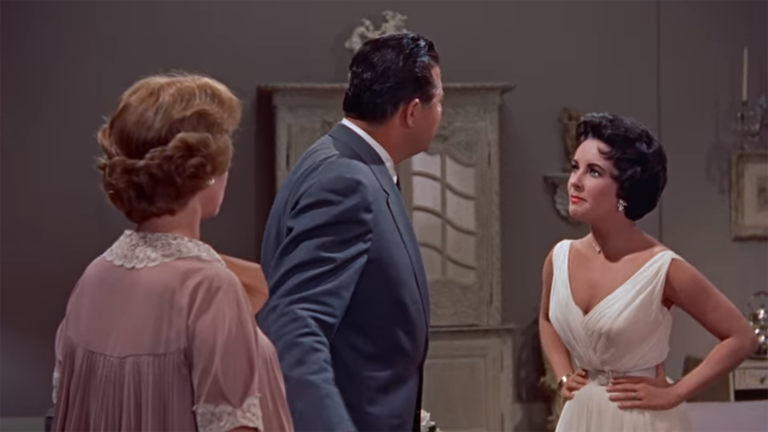
Memory Play in American Drama
What kind of drama lies in the depths of your memories?
In this 9-12 lesson, students will explore structural and technical devices of memory play through Tennessee Williams’s play, The Glass Menagerie. Students will apply the concept of memory play to write and dramatize original scripts.
Apply techniques that translate the inner workings of the human mind into artistic expression.
Collaborate to research, gather, create, and present information
Edit and revise writing.
Analyze how historical and cultural contexts shape themes and forms in art expression.
Recognize the widespread impact of philosophical and psychological theory in transforming themes and forms of art genres.
View drama as a vehicle of social conscience.
Use a non-linear memory structure to write an original play.
Standards Alignment
TH:Cr1.1.I.c Use script analysis to generate ideas about a character that is believable and authentic in a drama/theatre work.
TH:Cr2-I.a Explore the function of history and culture in the development of a dramatic concept through a critical analysis of original ideas in a drama/theatre work.
TH:Cr3.1.I.b Explore physical, vocal and physiological choices to develop a performance that is believable, authentic, and relevant to a drama/theatre work.
TH:Pr4.1.I.a Examine how character relationships assist in telling the story of a drama/theatre work.
TH: Re7.1.I.a Respond to what is seen, felt, and heard in a drama/theatre work to develop criteria for artistic choices.
TH:Re9.1.I.a Examine a drama/ theatre work using supporting evidence and criteria, while considering art forms, history, culture, and other disciplines.
TH:Re9.1.I.c Formulate a deeper understanding and appreciation of a drama/ theatre work by considering its specific purpose or intended audience.
ELA-LITERACY.WHST.9-10.2 Write informative/explanatory texts, including the narration of historical events, scientific procedures/ experiments, or technical processes.
ELA-LITERACY.WHST.9-10.7 Conduct short as well as more sustained research projects to answer a question (including a self-generated question) or solve a problem; narrow or broaden the inquiry when appropriate; synthesize multiple sources on the subject, demonstrating understanding of the subject under investigation.
ELA-LITERACY.WHST.11-12.2 Write informative/explanatory texts, including the narration of historical events, scientific procedures/experiments, or technical processes.
ELA-LITERACY.WHST.11-12.7 Conduct short as well as more sustained research projects to answer a question (including a self-generated question) or solve a problem; narrow or broaden the inquiry when appropriate; synthesize multiple sources on the subject, demonstrating understanding of the subject under investigation.
ELA-LITERACY.W.9-10.3 Write narratives to develop real or imagined experiences or events using effective technique, well-chosen details, and well-structured event sequences.
ELA-LITERACY.W.11-12.3 Write narratives to develop real or imagined experiences or events using effective technique, well-chosen details, and well-structured event sequences.
ELA-LITERACY.SL.9-10.1 Initiate and participate effectively in a range of collaborative discussions (one-on-one, in groups, and teacher-led) with diverse partners on grades 9-10 topics, texts, and issues, building on others’ ideas and expressing their own clearly and persuasively.
ELA-LITERACY.SL.11-12.1 Initiate and participate effectively in a range of collaborative discussions (one-on-one, in groups, and teacher-led) with diverse partners on grades 11-12 topics, texts, and issues, building on others’ ideas and expressing their own clearly and persuasively.
Recommended Student Materials
Editable Documents: Before sharing these resources with students, you must first save them to your Google account by opening them, and selecting “Make a copy” from the File menu. Check out Sharing Tips or Instructional Benefits when implementing Google Docs and Google Slides with students.
Teachers should know that plays by Tennessee Williams contain adult content. Teachers should review the conflicts, themes, and events in The Glass Menagerie prior to teaching the lesson. Obtain copies of the play, The Glass Menagerie by Tennessee Williams, and have specific knowledge about the plot, characters, themes, historical background, and literary analysis of the play. See the Wikipedia: The Glass Menagerie entry for more information.
Student Prerequisites
Students should be familiar with the elements of a story, the writing process, and symbolism as a literary device.
Accessibility Notes
Modify handouts, text, and utilize assistive technologies as needed. Allow extra time for task completion.
Engage
Ask students to close their eyes and recall a memory of one of the following:A happy event, traumatic event, “panoramic” account of a particular summer, return to a favorite place of one’s childhood, weekend afternoon spent with family members, an intense conversation with a parent, encounter of meeting someone you knew in the past.
Ask students, with their eyes still closed, to scan for a specific memory. Use the Memory Scan: Point of View questions to facilitate their thinking.
Ask students now to open their eyes and record, in free-style writing, specific details from the memory they recalled. Encourage students to share some of their memories and points of analysis of their scans. Ask students: Did any immediate thoughts or outside sounds from the present environment intrude on your train of thought? How were the past and present simultaneously operating in your consciousness during the memory? Note: You may wish to contrive a distraction during the exercise, such as dropping a book, to interrupt the stream of the students’ memory.
Arrange students in small collaborative groups and ask each group to initiate an open-ended Memory Scan Discussion about the processes of the mind. Have the students share their ideas in a large group discussion.
Build
Give students background information on the use of memory in American drama and on the playwright, Tennessee Williams. Tell the students that post-World War II many American playwrights began to tap into the power of memory as a narrative device. Influenced by the forces that were shaping American society, especially the psychoanalytic concepts of Sigmund Freud and Carl Jung, these playwrights used the concept of memory to fuel non-linear plots and intense character development.
Share with students that The Glass Menagerie by Tennessee Williams is one of the seminal pieces of American theatre. Have students read Tennessee Williams Biography for more details on his life and work.
Divide students into play reading groups for an oral reading of The Glass Menagerie. Delegate one member of the group to be the Director. The Director will assign roles for the oral reading of the play and realign the assignments to have different voices project the characterizations.
Have students examine Williams’s stage set description. Discuss and clarify the meaning of “linear” and “non-linear.” Encourage students to differentiate the “non-real” and “actual” properties of the set as described by Williams in his Scene I set description.
Apply
Have students respond to one of the following Essay Topics: The Glass Menagerie. Provide students with feedback on their essays and allow time for peer editing.
Conduct a follow-up discussion on the way Williams used memory as a narrative and dramatic device. Compare students’ responses about their own memories to the way Williams uses Tom’s memory in the play.
Divide students into pairs to write original scripts. Ask each student to return to the memory they recalled from the beginning of the lesson to develop original scripts. Ask students to emulate a script that demonstrates Williams’s non-linear memory structure in a play. Students can use the Memory Play Script Guidelines for support when writing their scripts.
Ask students to select one or more of the scripts to be dramatized for the class. Assign groups to act out each script and evaluate the performances with the Rubric: Memory Play Script.
Reflect
Assess students with a quick write. Ask students to respond to the following questions: How did your use of memory in your play differ from those you saw performed? In what ways was it similar? Were you surprised about the way you remembered the events you included in your play? If so, how? How has writing the play affected the way you feel about the memory you used to write it?
Extend
Distribute the Vocabulary: The Memory Play in American Drama. Have the students research the forces that contributed to changes in the American economic, political, sociological, philosophical and cultural landscapes in the last half of the 19th and in the 20th century.
Divide students into collaborative groups and have them select a topic from the Topic Suggestions list. Encourage students to draw from past work in history, literature, art, science, music classes, etc. to build an overview of the time period. Also, encourage students to divide their topic into subtopics, and have each member of the group research and analyze one of the segments. Have students present their findings to the class.
As a culminating experience, show students video clips of a performance of The Glass Menagerie.
In this 9-12 lesson, students will examine the complicated dynamics of families inCat on a Hot Tin Roof, by Tennessee Williams, andLong Day’s Journey into Night, by Eugene O’Neill. Students will apply their understanding of thematic relationships to write a one-act play or play script.
In this 9-12 lesson, students will examine the impact of living in an early 20th century industrialized society through Eugene O’Niell’s play, The Hairy Ape. Students will analyze O’Neill’s portrayal of a world in which spiritual, communal, and behavioral values of the past have been displaced by the lure of technology, materialism, and patterns of cultural barbarism.
In this 9-12 lesson, students will conduct a comparative analysis of Eugene O'Neill's Hairy Ape and Tennessee Williams’s A Streetcar Named Desire. Students will debate the themes between scripts and culminate their understanding by integrating visual and aural expressionistic devices into a script.
Staging controversial shows in school theaters presents rewards and risks. Veteran arts educators share insights about the pros and cons of such shows, and how to produce them successfully.
Theater Art
Sensitive Themes
Kennedy Center Education provides resources and experiences that inspire, excite, and empower students and young artists, plus the tools and connections to help educators incorporate the arts into classrooms and learning spaces of all types.
Generous support for educational programs at the Kennedy Center is provided by the U.S. Department of Education.
Gifts and grants to educational programs at the Kennedy Center are provided by The Paul M. Angell Family Foundation; Bank of America; Capital One; The Morris and Gwendolyn Cafritz Foundation; Carnegie Corporation of New York; The Ednah Root Foundation; Genesis Inspiration Foundation; Harman Family Foundation; William R. Kenan, Jr. Charitable Trust; the Kimsey Endowment; The Kiplinger Foundation; Laird Norton Family Foundation; Lois and Richard England Family Foundation; Dr. Gary Mather and Ms. Christina Co Mather; The Markow Totevy Foundation; Dr. Gerald and Paula McNichols Foundation; The Morningstar Foundation; Myra and Leura Younker Endowment Fund; The Irene Pollin Audience Development and Community Engagement Initiatives;
Prince Charitable Trusts; Dr. Deborah Rose and Dr. Jan A. J. Stolwijk; Rosemary Kennedy Education Fund; The Embassy of the United Arab Emirates; The Victory Foundation; The Volgenau Foundation; Jackie Washington; GRoW @ Annenberg and Gregory Annenberg Weingarten and Family; and generous contributors to the Abe Fortas Memorial Fund and by a major gift to the fund from the late Carolyn E. Agger, widow of Abe Fortas. Additional support is provided by the National Committee for the Performing Arts..
The content of these programs may have been developed under a grant from the U.S. Department of Education but does not necessarily represent the policy of the U.S. Department of Education. You should not assume endorsement by the federal government.