Media Romare Bearden + Empress of the Blues
In Empress of the Blues, Romare Bearden takes inspiration from jazz to create one of his most famous works of art.
Born
April 15, 1894
Died
September 26, 1937
Country
United States of America
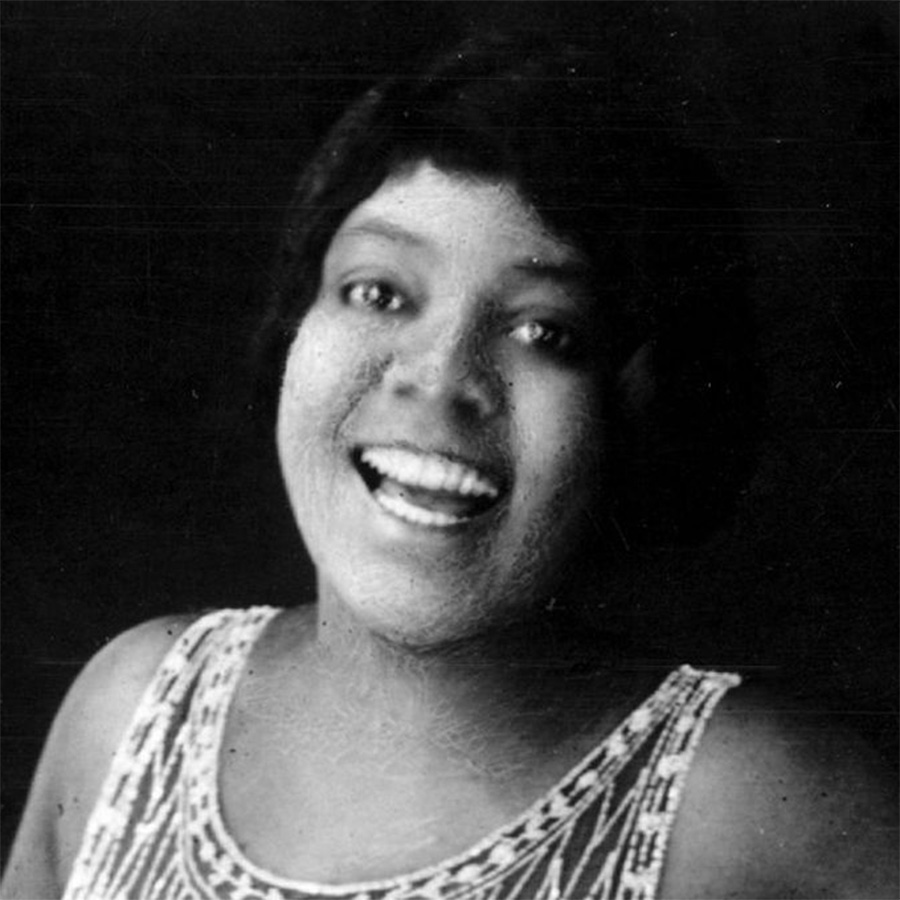
Bessie Smith was known as the “Empress of the Blues” for the majesty and power with which she belted out tunes. Her unforgettably amazing voice established her as the classical blues singer.
Born in Chattanooga, Tennessee, where she was coached by blues singer Ma Rainey, Smith was touring the South by the time she was in her teens.
In 1923, she headed for the recording studios of New York City. Her first release, “Down-Hearted Blues,” sold more than 750,000 copies in one month. In coming years, she would record with all the top jazz musicians, including Fletcher Henderson, James P. Johnson, and Louis Armstrong.
 |
The Music of
|
For the most part, only some African American audiences were privileged to catch her earliest live performances. Smith sang at speakeasies, rent parties, and “buffet flats” (private apartments that African Americans rented for the night in the era of hotel segregation). She also appeared at the Lafayette Theatre, the Lincoln Theatre, and a summer tent show dubbed the “Harlem Frolics.”
Standing over six feet tall and weighing more than 200 pounds, Smith had an imposing stage presence. Her powerful physique was matched by the strength and sweep of her voice and her personal manner. Smith’s fierce business acumen, toughness, and heavy drinking set her in stark contrast to the petite, demure white singers of the day.
Bessie Smith’s evocative voice and style ultimately captivated Black and white audiences alike. Her electrifying stage presence served her well in film and theater, too: Smith starred in the movie St. Louis Blues in 1929 and substituted for Billie Holiday in the musical show Stars Over Broadway in 1935.
St. Louis Blues, RKO Productions, Inc., 1929. Featuring Bessie Smith, Fletcher Henderson, and James P. Johnson. Produced at Long Island’s Gramercy Studio in late June of 1929, this all-Black musical short is the story of a no-account husband who cheats on his long-suffering wife, played by Bessie Smith in her only film appearance. Look for James P. Johnson as the pianist as the Fletcher Henderson Band plays.
 I n t e r s e c t i o n s |
|
 |
Smith sang with the Fletcher Henderson Orchestra. |
 |
She recorded a number of tunes with pianist James P. Johnson. |
 |
Langston Hughes praised her in his essay “The Negro Artist and the Racial Mountain.” |
 |
Smith performed at the Lafayette Theatre. |
 |
She was photographed by Carl Van Vechten, whose social mixers she regularly attended. |
 |
|
Video Bio
In Empress of the Blues, Romare Bearden takes inspiration from jazz to create one of his most famous works of art.
The story behind Billie Holiday’s “Strange Fruit” (1939) is one of violence and tragedy, but also bravery in the face of adversity.
The road to racial equality was a long one and the battle for equality had many heroes; some of them made history just by opening their mouths to sing.
Featuring Dianne Reeves with Kurt Elling, Darryl Pitt, Larry Rosen, and Don Was

Kennedy Center Education provides resources and experiences that inspire, excite, and empower students and young artists, plus the tools and connections to help educators incorporate the arts into classrooms and learning spaces of all types.


Generous support for educational programs at the Kennedy Center is provided by the U.S. Department of Education.
Gifts and grants to educational programs at the Kennedy Center are provided by The Paul M. Angell Family Foundation; Bank of America; Capital One; The Morris and Gwendolyn Cafritz Foundation; Carnegie Corporation of New York; The Ednah Root Foundation; Genesis Inspiration Foundation; Harman Family Foundation; William R. Kenan, Jr. Charitable Trust; the Kimsey Endowment; The Kiplinger Foundation; Laird Norton Family Foundation; Lois and Richard England Family Foundation; Dr. Gary Mather and Ms. Christina Co Mather; The Markow Totevy Foundation; Dr. Gerald and Paula McNichols Foundation; The Morningstar Foundation; Myra and Leura Younker Endowment Fund; The Irene Pollin Audience Development and Community Engagement Initiatives;
Prince Charitable Trusts; Dr. Deborah Rose and Dr. Jan A. J. Stolwijk; Rosemary Kennedy Education Fund; The Embassy of the United Arab Emirates; The Victory Foundation; The Volgenau Foundation; Jackie Washington; GRoW @ Annenberg and Gregory Annenberg Weingarten and Family; and generous contributors to the Abe Fortas Memorial Fund and by a major gift to the fund from the late Carolyn E. Agger, widow of Abe Fortas. Additional support is provided by the National Committee for the Performing Arts..
The content of these programs may have been developed under a grant from the U.S. Department of Education but does not necessarily represent the policy of the U.S. Department of Education. You should not assume endorsement by the federal government.


