Media Dancing to Different Rules
They were rebels, they were American, and they dared to be different: the makers of modern dance.
Born
August 14, 1906
Died
May 14, 1937
Country
United States of America
Dubbed the “Human Boa Constrictor,” Earl Tucker invented a dance called the “Snakehips” in the early 1930s.
Tucker enjoyed patronizing Harlem music clubs. At one of them, the Savoy Ballroom, his unusual style of dancing—a sort of shimmy that relied heavily on wiggling hips—attracted a great deal of attention.
Tucker danced with so much fluidity and flexibility that he appeared to lack a skeleton. He made quite a name for himself on the club circuit, then parlayed that popularity into performances at Connie’s Inn and the Cotton Club.
The dancer’s renown (or notoriety, depending on your view) reached its apex in 1935, when he appeared in a ten-minute film entitled Symphony in Black: A Rhapsody of Negro Life. The bulk of this short feature focuses on Duke Ellington composing at the piano, crosscut with shots of the bandleader’s orchestra playing an elaborate Ellington composition that interprets aspects of African American life. Those segments included teenager Billie Holliday singing the blues, and “Snakehips” Tucker demonstrating his eclectic and eccentric style of dance.
 I n t e r s e c t i o n s |
|
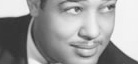 |
He appeared in the film Symphony in Black with Duke Ellington. |
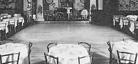 |
Tucker performed at Connie’s Inn. |
 |
He appeared on the stage of the Cotton Club. |
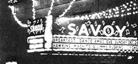 |
He frequented the Savoy Ballroom. |
 |
|
Video Bio
They were rebels, they were American, and they dared to be different: the makers of modern dance.
Learn about Alvin Ailey’s exploration of what he called “blood memories” through his magnum opus, Revelations.
See how four choreographers (Alvin Ailey, Robert Battle, Larry Keigwin, and Mark Morris) use music in different ways in their works.
Learn the basics of swing dance, called East Coast Swing; take it up a notch with the Charleston; and if you're really swingin' after that, you can learn the most advanced swing dance, the Lindy Hop.

Kennedy Center Education provides resources and experiences that inspire, excite, and empower students and young artists, plus the tools and connections to help educators incorporate the arts into classrooms and learning spaces of all types.


Generous support for educational programs at the Kennedy Center is provided by the U.S. Department of Education.
Gifts and grants to educational programs at the Kennedy Center are provided by The Paul M. Angell Family Foundation; Bank of America; Capital One; The Morris and Gwendolyn Cafritz Foundation; Carnegie Corporation of New York; The Ednah Root Foundation; Genesis Inspiration Foundation; Harman Family Foundation; William R. Kenan, Jr. Charitable Trust; the Kimsey Endowment; The Kiplinger Foundation; Laird Norton Family Foundation; Lois and Richard England Family Foundation; Dr. Gary Mather and Ms. Christina Co Mather; The Markow Totevy Foundation; Dr. Gerald and Paula McNichols Foundation; The Morningstar Foundation; Myra and Leura Younker Endowment Fund; The Irene Pollin Audience Development and Community Engagement Initiatives;
Prince Charitable Trusts; Dr. Deborah Rose and Dr. Jan A. J. Stolwijk; Rosemary Kennedy Education Fund; The Embassy of the United Arab Emirates; The Victory Foundation; The Volgenau Foundation; Jackie Washington; GRoW @ Annenberg and Gregory Annenberg Weingarten and Family; and generous contributors to the Abe Fortas Memorial Fund and by a major gift to the fund from the late Carolyn E. Agger, widow of Abe Fortas. Additional support is provided by the National Committee for the Performing Arts..
The content of these programs may have been developed under a grant from the U.S. Department of Education but does not necessarily represent the policy of the U.S. Department of Education. You should not assume endorsement by the federal government.


