Media Duke Ellington + Harlem
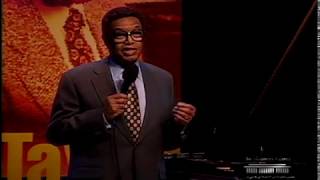
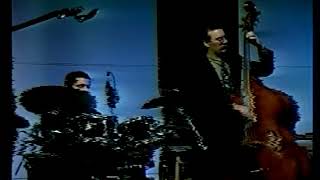
Experience Duke Ellington’s love letter to his adopted home in his 1950 symphonic composition, Harlem.
Born
April 29, 1899
Died
May 24, 1974
Country
United States of America
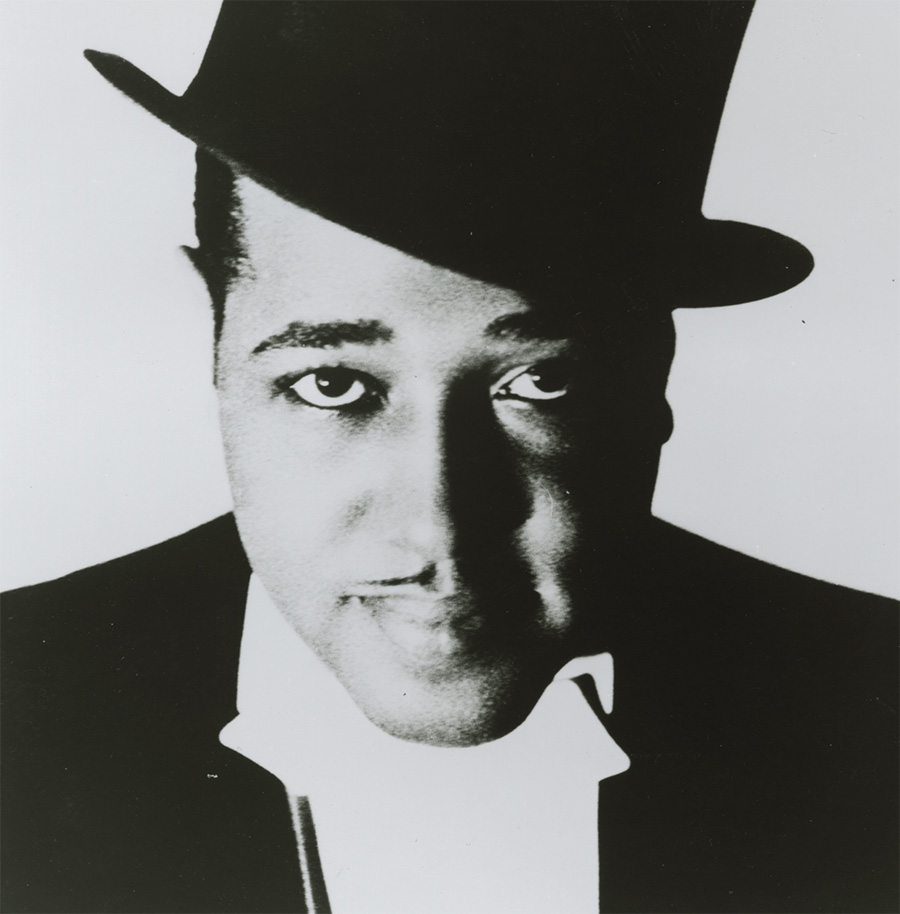
Edward Kennedy “Duke” Ellington (1899–1974) had a career as a composer, pianist, and bandleader that spanned more than 50 years, during which he created nearly 2,000 compositions and appeared in more than 20,000 performances around the world.
Born to musical parents, Ellington grew up in a house filled with the sound of popular songs. At the age of seven, he began taking piano lessons. His formal training ended soon after when he became more interested in visual arts and enrolled at the Armstrong Manual Training School to study commercial art. By 14, his exposure to ragtime music drew him to jazz and ignited a desire to become a professional musician.
Ellington began composing music and playing in ensembles throughout his hometown of Washington, D.C. Before long, Ellington formed his own group, The Duke’s Serenaders, and the band began playing in both the Black and white communities.
Having had much success in Washington, the young Ellington moved to New York City. After a rocky start, he found work playing in both theater orchestras and jazz bands. He soon became the bandleader of a small jazz band, but his need to push musical boundaries quickly grew his band into an orchestra. It wasn’t long before Ellington’s orchestra hit the stage at Harlem’s famous Cotton Club, New York’s most prestigious nightclub.
 |
The Music of
|
His “Concerto for Cootie”—named to honor trumpet player Charles “Cootie” Williams—was the first jazz composition in the form of a concerto (a three-movement piece of music for one or more solo instruments and an orchestra). Ellington did not stop breaking musical conventions there; he also invented his own harmonic language.
Black and Tan, Paramount Pictures, 1929. A musical short starring Duke Ellington and his orchestra.
As the country sank into the Great Depression in October 1929, many bandleaders had trouble making ends meet. But Ellington flourished. The 1930s found him caught up in a musical and social whirlwind. In addition to touring, playing Broadway shows, and appearing in movies like Symphony in Black: A Rhapsody of Negro Life (1935), Ellington also broadcast on radio, which brought the musician worldwide recognition.
Symphony in Black, Paramount Pictures, 1935. Filmed in New York in late 1934, this musical short features Duke Ellington composing the title symphony, crosscut with shots of a band playing. The film also features Earl “Snakehips” Tucker and an uncredited Billie Holliday.
Ellington and his orchestra broke racial barriers, performing in hotels and theaters that once barred Black artists. He became a cultural ambassador for the State Department as a result of his world tours.
Duke Ellington had a versatile style of music that was all his own. From the jungle music of the Cotton Club to the swing played on the dance floor, Ellington’s music goes beyond the category of jazz. Ellington was known for showcasing the talent of his band members and wrote entire songs for individual players. He was also experimental, always pushing boundaries and constantly reinventing himself as a musician.
Even today, Ellington’s music is a study of contrasts—dramatic and personal, traditional and innovative, strictly composed and loosely improvised—music that was often based on a highly personal memory, mood, or image.
 I n t e r s e c t i o n s |
|
 |
Ellington played at the Lafayette Theatre in 1923. |
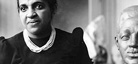 |
Sculptor Selma Burke created his bust. |
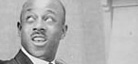 |
He recorded “That Lindy Hop” by composer Eubie Blake. |
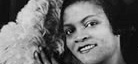 |
A huge fan of dancer Florence Mills, he wrote “Black Beauty” for her. |
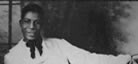 |
He appears with dancer Earl Tucker in the film Symphony in Black. |
 |
|
Video Bio
Experience Duke Ellington’s love letter to his adopted home in his 1950 symphonic composition, Harlem.
In this Kennedy Center commission, two of today’s top vocalists explore how classical sounds intertwine with improvisational jazz in the music of Duke Ellington, blending European classical traditions with syncopated rhythms and African American work songs, blues, and spiritual music.
From Fairmont Street to U Street, from the Howard Theater to the Bohemian Caverns, take a tour through jazz history with Billy Taylor and Frank Wess, who lead listeners through their hometown’s music scene in this seven-part audio series.
This series, hosted by Connaitre Miller of Howard University, explores why Swing was the most popular dance music in America and how it is still alive today in dance halls, clubs and movies
In this interactive microsite, meet the artists, writers, dancers, musicians, activists, philosophers, and patrons of the Harlem Renaissance between the years of 1917 and 1935. Explore how this period in our country's cultural evolution was documented through art, literature, journalism, theater, and film.
Featuring Dianne Reeves with Kurt Elling, Darryl Pitt, Larry Rosen, and Don Was
Join legendary jazz pianist, composer and educator Dr. Billy Taylor and his trio as he walks you through the musical world of Jazz on 52nd Street.
Join legendary jazz pianist, composer and educator Dr. Billy Taylor and his trio as they explore "America's classical music" and answer the question "what is jazz?"

Kennedy Center Education provides resources and experiences that inspire, excite, and empower students and young artists, plus the tools and connections to help educators incorporate the arts into classrooms and learning spaces of all types.


Generous support for educational programs at the Kennedy Center is provided by the U.S. Department of Education.
Gifts and grants to educational programs at the Kennedy Center are provided by The Paul M. Angell Family Foundation; Bank of America; Capital One; The Morris and Gwendolyn Cafritz Foundation; Carnegie Corporation of New York; The Ednah Root Foundation; Genesis Inspiration Foundation; Harman Family Foundation; William R. Kenan, Jr. Charitable Trust; the Kimsey Endowment; The Kiplinger Foundation; Laird Norton Family Foundation; Lois and Richard England Family Foundation; Dr. Gary Mather and Ms. Christina Co Mather; The Markow Totevy Foundation; Dr. Gerald and Paula McNichols Foundation; The Morningstar Foundation; Myra and Leura Younker Endowment Fund; The Irene Pollin Audience Development and Community Engagement Initiatives;
Prince Charitable Trusts; Dr. Deborah Rose and Dr. Jan A. J. Stolwijk; Rosemary Kennedy Education Fund; The Embassy of the United Arab Emirates; The Victory Foundation; The Volgenau Foundation; Jackie Washington; GRoW @ Annenberg and Gregory Annenberg Weingarten and Family; and generous contributors to the Abe Fortas Memorial Fund and by a major gift to the fund from the late Carolyn E. Agger, widow of Abe Fortas. Additional support is provided by the National Committee for the Performing Arts..
The content of these programs may have been developed under a grant from the U.S. Department of Education but does not necessarily represent the policy of the U.S. Department of Education. You should not assume endorsement by the federal government.