Media Billie Holiday + Strange Fruit
The story behind Billie Holiday’s “Strange Fruit” (1939) is one of violence and tragedy, but also bravery in the face of adversity.
Born
January 25, 1896
Died
November 1, 1927
Country
United States of America
Florence Mills was an immensely popular performer and Harlem personality, evidenced by the more than 150,000 people who crowded the streets around Mother Zion Church in Harlem in 1927 to mourn her untimely death from appendicitis.
Mills’ groundbreaking work in theater broke down many barriers for African American performers. Her whirlwind career began at the age of four, when she appeared on stage in a musical that was written, produced, and performed by African American artists.
After touring for several years on the vaudeville and cabaret circuits, Mills got her big break in 1921 as the lead in Shuffle Along. The musical was wildly successful and caused a sensation. Mills held audiences spellbound with her eccentric dancing and her unique, high-pitched voice.
Following her success in Shuffle Along, Mills was offered a part in the Ziegfeld Follies. Instead, she chose to perform in a competing all-Black revue, Dixie to Broadway. International success did not arrive until Florence Mills starred in the tremendously popular show Blackbirds, which reached Black and white audiences alike.
The musical showcased her signature tune, “I’m a Little Blackbird Looking for a Bluebird.” Delivered in her trademark soprano that came close to resembling birdsong, the tune earned Mills the nickname “Blackbird.” Some scholars of the Harlem Renaissance have suggested that the deceptively simple melody masked a song of protest.
 I n t e r s e c t i o n s |
|
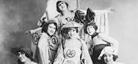 |
Mills captivated audiences and contributed to Shuffle Along’s success. |
 |
She worked with composer Eubie Blake and his partner Noble Sissle in 1921. |
 |
She inspired Duke Ellington’s haunting song “Black Beauty,” written in 1928. |
 |
She performed songs composed by William Grant Still. |
 |
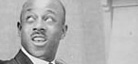
Bill Robinson, a close friend, gave her tap lessons and helped launch her career. |
 |
|
Video Bio
The story behind Billie Holiday’s “Strange Fruit” (1939) is one of violence and tragedy, but also bravery in the face of adversity.
August Wilson was one of America’s most significant and successful playwrights, known for his accurate portrayal of the experiences of Black Americans in the mid-20th century. Learn more through this overview of his play Fences.
Learn the basics of swing dance, called East Coast Swing; take it up a notch with the Charleston; and if you're really swingin' after that, you can learn the most advanced swing dance, the Lindy Hop.
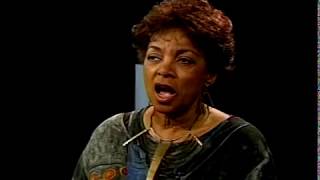
Host Jack Carr, actor Ruby Dee, director Ricardo Khan, and lighting designer Jackie Manassee discuss the collaborative process to bring Pearl Cleage's play Flyin' West to the stage.

Kennedy Center Education provides resources and experiences that inspire, excite, and empower students and young artists, plus the tools and connections to help educators incorporate the arts into classrooms and learning spaces of all types.


Generous support for educational programs at the Kennedy Center is provided by the U.S. Department of Education.
Gifts and grants to educational programs at the Kennedy Center are provided by The Paul M. Angell Family Foundation; Bank of America; Capital One; The Morris and Gwendolyn Cafritz Foundation; Carnegie Corporation of New York; The Ednah Root Foundation; Genesis Inspiration Foundation; Harman Family Foundation; William R. Kenan, Jr. Charitable Trust; the Kimsey Endowment; The Kiplinger Foundation; Laird Norton Family Foundation; Lois and Richard England Family Foundation; Dr. Gary Mather and Ms. Christina Co Mather; The Markow Totevy Foundation; Dr. Gerald and Paula McNichols Foundation; The Morningstar Foundation; Myra and Leura Younker Endowment Fund; The Irene Pollin Audience Development and Community Engagement Initiatives;
Prince Charitable Trusts; Dr. Deborah Rose and Dr. Jan A. J. Stolwijk; Rosemary Kennedy Education Fund; The Embassy of the United Arab Emirates; The Victory Foundation; The Volgenau Foundation; Jackie Washington; GRoW @ Annenberg and Gregory Annenberg Weingarten and Family; and generous contributors to the Abe Fortas Memorial Fund and by a major gift to the fund from the late Carolyn E. Agger, widow of Abe Fortas. Additional support is provided by the National Committee for the Performing Arts..
The content of these programs may have been developed under a grant from the U.S. Department of Education but does not necessarily represent the policy of the U.S. Department of Education. You should not assume endorsement by the federal government.