Media Billie Holiday + Strange Fruit
The story behind Billie Holiday’s “Strange Fruit” (1939) is one of violence and tragedy, but also bravery in the face of adversity.
Born
February 7, 1887
Died
February 12, 1983
Country
United States of America
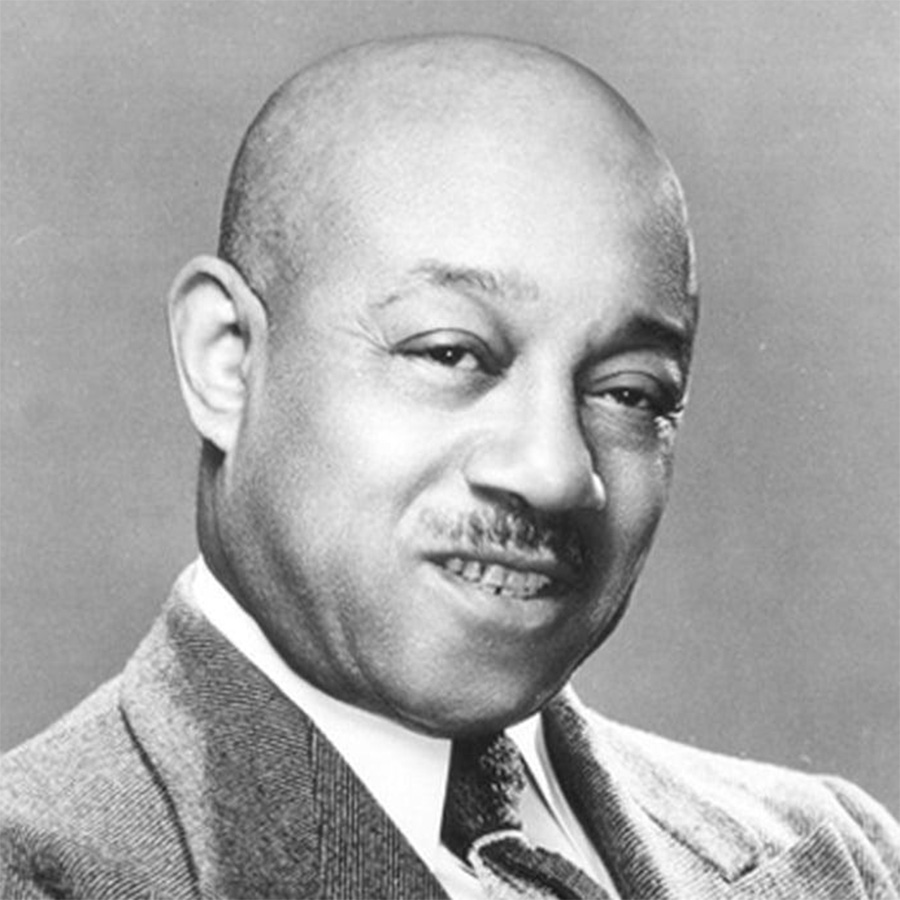
Composer and performer Eubie Blake had been playing piano in Baltimore bars and saloons when he began to experiment with ragtime, a jazz style featuring syncopated melodies. At the age of just 16, Blake composed his first rag, “The Charleston Rag.”
Blake met singer Noble Sissle in 1915, and the pair formed a vaudeville act called The Dixie Duo. Breaking away from an accepted but racist tradition of the time, they performed not in blackface but in tuxedos. (Previously, Black performers used exaggerated make-up to make their faces appear darker.) Blake and Sissle’s first song, “It’s All Your Fault,” performed by Sophie Tucker, became an overnight hit. It also kicked off a long and fruitful songwriting partnership.
In 1921, composer Blake and lyricist Sissle joined writers Flournoy Miller and Aubrey L. Lyles to create Shuffle Along, Broadway’s first all-Black musical comedy. Cast members included Josephine Baker, Florence Mills, and Paul Robeson; all three would go on to stardom. Shuffle Along also launched many of Blake’s most enduring songs, among them “Love Will Find a Way” and “I’m Just Wild about Harry.”
 |
The Music of
|
Building on the success of Shuffle Along, Blake and Sissle created two more hit musicals, Elsie and Chocolate Dandies. Working independently, Blake composed tunes for Swing It, the series of Blackbirds musical revues, and the self-titled tribute Eubie!
Success came his way, but he never tired of advancing the careers of other African American musicians. Blake performed benefit concerts on behalf of the NAACP and the Urban League, as well as numerous Black youth groups and schools.
In 1948, presidential candidate Harry Truman adopted “I’m Just Wild about Harry” as his official campaign song. When Truman won the election, Blake was summoned to Washington, D.C., to work on a new arrangement for his inauguration—only to be replaced at the last minute by a white singer.
 I n t e r s e c t i o n s |
|
 |
He composed music for the famous production of Shuffle Along. |
 |
Blake launched the career of Florence Mills when he cast her in Shuffle Along. |
 |
He played at benefits held by the NAACP, of which W. E. B. Du Bois was a founding member. |
 |
Dancer Bill Robinson appeared on screen with Blake’s orchestra. |
 |
Actress Evelyn Preer appeared in Chocolate Dandies. |
 |
Duke Ellington recorded many Blake compositions, including “That Lindy Hop.” |
 |
|
Video Bio
The story behind Billie Holiday’s “Strange Fruit” (1939) is one of violence and tragedy, but also bravery in the face of adversity.
Learn the basics of jazz music and how the art form works. Along with his band, Jason Moran shows you how jazz is more like skateboarding and football than you would think, as well as plays original and classic jazz standards.
From Fairmont Street to U Street, from the Howard Theater to the Bohemian Caverns, take a tour through jazz history with Billy Taylor and Frank Wess, who lead listeners through their hometown’s music scene in this seven-part audio series.
This series, hosted by Connaitre Miller of Howard University, explores why Swing was the most popular dance music in America and how it is still alive today in dance halls, clubs and movies

Kennedy Center Education provides resources and experiences that inspire, excite, and empower students and young artists, plus the tools and connections to help educators incorporate the arts into classrooms and learning spaces of all types.


Generous support for educational programs at the Kennedy Center is provided by the U.S. Department of Education.
Gifts and grants to educational programs at the Kennedy Center are provided by The Paul M. Angell Family Foundation; Bank of America; Capital One; The Morris and Gwendolyn Cafritz Foundation; Carnegie Corporation of New York; The Ednah Root Foundation; Genesis Inspiration Foundation; Harman Family Foundation; William R. Kenan, Jr. Charitable Trust; the Kimsey Endowment; The Kiplinger Foundation; Laird Norton Family Foundation; Lois and Richard England Family Foundation; Dr. Gary Mather and Ms. Christina Co Mather; The Markow Totevy Foundation; Dr. Gerald and Paula McNichols Foundation; The Morningstar Foundation; Myra and Leura Younker Endowment Fund; The Irene Pollin Audience Development and Community Engagement Initiatives;
Prince Charitable Trusts; Dr. Deborah Rose and Dr. Jan A. J. Stolwijk; Rosemary Kennedy Education Fund; The Embassy of the United Arab Emirates; The Victory Foundation; The Volgenau Foundation; Jackie Washington; GRoW @ Annenberg and Gregory Annenberg Weingarten and Family; and generous contributors to the Abe Fortas Memorial Fund and by a major gift to the fund from the late Carolyn E. Agger, widow of Abe Fortas. Additional support is provided by the National Committee for the Performing Arts..
The content of these programs may have been developed under a grant from the U.S. Department of Education but does not necessarily represent the policy of the U.S. Department of Education. You should not assume endorsement by the federal government.


