• History
  • Jazz & Blues
  • African-American History

John Coltrane + Alabama
Meet the artist through one of their most important works

by Jim Frey—professional learning design consultant, lifelong musician, and jazz enthusiast

Songs can advocate powerfully for social change and justice. Think of folk, R&B, rock, or hip-hop songs by artists such as Aretha Franklin, Bob Dylan, Marvin Gaye, Beyoncé, and Janelle Monáe. Jazz artists, too, have created important and enduring social statements. In his deeply moving 1963 work, “Alabama,” saxophonist and composer John Coltrane masterfully illustrated how much emotion could be conveyed in a song—even one without lyrics.

Recommended for grades 6-12

In this resource, you’ll:

  • Explore how Coltrane’s path and historical context led him to write and record “Alabama”

  • Discover the legacy of “Alabama” as a historical document

  • Unpack the elements of “Alabama” and how they contribute to the work’s timelessness and impact

Part of the Artist + Work collection.

Coltrane Quote Forces

“I know that there are bad forces, forces that bring suffering to others and misery to the world. I want to be the opposite force. I want to be the force which is truly for good.”

John Coltrane
1966

“Alabama” is just over five minutes longplease listen to it now. This will enable a valuable comparison later on.

Reflection: What is your reaction to the song? What emotions does it conjure? What do you think Coltrane may have been communicating?

The Artist: John Coltrane (1926-1967)

Early Life

John William Coltrane was born in Hamlet, North Carolina, on September 23, 1926. He was still an infant when his family moved to High Point, North Carolina, where he spent his childhood. Coltrane grew up with music in the house; his mother was a church pianist, and his father played violin and ukulele. Their religious lifestyle would inform the music Coltrane himself would later create. “My family liked church music,” he later remembered, “so there was no jazz in the house.” But Coltrane’s multigenre music education began early. Aside from the music his parents played at home, he heard hymns sung at church, blues performed by street musicians, and swing music on the radio. These and many other styles would influence his musical career.

Coltrane grew up amid racial segregation, with school clothes and books often handed down from better-funded, “whites-only” schools in the area. From an early age, he was aware of the unfairness and harm of the racism surrounding him. According to his cousin Mary (after whom he would later name a song), “Those things John didn’t like at all, they just got to him.” Social struggles would intensify throughout Coltrane’s life and, as we shall see, shape his music at times.

In 1938, at age 12, Coltrane began playing his first instrument: a clarinet. Five years later, he took up the saxophone—a common progression. As Coltrane remembered, “The first horn I got was an alto [saxophone], not a tenor. I wanted a tenor, but some friends of my mother advised her to buy me an alto because it was a smaller horn and easier for a youngster to handle.” His preference won out in the end, and Coltrane would rarely record or perform on alto sax once he got a hold of a tenor—though he would also become known for soprano saxophone. 

Coltrane’s father and three other relatives passed away within a five-month period between 1938 and 1939. John was not yet even a teenager, and we can only imagine the effect such concentrated loss had on him. His mother then sought employment in New Jersey, and John stayed in North Carolina with other family while finishing school. He began prioritizing music—perhaps a needed focus during a difficult time. Recognizing his emerging talent, Coltrane’s high school classmates voted him “most musical” before he graduated in 1943. 

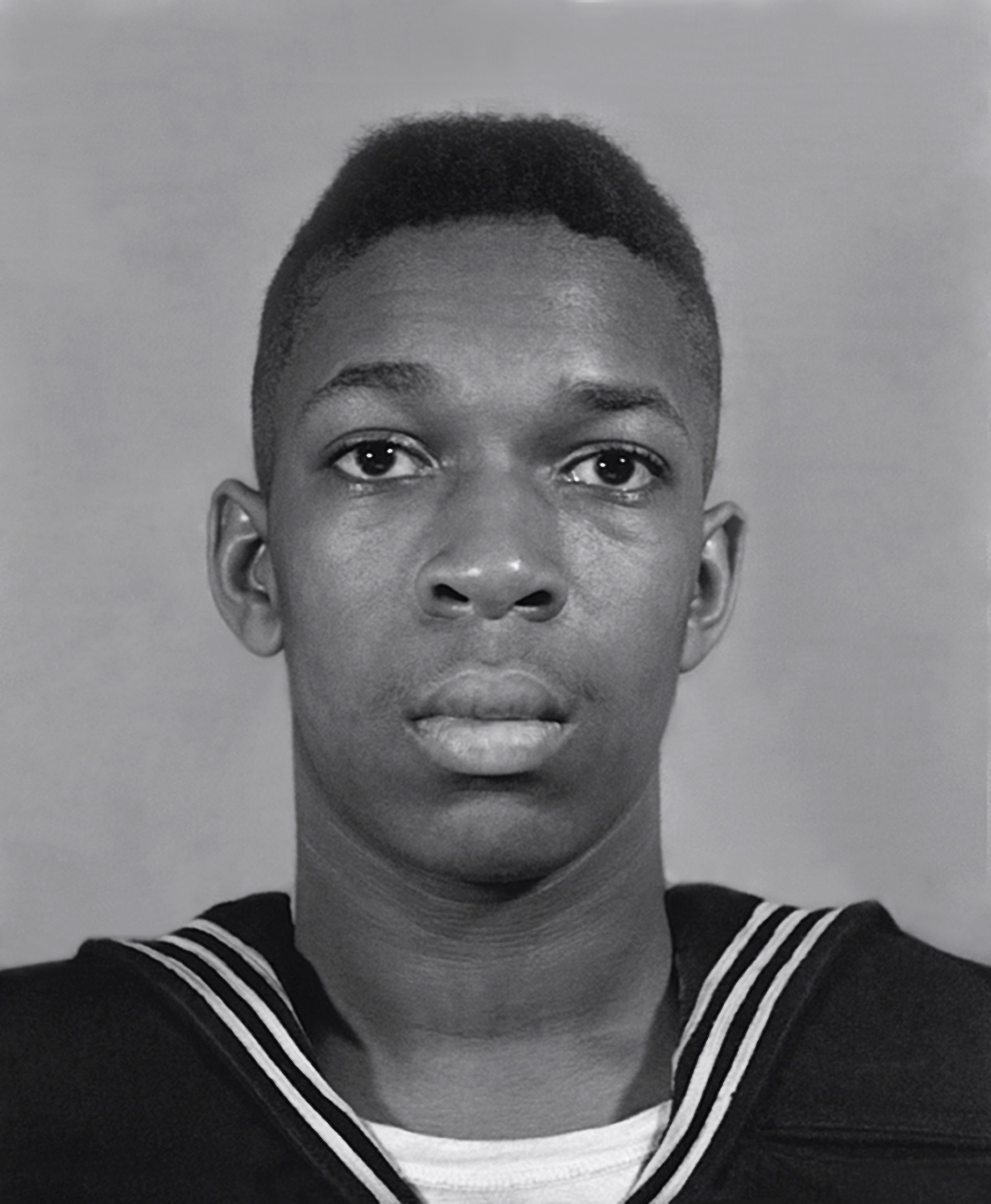
 John Coltrane poses for a Navy identity photo circa 1945.

(Photo by Donaldson Collection/Michael Ochs Archives/Getty Images)

Coltrane moved to Philadelphia in 1944, where music became an even larger part of his life. He took classes, performed, and studied different genres with a variety of musicians. After a year of playing in the U.S. Navy, he enrolled in advanced music lessons and immersed himself in classical harmony and chord structures. Coltrane also worked as a “horn for hire,” playing with musicians such as Dizzy Gillespie, Jimmy Heath, Johnny Hodges, Jimmy Smith, and even Duke Ellington.

In 1955, Coltrane was making his living as a musician in Philadelphia when he married Juanita “Naima” Grubbs, after whom he would name one of his best-loved ballads. Becoming stepfather to Naima’s young daughter, Antonia, made him a family man. While Coltrane’s personal life took on new dimensions, his career was similarly expanding.

Miles Davis, Thelonious Monk, and John Coltrane

Coltrane’s true commercial breakthrough came in 1955, when he replaced the now-legendary Sonny Rollins in Miles Davis’ group, beginning a pivotal collaboration. “It was Miles who made me want to be a much better musician,” Coltrane later remembered, and the recordings with Davis reveal a clear increase in his focus over time. The group featuring Coltrane is now generally referred to as Davis’ “first great quintet.” (The second, in the 1960s, featured saxophonist Wayne Shorter.) As author Martin Smith (2003) points out, “The quintet was hailed by the music press as the ‘savior of jazz.’”

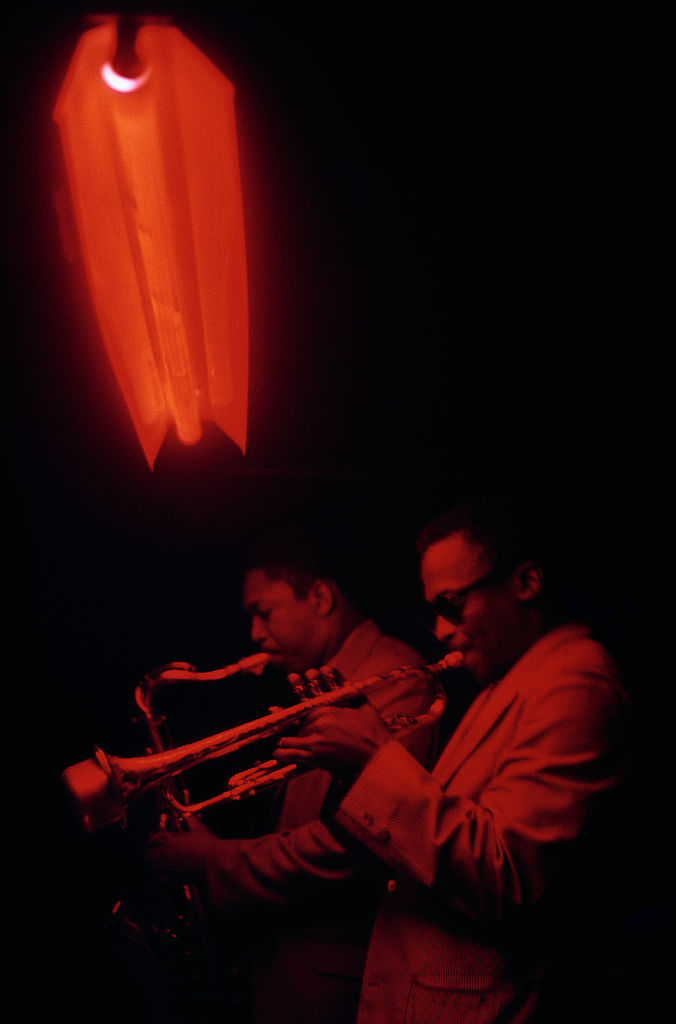
Miles Davis and John Coltrane performing at jazz club Cafe Bohemia in New York City in 1956.

(Photo by © Marvin Koner/CORBIS/Corbis via Getty Images)

In the late 1950s, Coltrane moved with his family to New York City, where his fast-growing reputation earned him playing time with pianist Thelonious Monk. “Working with Monk brought me close to a musical architect of the highest order,” Coltrane later said. “I felt I learned from him in every way.” Monk often allowed Coltrane to take long, explorative saxophone solos, refining a technique that critic Ira Gitler would later praise as “unfurling colorful bolts of music”—playing dense flurries of notes, or “sheets of sound,” incredibly quickly. Long, intense performances were becoming one of Coltrane’s hallmarks. As he observed, perhaps half-jokingly, “If you like something for 10 minutes, why shouldn’t you like it for 45 minutes?” 

Side Note: It’s often recounted that Miles Davis once confronted Coltrane about his increasingly long solos. Coltrane said, “I just don’t know how to stop.” Davis replied, “Why don’t you try taking the horn out of your mouth?”

Coltrane and Civil Rights

One early indication of John Coltrane’s social consciousness was the opening track on his first album as a band leader: Coltrane, released in 1957. (This is not to be confused with another album entitled Coltrane, released in 1962 and featuring a more established lineup and confident direction.) The track was called “Bakai.” Written by Calvin Massey, a friend of Coltrane’s, the song was dedicated to the memory of Emmett Till, a Black teenager murdered by racists in 1955, whose name became a rallying cry for the civil rights movement. This selection was an understated but genuine gesture of Coltrane’s support for the escalating crusade.

The Classic Quartet

In 1962, Coltrane established what later became known as the “classic” John Coltrane Quartet, featuring himself, McCoy Tyner on piano, Jimmy Garrison on bass, and Elvin Jones on drums. John’s son Ravi later commented, “It was a sound that didn’t exist before they played it, and that speaks volumes. The historical importance of that goes beyond saying.” Coltrane was very happy with this group’s work, saying, “Music is about the best thing I can think of to do. If there were something better, it would have to be very wonderful.” The classic quartet would go on to record such important albums as Coltrane’s magnum opus, A Love Supreme, in 1964. Before that milestone, however, a horrifying and shattering event would inspire him to issue a poignant, haunting, and powerful musical response.

Ravi Coltrane Quote

“It was a sound that they actually created.”

Ravi Coltrane
2018

Reflection: What do you hear in these recordings? What stands out as interesting or impactful? If you have listened to more than one, what differences do you hear among them?

The Work: “Alabama”

The Atrocity

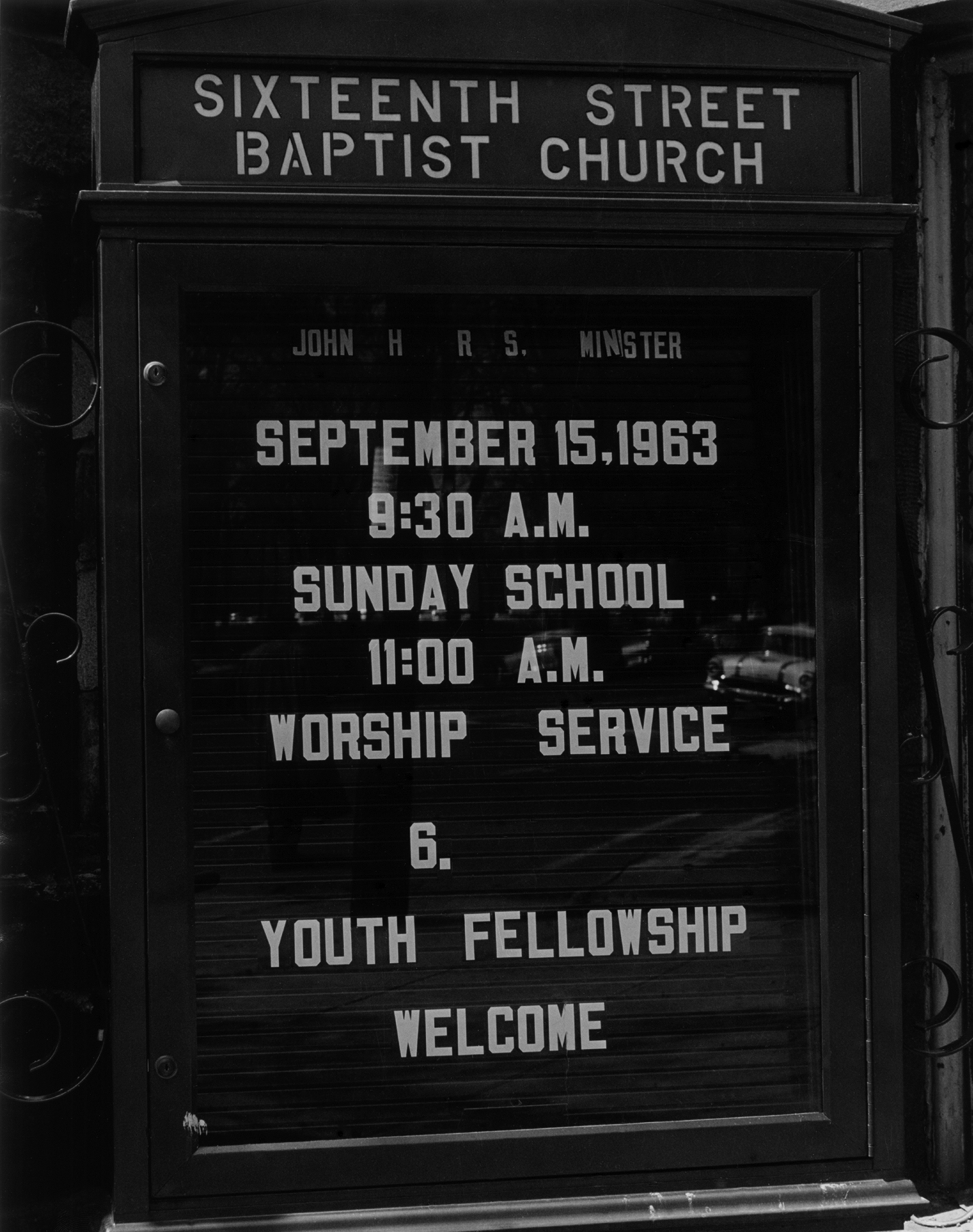
On September 15, 1963, a ghastly act of racial violence occurred in Birmingham, Alabama. Suspected associates of the white-supremacist group the Ku Klux Klan, active at the time, placed 12 sticks of dynamite in the basement of the 16th Street Baptist Church, a key civil rights meeting place. Four young Black girls were killed in the ensuing explosion: 14-year-olds Addie Mae Collins, Denise McNair, and Carole Robertson; and 11-year-old Cynthia Wesley. Like much of America, Coltrane heard the news that afternoon on a radio broadcast. He felt emotional devastation. Coltrane was a religious man who believed earnestly that people needed to love one another and that world peace was a crucial aspiration. The Birmingham church bombing conflicted so deeply with his philosophy that he decided to make a personal statement about it through music. 

A view of the marquee announcing services on the day of the bombing of the 16th Street Baptist Church on September 15, 1963 in Birmingham, Alabama. (Photo by Chris McNair/Getty Images)

Reflection: How do you think the events and elements of John Coltrane’s life through 1963 may have informed or amplified his deeply empathetic reaction to the Birmingham bombing? Might he have felt similarly about any more recent events?

The Eulogy

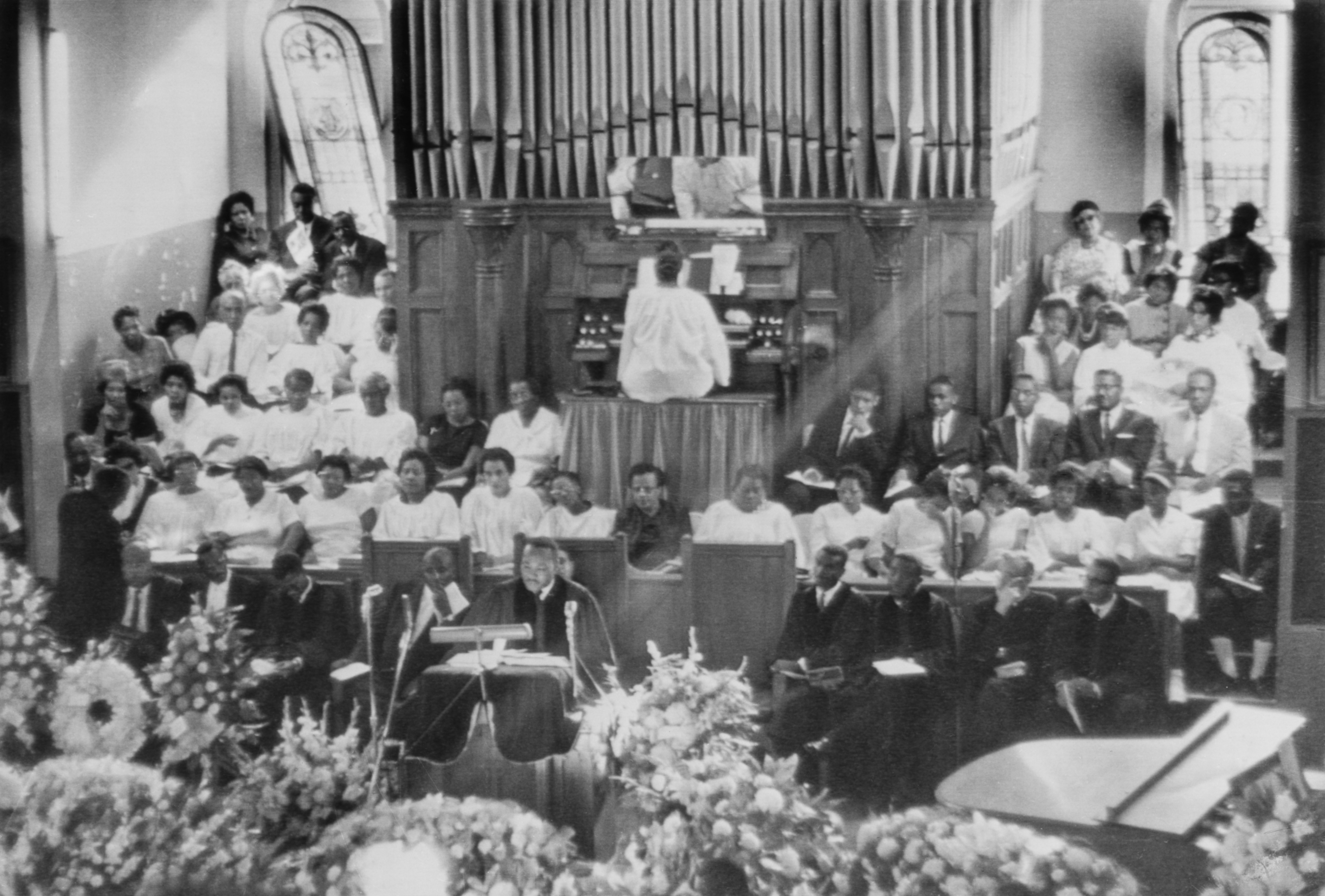
Three days later, on September 18, 1963, civil rights activist Dr. Martin Luther King Jr. went to Birmingham to speak at a combined funeral for three of the four murdered girls. His eulogy was unforgettably powerful. Excerpts from the speech were published in newspapers across the United States, which is how Coltrane read the words that would prove essential to his response to the bombing.

Here is the surviving audio of part of the eulogy:


Here is the full text of King’s speech: Eulogy for the Martyred Children

Dr Martin Luther King Jr conducts a funeral service for 3 young African American girls killed in a church bombing in Birmingham, Alabama. (Bettmann/Getty Images)


The Song

On November 18, 1963, two months after the funeral oration, Coltrane brought his quartet to the studio to record a new song called “Alabama,” a musical memorial for the four murdered girls in Birmingham. (Incidentally, the recording session took place just days before U.S. President John F. Kennedy was assassinated; this was an especially tumultuous time in American history.) Pianist Tyner later recounted the effect of King’s words: “The song ‘Alabama’ came from a speech. John said there was a Martin Luther King speech about the four girls getting killed in Alabama. It was in the newspaper—a printed medium. And so John took the rhythmic patterns of his speech and came up with ‘Alabama.’” Coltrane did not need lyrics to say what was in his mind and heart; he instead imbued the song with the essence of King’s eulogy. King’s words are not heard in “Alabama,” yet they are felt.

Coltrane begins and ends the song with aching expressions of grief. In the middle, as observed in JAZZIZ Magazine, “like the speech, ‘Alabama’ shifts its tone from one of mourning to one of renewed determination for the struggle against racially motivated crimes.” One of Coltrane’s most emotional works, “Alabama” was one of two studio-recorded songs on the album Live at Birdland, released to the public on January 9, 1964. 

Listening to “Alabama”

Pianist and composer Lewis Porter traced more specific correlations between King’s words and Coltrane’s notes. Per Porter’s analysis, the very first notes Coltrane plays seem to correspond with a stirring phrase from King’s eulogy: “They did not die in vain.” The final notes of the introductory section, at 1:20, invoke another iconic line: “Today you do not walk alone / not walk alone.” The full band emphasizes the latter part, playing it in unison.

After a brief improvisation section, the group returns to the opening theme, where Porter interprets Coltrane’s somber notes as “They did not die—they did not die in vainin vain.” Porter asserts, “There’s real power to this music. Coltrane is in full preaching mode. That ending, especially now that I hear the words, makes my scalp tingle and my heart race.” A close listen with this context in mind can certainly have that effect. Porter reveals more possible correlations in his deep dive, found here: “They Did Not Die in Vain”: On ‘Alabama,’ John Coltrane Carefully Wrought Anguish into Grace.”

Reflection: Listen to “Alabama” again. Given what you now know about “Alabama,” what did you hear this time? Compared with your first listen, how did the song make you feel?

The Jazz Casual Performance

The Jazz Casual Performance

On December 7, 1963, less than three weeks after the studio recording, Coltrane’s group appeared on the television program Jazz Casual and performed “Alabama,” among other songs. Watch/listen to this version and reflect on the following: What stands out about this performance in comparison with the album version? What did you see and hear that might shed light on Coltrane’s intentions, thoughts, or feelings?
You may have noted the following:
  1. The similarities between the performances, suggesting Coltrane’s intentionality. Whereas he tended to vary individual performances of other songs, Coltrane apparently knew exactly what he wanted to do with “Alabama” and executed that plan with power, precision, and tenderness. “Alabama” was a succinct statement.
  2. The depth of the band members’ emotion toward the song: In a close-up of Garrison playing the bass at 3:52, he appears to be fighting back tears.
Coltrane conveyed incredible sentiment using only one word—the song’s title—and many carefully chosen musical notes. As jazz historian Eric Nisenson observes, “‘Alabama’ cries not only for the four dead girls, but for all of us.” It is a work of enormous emotional gravity that endures to this day.
Reflection: Coltrane had recorded an album with a singer earlier in 1963 and could have written a vocal part for “Alabama,” yet he chose to create an instrumental piece. Why do you think he did that? If you had written the song, would you have approached it the same way?

After “Alabama”

A Love Supreme

Soon after “Alabama,” the same quartet recorded A Love Supreme, one of Coltrane’s most beloved and influential albums. Like Kind of Blue, A Love Supreme has merited volumes of analysis, including at least one entire book.

Notably, that album’s fourth movement, entitled “Psalm,” is what Coltrane called a “musical narration,” in which he played a saxophone incantation of a poem he had written. He included the poem in the album’s liner notes, so we can clearly align the music with his words.

SFJazz.org created a video clearly illustrating this throughline. You can find it here. We can’t know whether Coltrane would have approached “Psalm”or A Love Supreme itselfin the same way without writing “Alabama” first, but we can certainly see the lineage in his approach to rendering text through his playing.

John and Alice Coltrane

In 1965, fellow musician Alice McLeod became Coltrane’s second wife, taking his last name. John became stepfather to Alice’s daughter, Michelle, and the couple had three more children together, all of whom became musicians: John Jr., Ravi, and Oran. John and Alice Coltrane’s 1966 collaboration, “Cosmic Music” (released in 1968), includes a dense, 11-minute song called “Reverend King.” While it seems unlikely that the duo based that song on King’s spoken words, it is a clear sign of support and mourning for the civil rights leader, who had been assassinated earlier in the year. Five years after creating a musical eulogy based on King’s words in “Alabama,” Coltrane composed another tribute, this time for King himself.

Reflection: Can you think of any current music that may have taken inspiration from John Coltrane and “Alabama”? If Coltrane were with us today, what might he have wanted to write music about?

John William Coltrane died of liver cancer on July 17, 1967 at the age of 40. He achieved a tremendous amount in his tragically short life, and “Alabama” is one of many highlights. The song’s power transcends time as an unforgettable embodiment of sorrow, defiance, and urgency—a tender and impassioned memorial for four innocent lives extinguished decades ago.

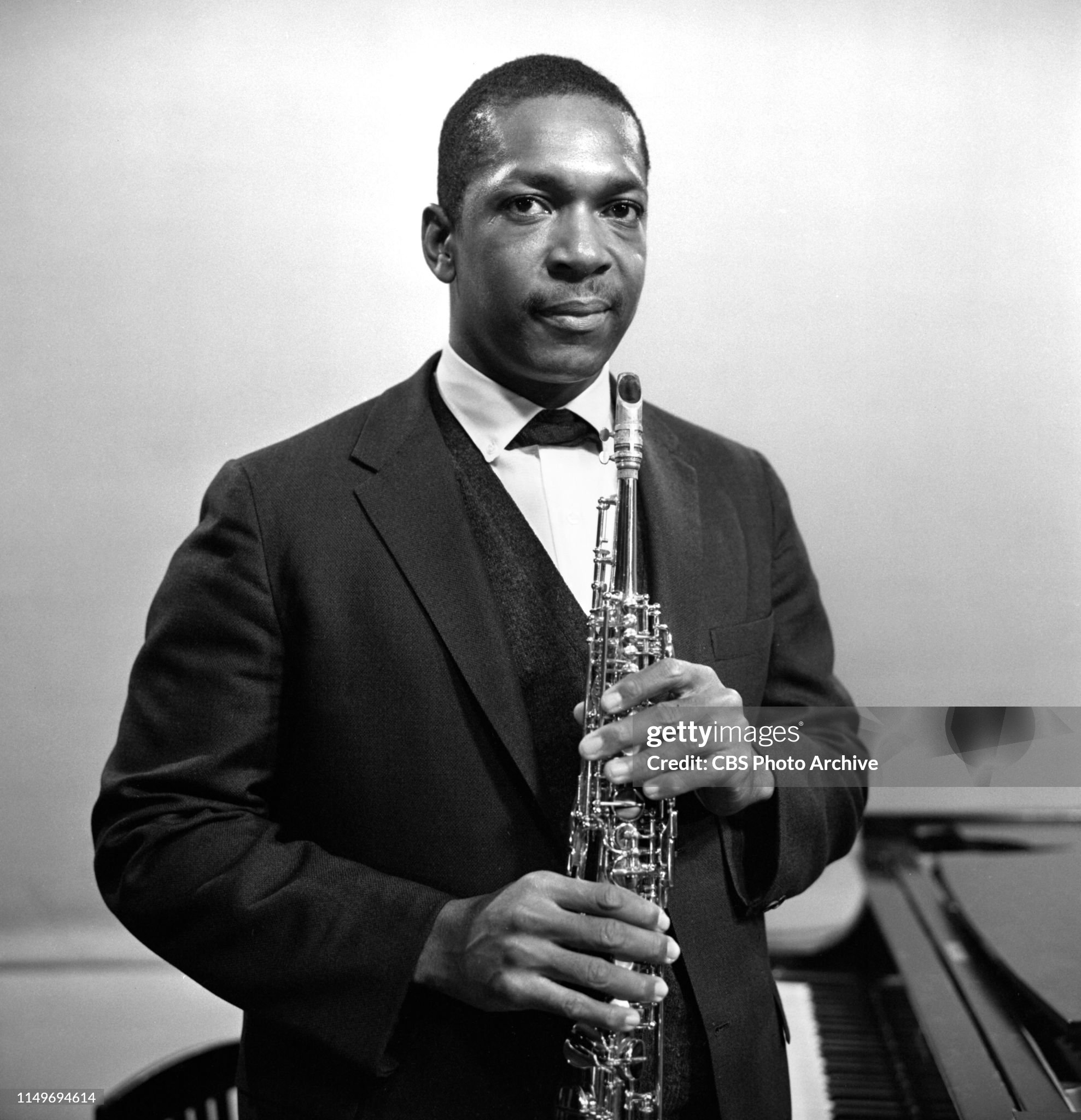
(Photo by Michael Ochs Archives/Getty Images)

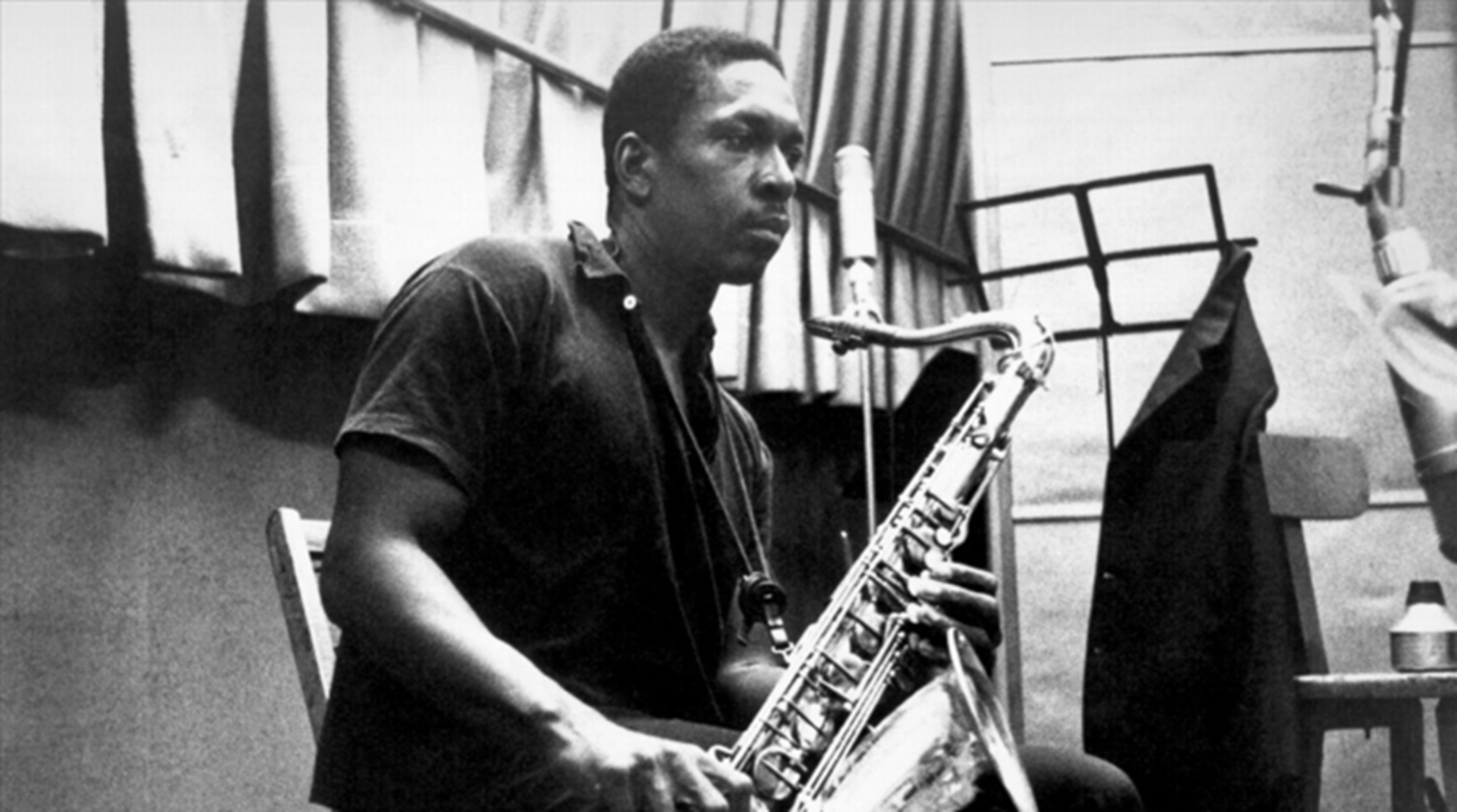
John Coltrane records in the studio in circa 1958. (Photo by Michael Ochs Archives/Getty Images)

Jim Frey is a professional learning design consultant, lifelong musician, and jazz enthusiast. He is the drummer in two Boston-area jazz groups, as well as the creator & host of Jazz You Like It on Spotify.

Kennedy Center Logo

  • Writer

    Jim Frey

  • Copy Editor

    Sandra Frey

  • Producer

    Ellie Pline

  • Updated

    March 2025

Related Resources

Interactive Drop Me Off in Harlem

Meet the actors, musicians, artists, dancers, writers, activists, and supporters of the early 20th century Harlem Renaissance, and discover the creative, cultural, and political “intersections” they made with each other.

A photo of a street view of the Cotton Club, featuring its main building sign and nearby billboards promoting performers at the venue. Two old-fashioned vehicles—one white and one black—are parked on the street. The black and white photo has been modified so the top half of the image has colorful tints in pink, green, yellow, and orange tinting the billboards.

Lesson Jazz Music, Dance, and Poetry

In this 3-5 lesson, students will explore jazz music and dance, then write a jazz-inspired cinquain poem. They will build their background on the history of jazz and its use of improvisation to demonstrate jazz dance movements. 

  • Grades 3-5
  • Music Art
  • Dancing
  • English & Literature
  • Jazz & Blues

Media Billie Holiday + Strange Fruit

The story behind Billie Holiday’s “Strange Fruit” (1939) is one of violence and tragedy, but also bravery in the face of adversity.

  • Music Art
  • Jazz & Blues
  • African-American History
  • Women in the Arts

Collection Jazz & Blues

Foot thumping rhythms, crooning voices, soulful melodies – jazz is a music with a history as rich as its sound. Follow the great migration that lead African Americans to Harlem, meet jazz icons such as Bessie Smith and Charlie Parker, and stop by the Cotton Club and Apollo Theater on a journey through the past of this American art form.

  • Jazz & Blues

Kennedy Center Education logo


Kennedy Center Education provides resources and experiences that inspire, excite, and empower students and young artists, plus the tools and connections to help educators incorporate the arts into classrooms and learning spaces of all types.

Connect with us!

spacer-24px.pngyoutube.png    facebook.png    twitter.png    instagram.png    email.png

Sign up to stay informed!

Generous support for educational programs at the Kennedy Center is provided by the U.S. Department of Education.

Gifts and grants to educational programs at the Kennedy Center are provided by The Paul M. Angell Family Foundation; Bank of America; Capital One; The Morris and Gwendolyn Cafritz Foundation; Carnegie Corporation of New York; The Ednah Root Foundation; Genesis Inspiration Foundation; Harman Family Foundation; William R. Kenan, Jr. Charitable Trust; the Kimsey Endowment; The Kiplinger Foundation; Laird Norton Family Foundation; Lois and Richard England Family Foundation; Dr. Gary Mather and Ms. Christina Co Mather; The Markow Totevy Foundation; Dr. Gerald and Paula McNichols Foundation; The Morningstar Foundation; Myra and Leura Younker Endowment Fund; The Irene Pollin Audience Development and Community Engagement Initiatives;

Prince Charitable Trusts; Dr. Deborah Rose and Dr. Jan A. J. Stolwijk; Rosemary Kennedy Education Fund; The Embassy of the United Arab Emirates; The Victory Foundation; The Volgenau Foundation; Jackie Washington; GRoW @ Annenberg and Gregory Annenberg Weingarten and Family; and generous contributors to the Abe Fortas Memorial Fund and by a major gift to the fund from the late Carolyn E. Agger, widow of Abe Fortas. Additional support is provided by the National Committee for the Performing Arts..

The content of these programs may have been developed under a grant from the U.S. Department of Education but does not necessarily represent the policy of the U.S. Department of Education. You should not assume endorsement by the federal government.