Virtual Performance

Philharmonia Fantastique:
The Making of the Orchestra

Event Information

  • Genre

    Performances for Young Audiences

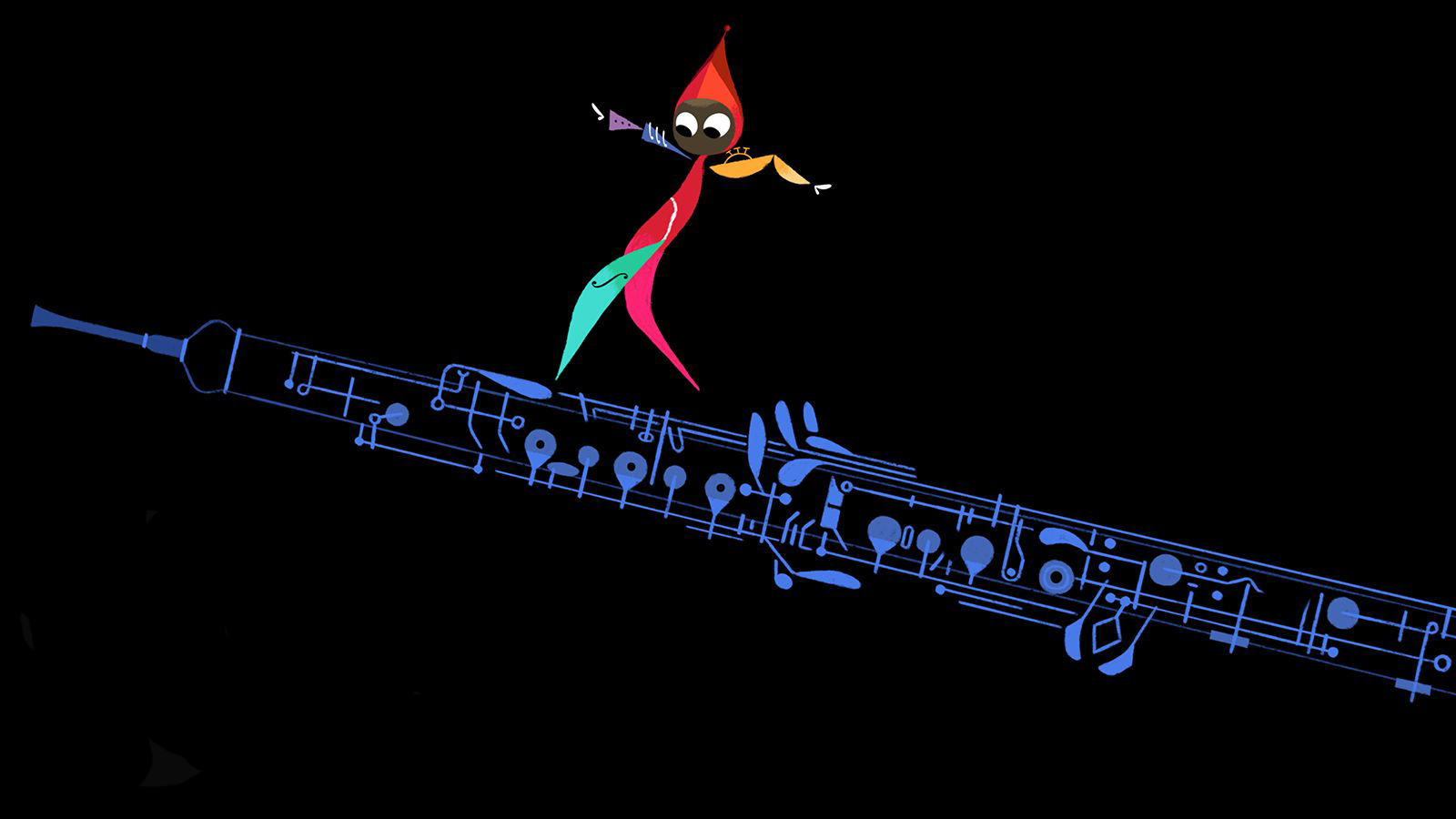
A still image of an animation scene shows a character named Sprite in a multi-colored outfit with a red pointy hat against a black background. Sprite walks along the top of a blue wireframe-stylized wind instrument, moving with arms raised for balance and eyes looking down at their steps. The colors and design of Sprite’s outfit represent the instrument families of the woodwind family, brass family, orchestra family, string family, and percussion family.

Dynamic concerto meets animated film!

Follow a magical Sprite as they embark on a musical journey through the inner workings of an orchestra. Violin strings vibrate, brass valves slice air, and drumheads resonate. By the film’s end, the instruments of the orchestra come together like you’ve never seen before. Music written by former Kennedy Center Composer-in-Residence, Mason Bates. Co-created with 7-time Academy Award®-winning director/writer Gary Rydstrom and Academy Award®-nominated animator Jim Capobianco.

Video shared courtesy of Mason Bates and World's Greatest Synth.

Recommended for all ages at home and in the classroom.

Duration: 23 minutes.

access-icon-audio-described-2.png

Welcome to the Philharmonia Fantastique: The Making of the Orchestra virtual performance and learning guide!

You’ll take a deep dive into the piece, which can be described as an animated concerto for orchestra. In Philharmonia Fantastique, you’ll learn about specific sections or families of the orchestra and explore some activities and thinking exercises. We hope you enjoy discovering something new and seeing all you know about the orchestra through the eyes of our mercurial Sprite!

This virtual performance is available to stream here for free!

Please register for access (it's very quick) to get your order number which you can enter below to watch the film.

Video: Discover with Composer Mason Bates

Video: Discover with Composer Mason Bates

Notes for Grownups and Teachers

Please help your young concertgoers get the most out of the performance by exploring together the ideas and activities on this page. Be sure to also see the comprehensive and downloadable Philharmonia Fantastique Youth Concert Resource Guide which includes in-depth information about the performance, the creative team (including Grammy®-winning composer Mason Bates), the instrument families, and the making of the film, as well as worksheets and extended learning activities.

You might want to plan your own approach to all the rich resources, but if time is short, here are some suggestions:

Before the performance

  • Review together the concert description and music, and discuss what learners are most excited about and hope to learn.
  • Discuss “What to Expect” and “Look and Listen for.”
  • Watch a 2-minute video about Sprite.
  • Review the instrument families in the Resource Guide (p. 15) or in Sprite’s World.

After the performance

  • Discuss some or all of the questions in “Think About.”
  • Discuss the “Animating Questions” on page 20 of the Resource Guide.
  • Try together (or assign students to try at home) one or more of the activities under “Try It Yourself” or in the Resource Guide (p. 20).
  • If you need ideas for homemade instruments for the “Build an Orchestra” activity under “Try It Yourself,” see page 39 of the Resource Guide and check out this resource in our library for even more ideas: Strike Up the Band: Creating Homemade Instruments.

What to Expect

Performance

  • This performance features animation, and a magical animated character named Sprite.

Visuals

  • The animated images spin, swirl, vibrate, and pop in and out of the screen’s frame. Some of the animated shapes come together to create the main character of the film, Sprite! There are also moments in the film when bright light shines through the animated instruments.

Sound

  • The music in this concert is often exuberant and may be loud for some!

What You’ll Need

  • Please have any tools on hand that will help make the viewing experience comfortable for you! Depending on whether you’re watching on a shared screen (like a TV or projector screen) or on a computer, in a bright room or a dark room, you might want headphones (to enhance or reduce sound); sunglasses, visors, or other eyewear; fidgets; or communication devices.

Watch the teaser!

Video (for this block): “Birth of Sprite”

Video (for this block): “Birth of Sprite”


Look and Listen for

Before you watch the video, check out this list of important moments and ideas:

  • the different colored lines and images and how they represent each instrument family (hint: blue=woodwinds; green=strings; yellow=brass; and red=percussion)
  • the different instrument parts that make up Sprite (look to the colors for clues!)
  • the different musical themes or styles of each instrument family—how would you describe them?
  • the film’s action scene during the brass instrument section and what makes the animal running through the trumpet change its direction
  • when Sprite conducts (with the small stick called a “baton”), and what happens when the instrument families all play faster and louder at the same time
  • how the string instruments make percussion sounds
  • when the instrument families begin playing each other’s themes and finishing each other’s musical patterns (like a person would finish another person’s sentence)
  • the flowing lines that suggest sound waves, the usually invisible ripples formed when an object vibrates, such as a violin string

Think About

After you’ve experienced the performance, consider these questions:

  • What was your favorite section of the piece and why?
  • How did you feel during each section of the film? Did you have a different feeling during the strings versus the brass?
  • Did the music or animation make you think of anything you have listened to or seen before? What was it and why did your prior experience come to mind?
  • What surprising things did you learn from the virtual performance?
  • In describing the moment when the orchestra tunes, Mason Bates said, “As this super-instrument brings its marvels of engineering together into a single pitch, we are witnessing both art and science.” What do you think he means? How can it be both art and science? Do you agree that the orchestra is a “super-instrument”? Why or why not?
  • The title Philharmonia Fantastique was inspired by French composer Hector Berlioz’s Symphonie Fantastique (1830), which was groundbreaking for its dream-like storytelling. “Philharmonia” can refer to a symphony orchestra, and it comes from Latin and Greek words that mean “loving harmony.” Do you think Philharmonia Fantastique is a good title for the piece? Why or why not?
  • One of the big ideas of Philharmonia Fantastique is how the diverse families of instruments fail when they don’t cooperate, but create harmonious music together when they listen to and learn each other’s “language,” or musical themes. What examples of this idea can you think of in your own life?

Try It Yourself

Compose Music

Mason Bates says the best thing about being a composer is that it “…allows me to build all kinds of different worlds: symphonies, operas, even films.” Mason composed his first music around age 7, and you, too, can build musical worlds. One way to start is to think of a favorite short story. Then imagine the music that could tell that story without words. Try to “hear” your story’s music in your head and then hum, sing, or describe your music to friends and family. If you know music notation, write the music down. And have fun giving your musical piece a title.

Ready to take it up a notch? Use some of the tools in The Composer’s Toolbox (Google Doc) to make your music even more expressive.

Build Your Own Orchestra

With a few friends or family members (or your class), find different instruments you can play—either actual instruments or ones you make yourself. First, let all participants take turns playing their own musical themes. Then, each musician should try to learn the theme of one other person. Finally, work together to play as an orchestra. Decide on one or two themes that everyone can play or choose new patterns that sound good together. Afterward, discuss the challenges you faced and how you overcame them to make music together. Check out this resource in our library for ideas: Strike Up the Band: Creating Homemade Instruments.

Create a Visual Accompaniment

Like the animators of Philharmonia Fantastique, plan your own animation or video to express music. Choose a short passage from a classical music piece you like. What short story could you tell with this music? Write down a few ideas and draw some pictures—or make an actual video if you like—showing how you would bring the story to life. Share your ideas with others, explaining how the music inspired the story and how your story goes with the music.

Continue Exploring

More Orchestra Please!

Our Guide to the Orchestra is a kid-friendly and handy reference on just about everything there is to know about orchestras, their music, and their instruments.

Our interactive, Perfect Pitch, explores the instruments and eras of the orchestra and invites learners of all ages to discover the ways compositions can be arranged with different instruments all in a fun, baseball-themed context.

Philharmonia Fantastique Resource Guide and Sprite's World

The Philharmonia Fantastique Youth Concert Resource Guide is a comprehensive teaching guide to the music and film. 

Sprite’s World, is an interactive site for learning more about Sprite and the musical instruments.

Mason Bates, Composer

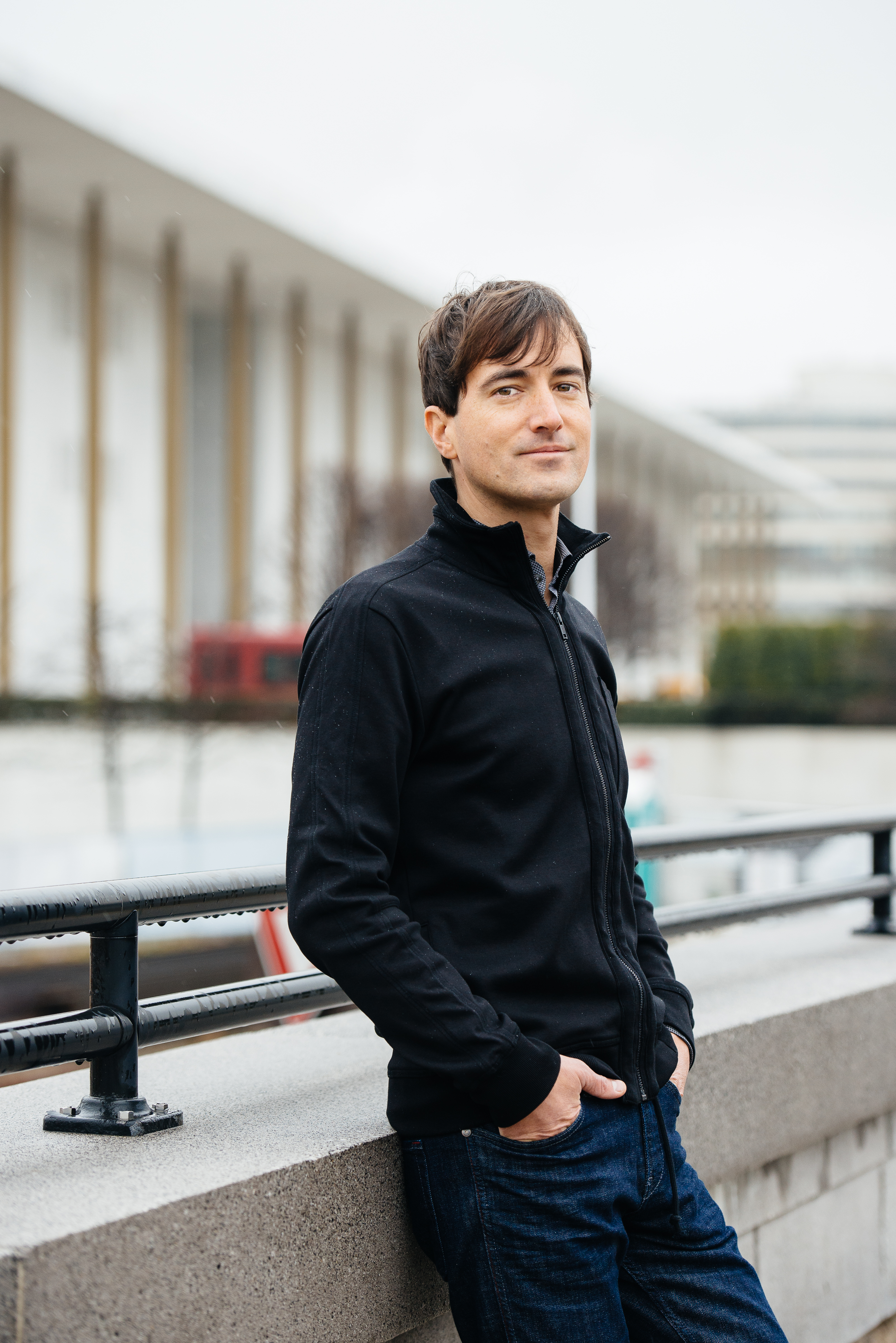
Photo of Mason Bates by Kate Warren. A tall slim white man with short brown hair dressed in jeans and a dark blue sweater is standing with hands in his pockets outside in front of the Kennedy Center.

Learn more about Mason Bates, the composer of Philharmonia Fantastique through his website, YouTube, and Spotify channels!

Photo credit: Kate Warren


Philharmonia Fantastique In Person

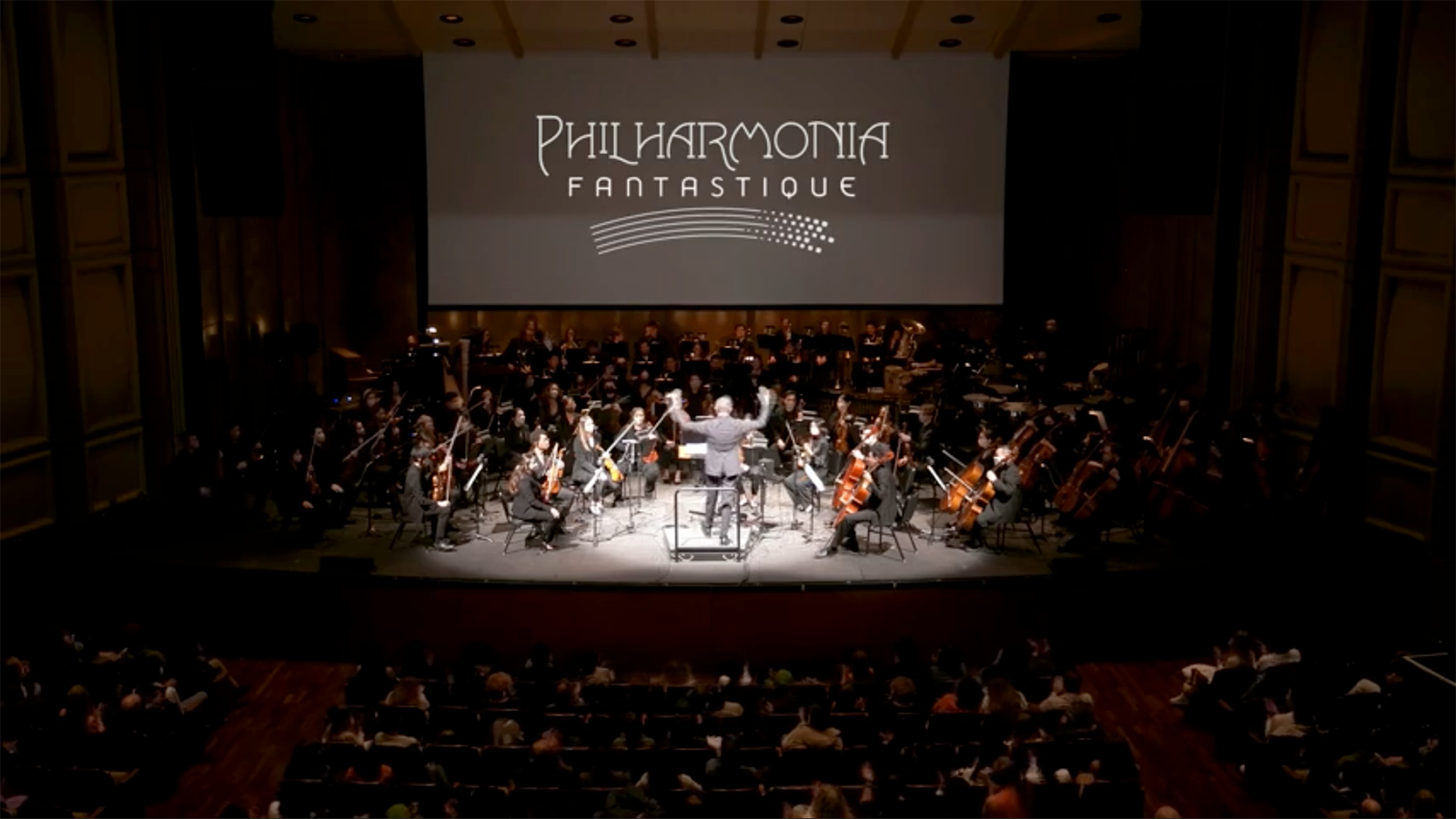
The soundtrack for Philharmonia Fantastique is typically performed in person. Check the Sprite’s World events page to find out when it may be coming to a theater near you!


Production Credits

Music by Mason Bates. Directed by Gary Rydstrom. Written by Mason Bates and Gary Rydstrom. Animation direction by Jim Capobianco.

Commissioned by Chicago Symphony Orchestra, San Francisco Symphony, Pittsburgh Symphony Orchestra, Dallas Symphony Orchestra, National Symphony Orchestra, American Youth Symphony, Sakana Foundation, John & Marcia Goldman Foundation and Paul J. Sekhri & The Sekhri Family Foundation.

With thanks to the Heinz Family Foundation, Bette and Joe Hirsch, Judy and David Anderson, Noelle and Evan Shahin, Robin Raborn and John Lazlo, Paula Blank and Irwin Derman for their generous contribution to the education program and digital materials for Philharmonia Fantastique and Sprite’s World.

Produced by Alex D. da Silva & Mason Bates | Executive producers Jody Allen, Rocky Collins, Ruth Johnston & Mary Pat Buerkle | Soundtrack recorded by the Chicago Symphony Orchestra and Edwin Outwater

With thanks to the John & Marcia Goldman Foundation, Carol M. Kaganov and Joseph & Bette Hirsch for their generous support of the inaugural educational installation of Philharmonia Fantastique at Moonshoot Studio at The REACH, Kennedy Center.
Learning Guide Credits

Writer: Marcia Friedman

Editors: Emily Heckel, Tiffany A. Bryant

Producers: Tiffany A. Bryant, Eric Friedman

Accessibility Consultant: Office of Accessibility

Related Resources

Media Perfect Pitch

Take the field and learn the looks, sounds, history, and notable players of orchestral instruments from four eras—baroque, classical, romantic, and modern. Next, use the interactive audio mixer to choose your players and hear them perform together. Finally, test your musical knowledge with a fun baseball-style quiz.

Media Guide to the Orchestra

Listening to an orchestra can be a powerful experience. It can entertain you, tell you stories, make you laugh or cry, or take you away to faraway places. Knowing a few things about orchestras and the range of music they play can make it even better. Everything you need to get started is right here in this guide.

  • Orchestral Music
  • Composers
  • Musical Instruments

Media Mason Bates on Curating the Concert Experience

Join Kennedy Center composer-in-residence Mason Bates on an exploration of the process of Curating the Concert Experience. In this mini mini-series, Mason takes us on a journey in three parts—Programming, Production, and Platform—sharing his unique perspective and insights.

  • Music Art
  • Jobs in the Arts
  • Popular Culture
  • Composers

Media Instrument Spotter’s Guide

You might see some of these instruments when you come to the Kennedy Center, watch a performance by your school band, or at any other concert you attend! Click the slides to learn more about some of the most frequently spotted instruments in each family.

  • Music Art
  • Musical Instruments

Media Kids’ Classical Countdown

Looking to bolster your knowledge of classical music or simply trying to broaden your knowledge of music in general? Whatever your reason, here’s a different kind of musical hit list—our choices for the top 10 works in Western classical music for kids and their parents.

  • Orchestral Music
  • Composers

Media Feel the Dynamics!

Teaching artist Zeynep Alpan demonstrates how different dynamics in music can evoke different emotions, and leads students through the process of creating different dynamics with household objects.

Collection Classical Music

Meet great composers, explore the vast musical world of the orchestra, study the science behind the instruments, and discover how classical music is anything but boring.

  • Orchestral Music
  • Chamber Music

Kennedy Center Education 
Building the Future
of Arts Education

Professional development for educators. Summer intensives for young artists. Teaching artist guided activities. Performances for young audiences. Classroom lesson plans. Arts-focused digital media.

Kennedy Center Education offers a wide array of resources and experiences that inspire, excite, and empower students and young artists, plus the tools and connections to help educators incorporate the arts into classrooms of all types.

Our current teaching and learning priorities include:

Digital Resources Library

A robust collection of lesson plans, articles, and activities that allow students and educators of all ages to explore and learn about the arts and arts integration.

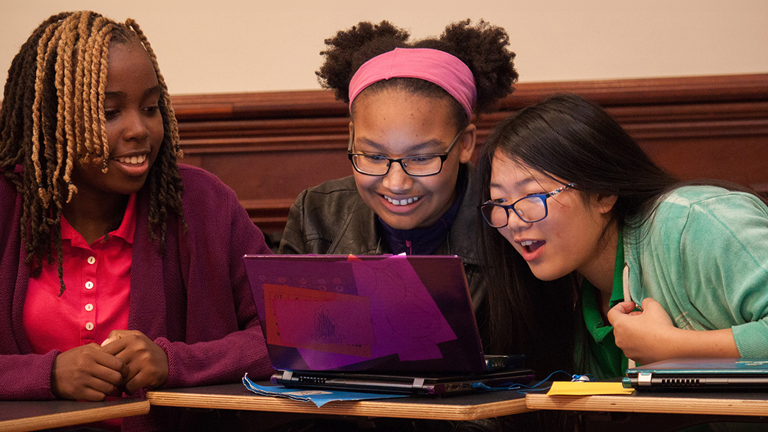
Three young people smiling and looking at a laptop computer screen

Current Topics in Arts Integration

Current approaches to arts integration in the classroom, inclusion, rigor, and adopting an arts integration approach at the school and district level.

A group of teens performing the musical, "In the Heights."

Kennedy Center Education logo


The Vice President of Education is generously endowed by the A. James & Alice B. Clark Foundation.

Generous support for educational programs at the Kennedy Center is provided by the U.S. Department of Education.

Gifts and grants to educational programs at the Kennedy Center are provided by The Paul M. Angell Family Foundation; Bank of America; Capital One; The Morris and Gwendolyn Cafritz Foundation; Carnegie Corporation of New York; The Ednah Root Foundation; Genesis Inspiration Foundation; Harman Family Foundation; William R. Kenan, Jr. Charitable Trust; the Kimsey Endowment; The Kiplinger Foundation; Laird Norton Family Foundation; Lois and Richard England Family Foundation; Dr. Gary Mather and Ms. Christina Co Mather; The Markow Totevy Foundation; Dr. Gerald and Paula McNichols Foundation; The Morningstar Foundation; Myra and Leura Younker Endowment Fund; The Irene Pollin Audience Development and Community Engagement Initiatives;

Prince Charitable Trusts; Dr. Deborah Rose and Dr. Jan A. J. Stolwijk; Rosemary Kennedy Education Fund; The Embassy of the United Arab Emirates; The Victory Foundation; The Volgenau Foundation; Jackie Washington; GRoW @ Annenberg and Gregory Annenberg Weingarten and Family; and generous contributors to the Abe Fortas Memorial Fund and by a major gift to the fund from the late Carolyn E. Agger, widow of Abe Fortas. Additional support is provided by the National Committee for the Performing Arts..

The content of these programs may have been developed under a grant from the U.S. Department of Education but does not necessarily represent the policy of the U.S. Department of Education. You should not assume endorsement by the federal government.