Patrons are requested to silence cell phones and other electronic devices during performances.
The taking of photographs and the use of recording equipment are not allowed in this venue.
Terms and Conditions
All events and artists subject to change without prior notice.
Sponsors
The NSO Music Director Chair is generously endowed by the Roger and Victoria Sant Trust
The Irene Pollin Audience Development and Community Engagement Initiatives; The Morris and Gwendolyn Cafritz Foundation; Dr. Gary Mather and Ms. Christina Co Mather
This project is supported in part by the National Endowment for the Arts.
Post-Concert Panel Discussion
Moderator:
Anthony W. Randolph, Associate Professor - Composition, Howard University
Panelists:
Gianandrea Noseda, Music Director, National Symphony Orchestra
Carlos Simon, Kennedy Center Composer-in-Residence
Mickey Thomas Terry, Lecturer - Organ, Accompanist, Blacks in the Arts, Howard University
Gregory Walker, Composer, Violinist, Guitarist, son of George Walker
Post-Concert Panel Discussion
Moderator:
Anthony W. Randolph, Associate Professor - Composition, Howard University
Panelists:
Gianandrea Noseda, Music Director, National Symphony Orchestra
Carlos Simon, Kennedy Center Composer-in-Residence
Mickey Thomas Terry, Lecturer - Organ, Accompanist, Blacks in the Arts, Howard University
Gregory Walker, Composer, Violinist, Guitarist, son of George Walker
Gianandrea Noseda is one of the world’s most sought-after conductors, equally recognized for his artistry in both the concert hall and opera house. He is Music Director of the National Symphony Orchestra, General Music Director of the Zurich Opera House, Principal Guest Conductor of the London Symphony Orchestra, and founding Music Director of the Tsinandali Festival and Pan-Caucasian Youth Orchestra.
Noseda’s leadership has inspired and reinvigorated the National Symphony Orchestra, which makes its home at the Kennedy Center. The renewed artistic recognition has led to invitations to leading international concert halls, digital streaming, and a record label distributed by LSO Live. Noseda’s discography numbers over 80, with many of them receiving critical acclaim.
Noseda has conducted the most important international orchestras, opera houses and festivals. The institutions where he has had significant roles include the Teatro Regio Torino (Music Director), BBC Philharmonic (Chief Conductor), Israel Philharmonic Orchestra (Principal Guest Conductor), Mariinsky Theatre (Principal Guest Conductor), Orchestra Sinfonica Nazionale della RAI (Principal Guest Conductor), Pittsburgh Symphony Orchestra (Victor de Sabata Chair), and Rotterdam Philharmonic (Principal Guest Conductor).
A native of Milan, Noseda is Commendatore al Merito della Repubblica Italiana, marking his contribution to the artistic life of Italy. He has also been honored with Musical America’s Conductor of the Year, International Opera Awards Conductor of the Year, OPER! AWARDS Best Conductor and is a recipient of the Puccini Award and the "Ambrogino d'Oro" by the city of Milan.
Carlos Simon is a multi-faceted and highly sought-after composer whose music ranges from concert music for large and small ensembles to film scores with influences of jazz, gospel, and neo-romanticism. Recently announced as Composer-in-Residence at the Kennedy Center, Carlos’s commissioning highlights include premiere works with New York Philharmonic, Los Angeles Philharmonic, Los Angeles Opera, Philadelphia Orchestra, and Washington National Opera. The Philadelphia Enquirer described his music as “perfectly engaging and propulsive.” Simon’s latest album, My Ancestor’s Gift, which was released in April 2018 on Navona Records, epitomizes Simon’s work by incorporating spoken word and historic recordings alongside traditional classical music, crafting a multi-faceted record that speaks to audiences past and future. In 2017, Carlos Simon joined the inaugural class of the Gabriela Lena Frank Academy of Music. He then went on to be named a Sundance/Time Warner Composer Fellow in 2018, seeing him work at the legendary Skywalker Ranch, and he was a recipient of the Sphinx Medal of Excellence in 2021.
Anthony W. Randolph, DMA, The Catholic University of America 2006, MM, Howard University 1988, BM, Howard University 1982, is a composer, pianist, and music historian with extensive teaching experience at the university and primary levels. Dr. Randolph has served on the music faculty of the Benjamin T. Rome School of Music at The Catholic University of America, and is currently Associate Professor of Music at Howard University. Recent compositions by Dr. Randolph include Requiem Mass for the African-American Slave for orchestra, chorus, and soloists; Baghdad, the Day After, for orchestra, muezzin, and audio CD; How Long, O Lord, an electronic composition and video compilation chronicling the struggles of African-Americans from the slave trade to the present, as well as multiple chamber works.
Mickey Thomas Terry holds a Ph.D. from Georgetown University in Washington, D.C. His principal organ teachers were Clarence Watters, Conrad Bernier, and Charles Callahan. Dr. Terry has been a prize-winner and/or finalist in national and international organ competitions. He has been a featured recitalist at national and regional conventions of the American Guild of Organists and has appeared on Minnesota Public Radio “Pipedreams” broadcasts. Dr. Terry is the editor of critically acclaimed multi-volume African-American Organ Music Anthology, published by Morning Star Music Publishers (St. Louis, MO). Dr. Terry serves as a Lecturer in the Department of Music at Howard University. He has also taught on the faculty of Georgetown University. A recipient of the 2022 Artist Fellowship from the District of Columbia Council on the Arts and Humanities, Dr. Terry is an avid recitalist who is considered as one of the leading authorities on the music of African-American classical composers. His published articles have appeared in numerous professional music journals. His latest publication Blacks in the Arts: Music, Art, and Theater-Selective Readings has just been released.
Since his Philadelphia Orchestra debut, praised by the American Record Guide as a performance of “precision and rapturous immediacy,” violinist and composer Gregory Walker has appeared as soloist with orchestras across the U.S. and abroad including the Detroit Symphony, Poland's Sinfonia Varsovia and the Filharmonia Sudecka, and the Encuentro Musical de los Americas in Havana, Cuba, as well as the Colorado Symphony. With recordings available on the Newport Classic, CRI, Orion, Albany and Leonarda record labels, he has been featured at Beijing's Genesis Concert Series, Great Britain's Lake District Music Festival, Norway's Tromsø Cathedral Series, the Centro Mexicano para la Musica y las Artes Sonoras, the Cork Orchestral Society Concert Series in Ireland, the Chetana International Music Festival in Kerala, India, and at the U.S. Library of Congress.
The son of Pulitzer Prize-winning composer George Walker and African-American women's music scholar Helen Walker-Hill, Walker is an American Academy of Arts and Letters Fellowship recipient, International Musician cover artist, and subject of the internationally-distributed documentary film Song of the Untouchable. Walker's Dream N. the Hood for Rapper and Orchestra was described by the Minneapolis Pioneer Press as "an American masterpiece." His Bad Rapfor Electric Violin and Chamber Orchestra is published by Keiser Music, Global Solstice for Electronic Guitar and Chamber Orchestra has just been released on the Centaur label, and Rock, Pop and Hip-Hop Fantasies for Two Violins are published by Bellegrove. Dr. Walker currently serves as a professor at the University of Colorado Denver.
Life In Time
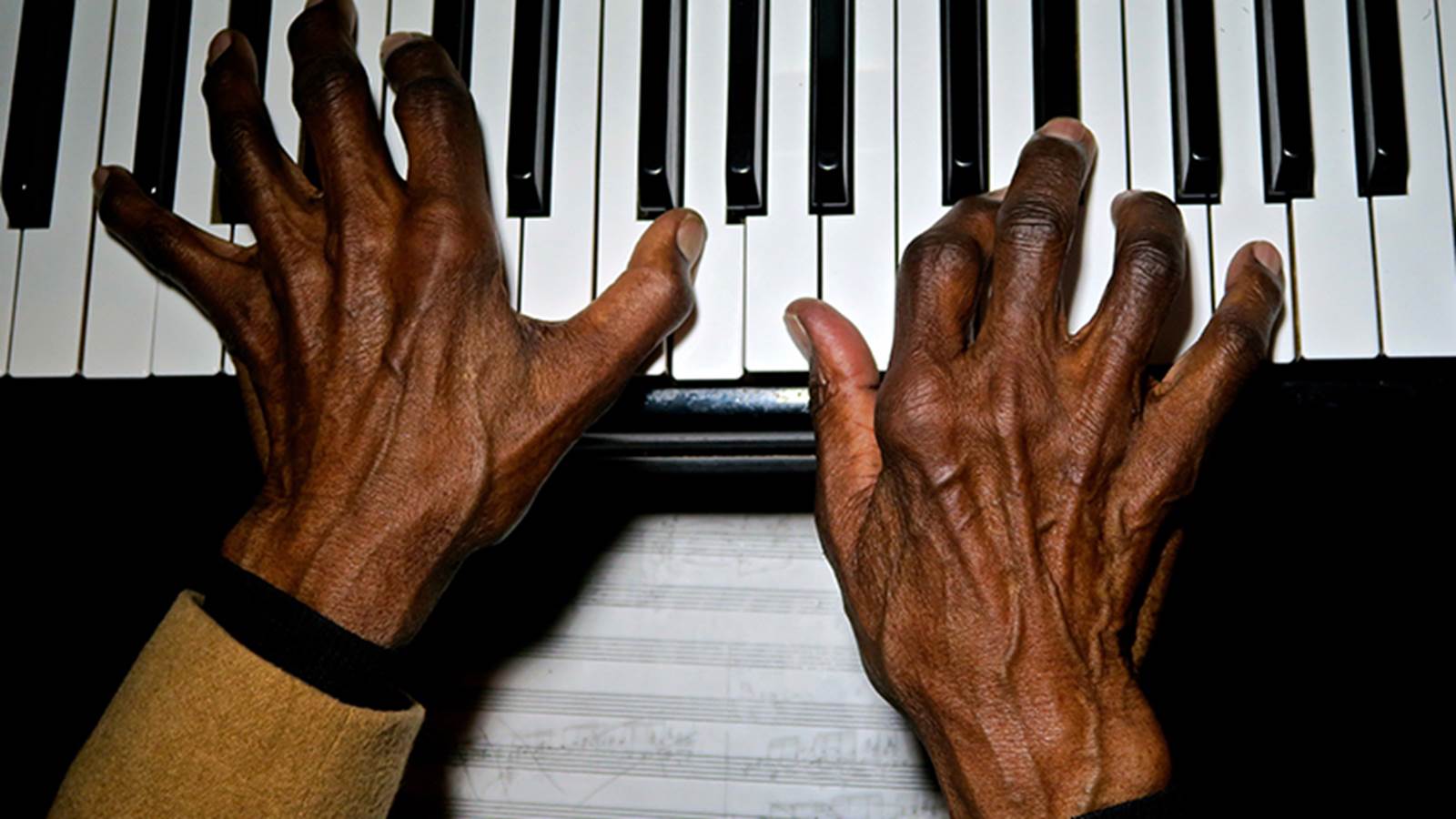
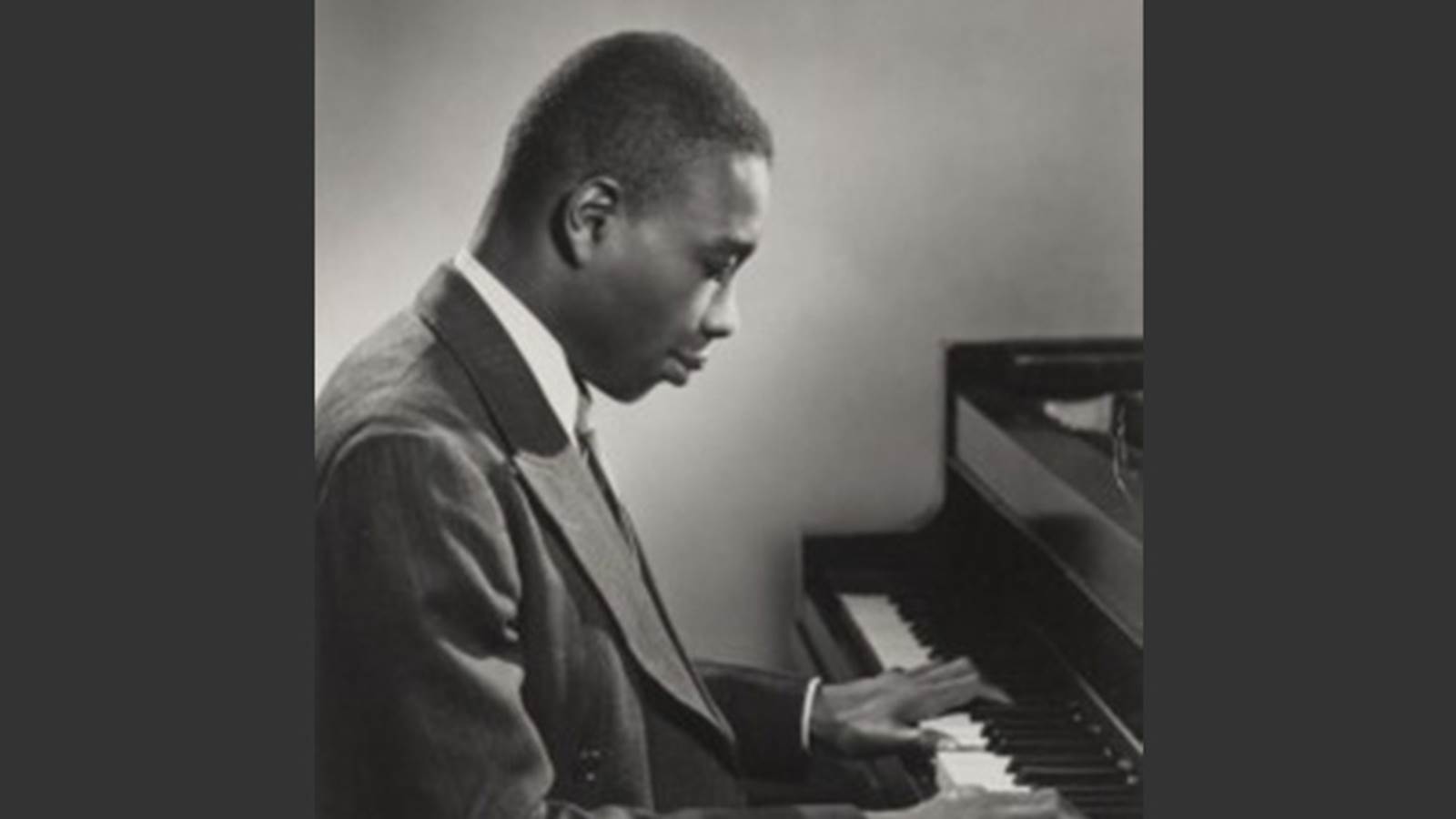
Hands on piano. Photographs by Frank Schramm
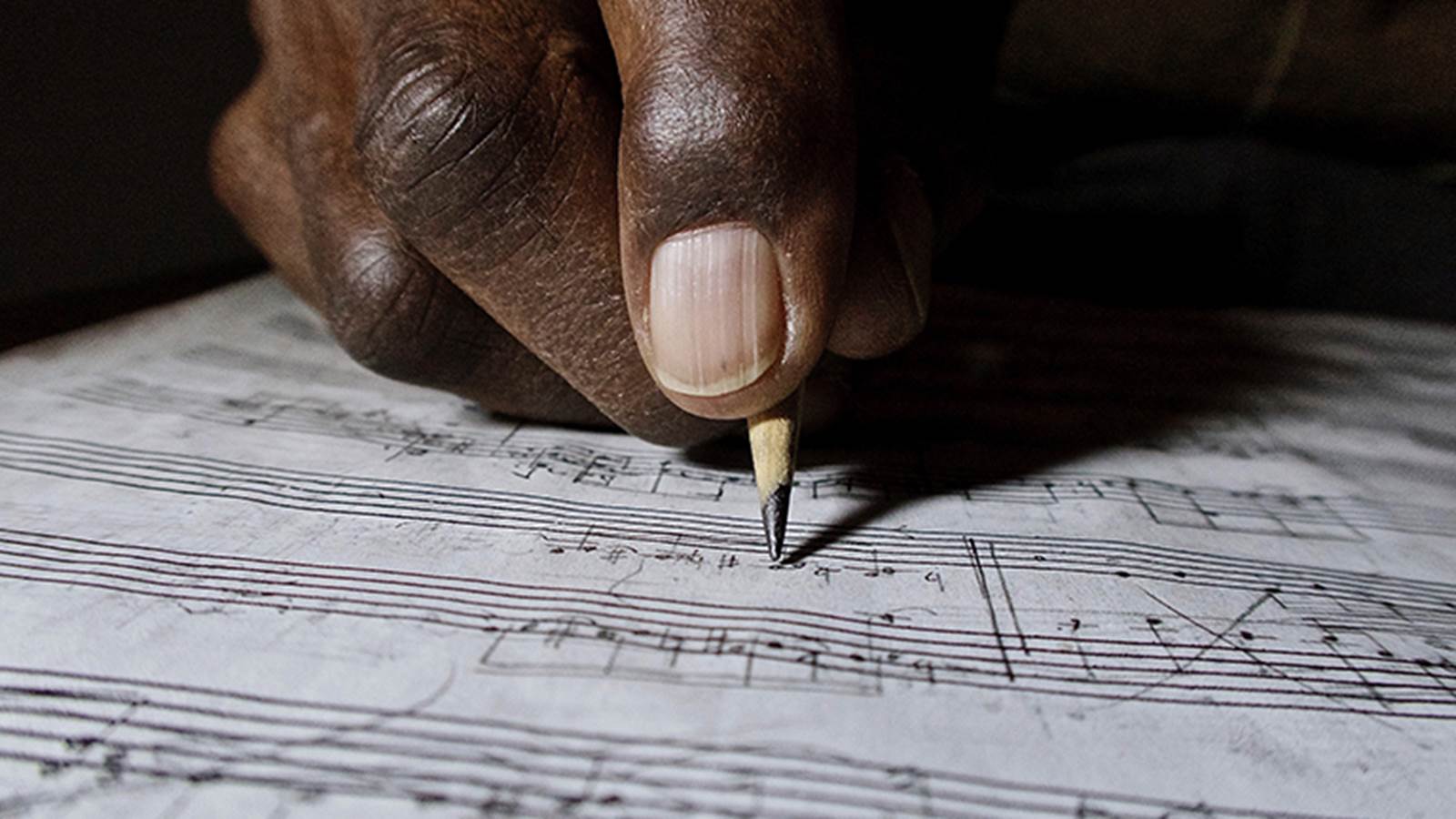
Hand with pencil to music. Photographs by Frank Schramm
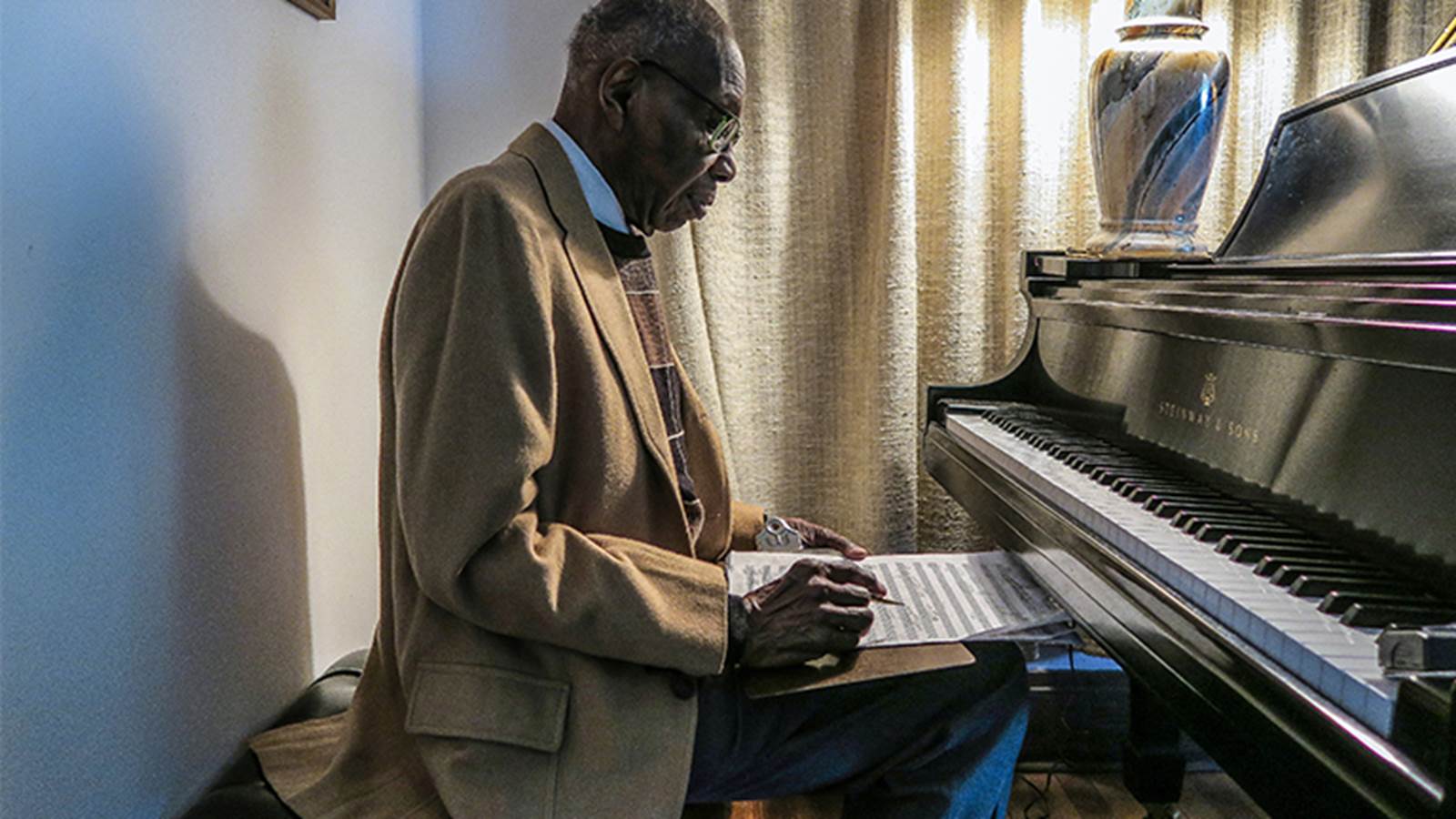
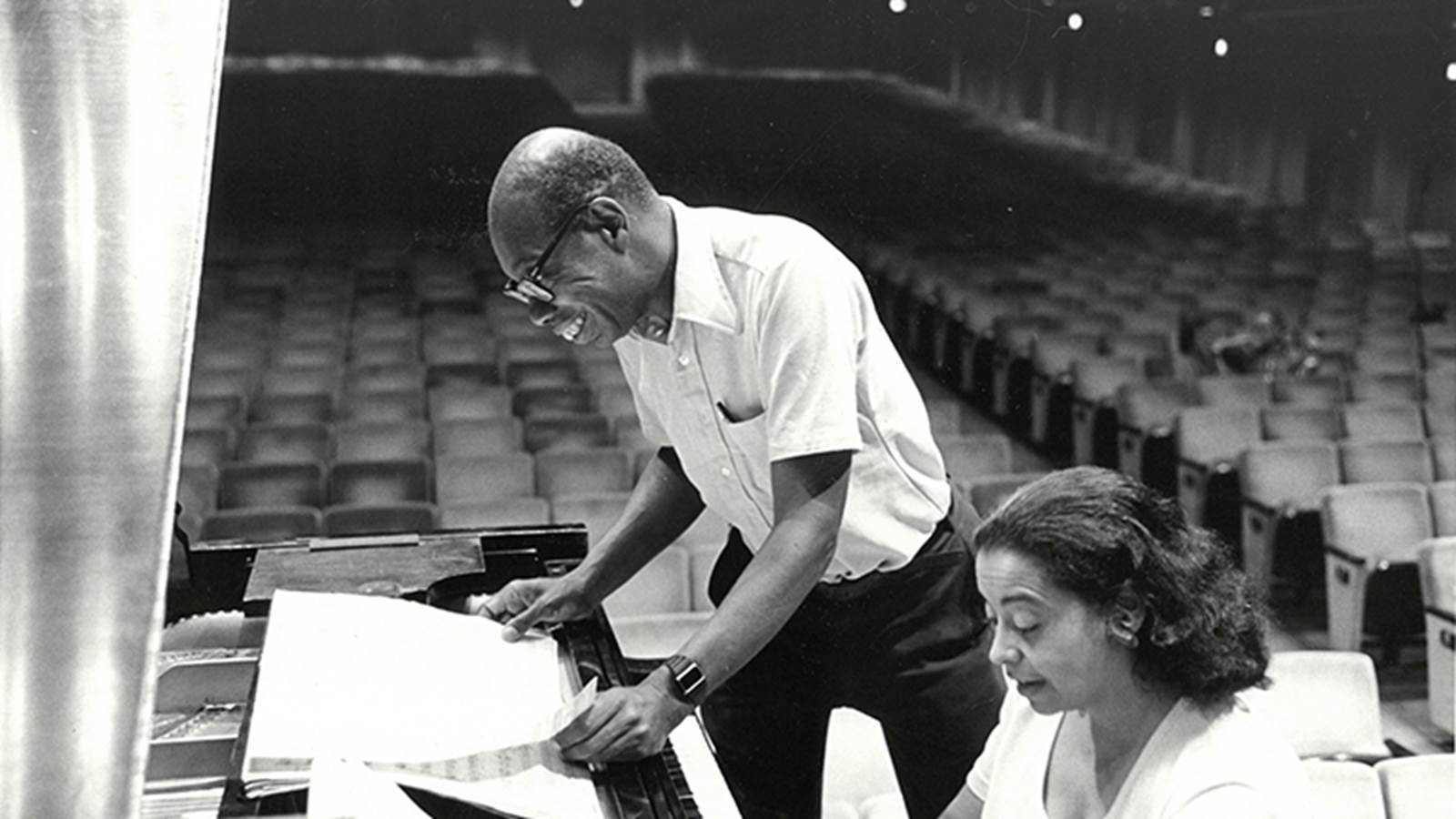
Walker at piano with score. Photographs by Frank Schramm
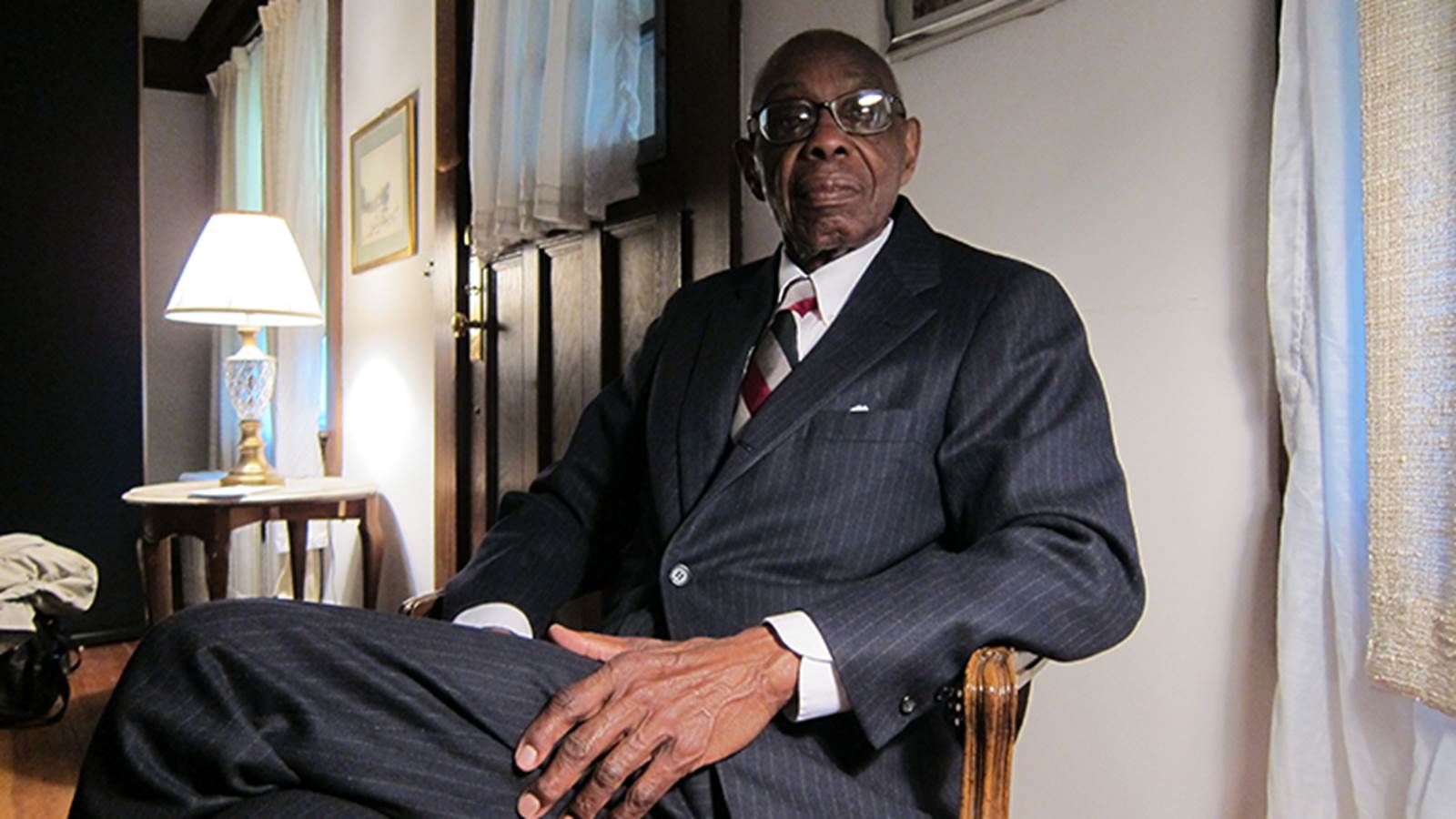
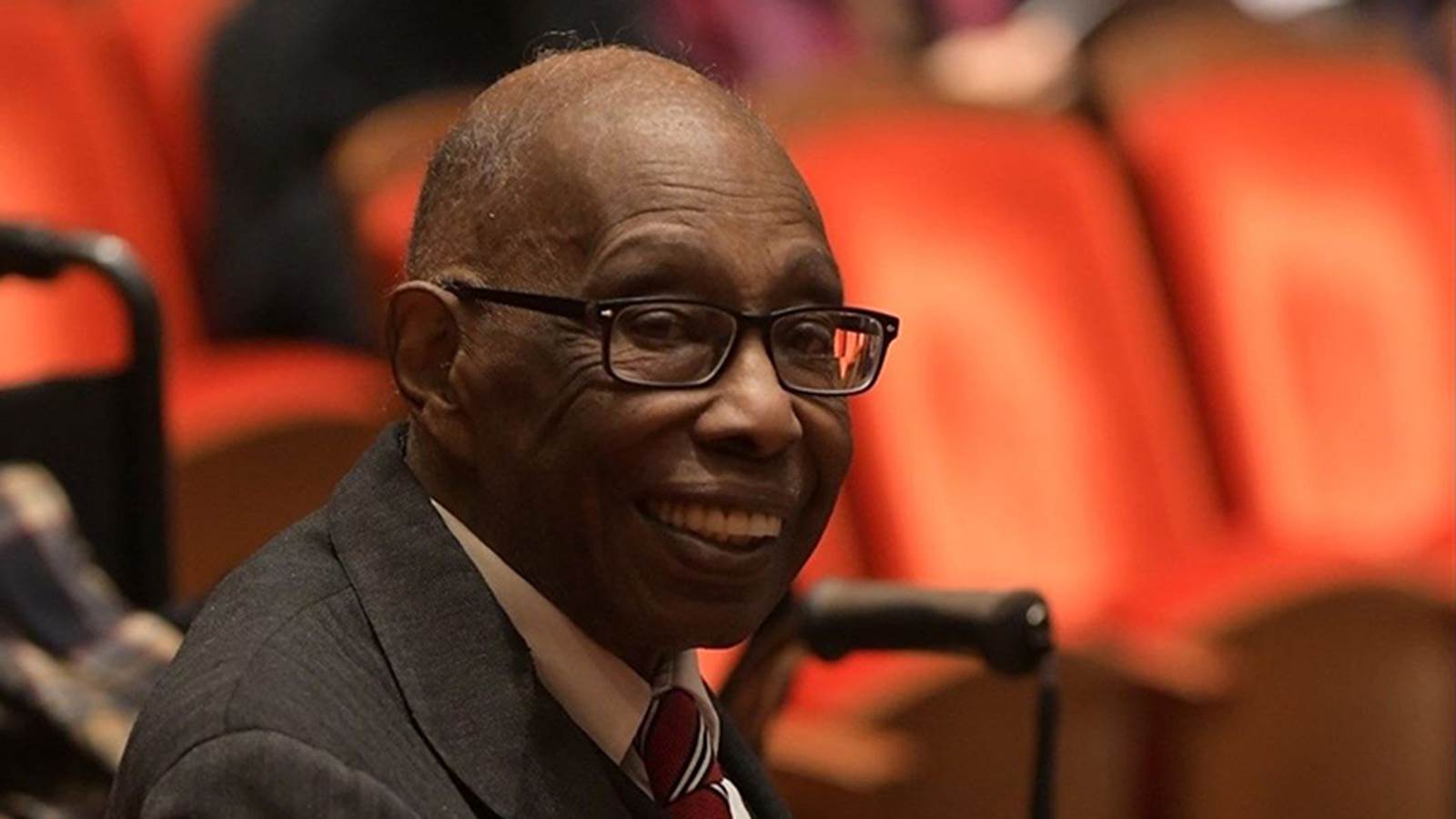
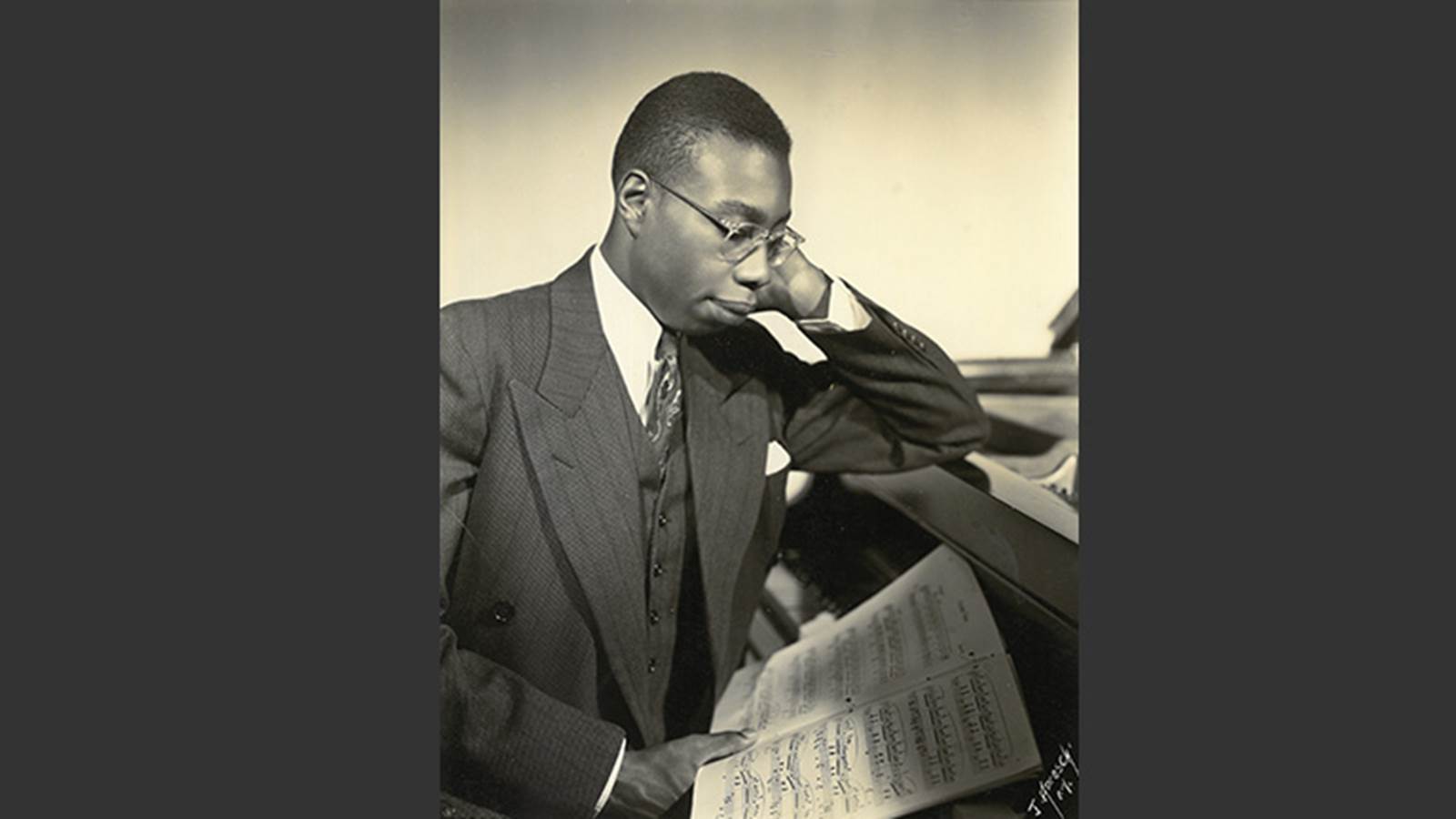
George Walker portrait. Photographs by Frank Schramm
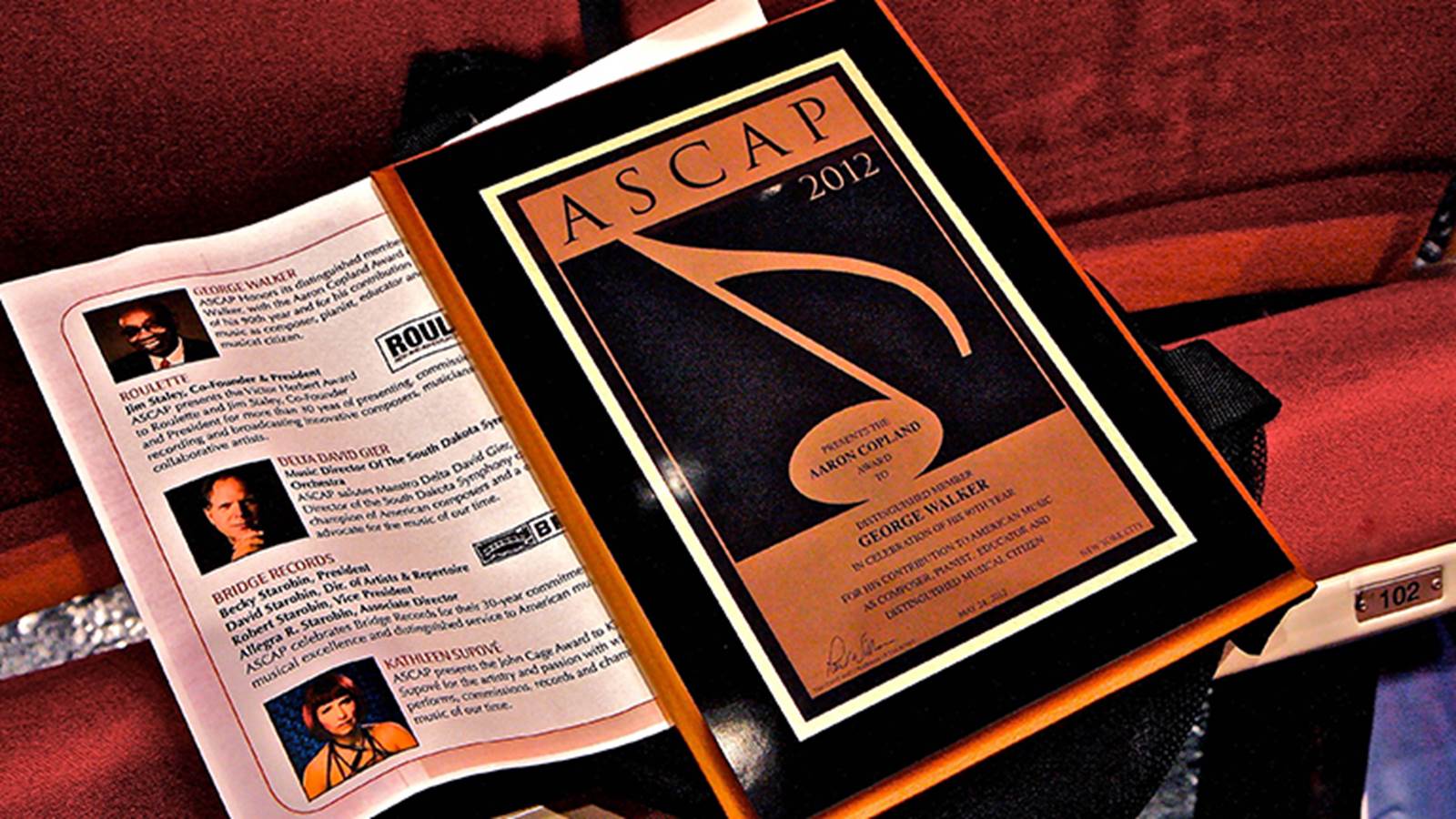
Photo of ASCAP award. Photographs by Frank Schramm
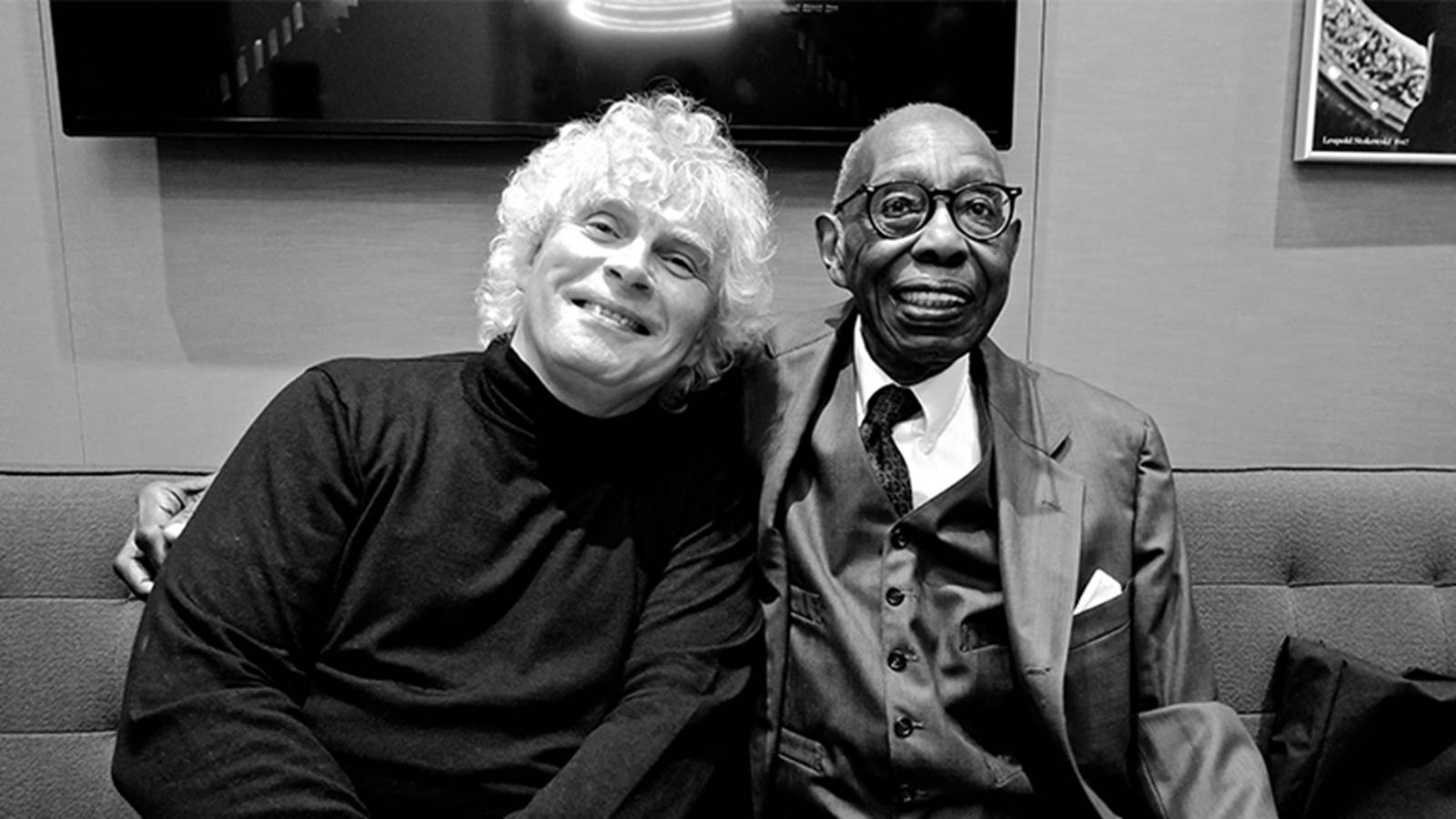
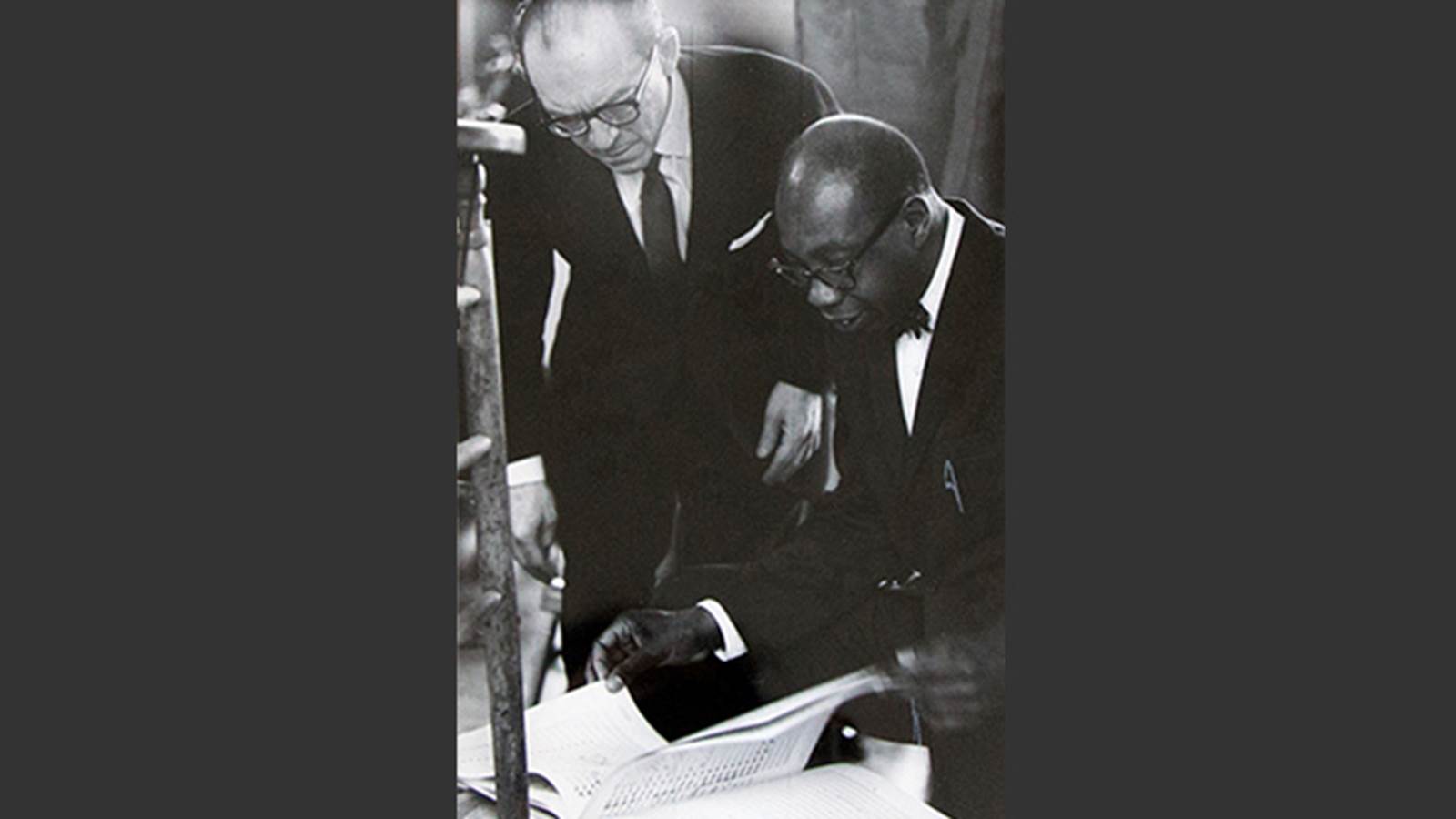
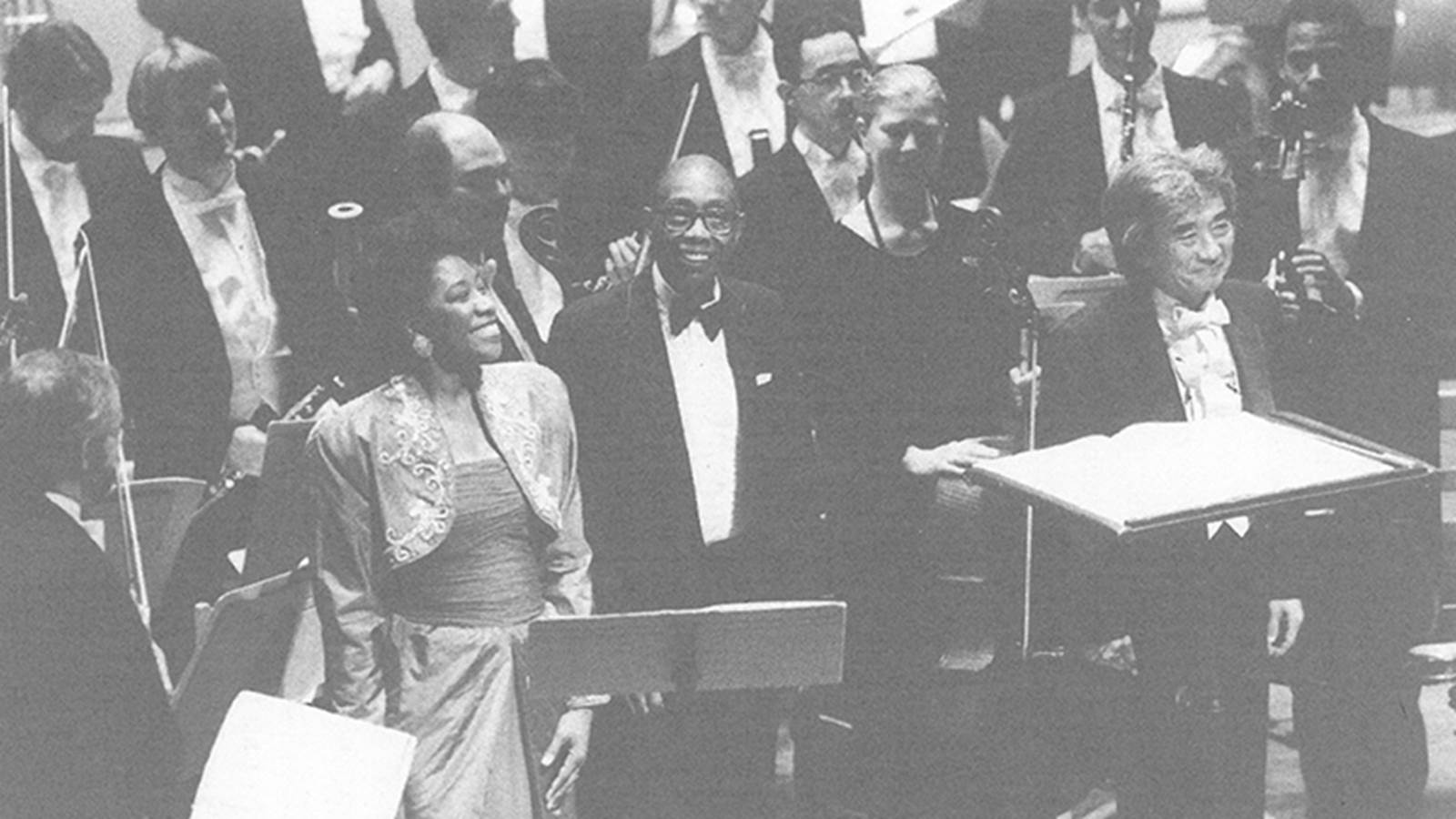
Walker with conductor Simon Rattle. Photographs by Frank Schramm
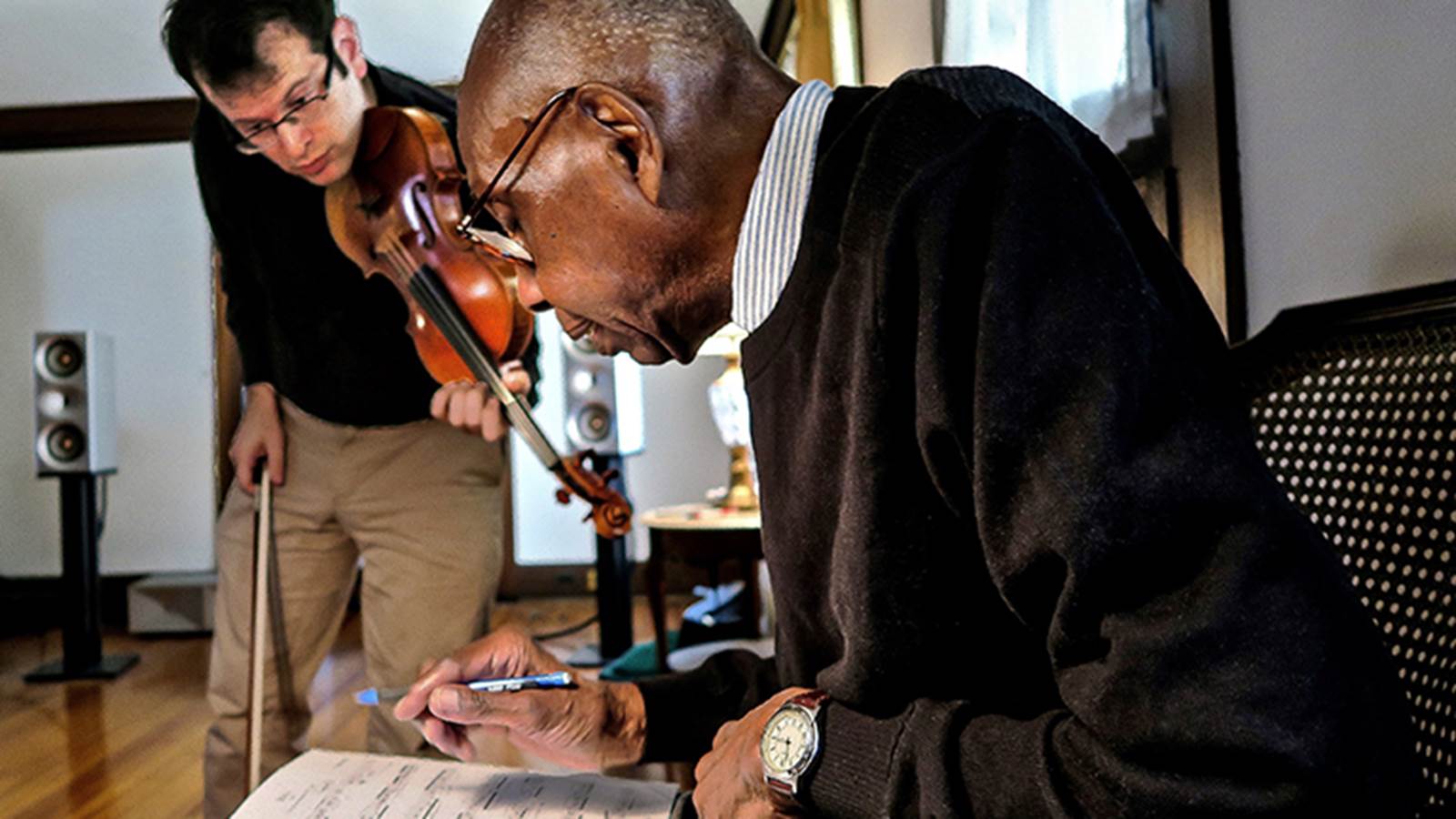
Walker with violinist William Harvey. Photographs by Frank Schramm
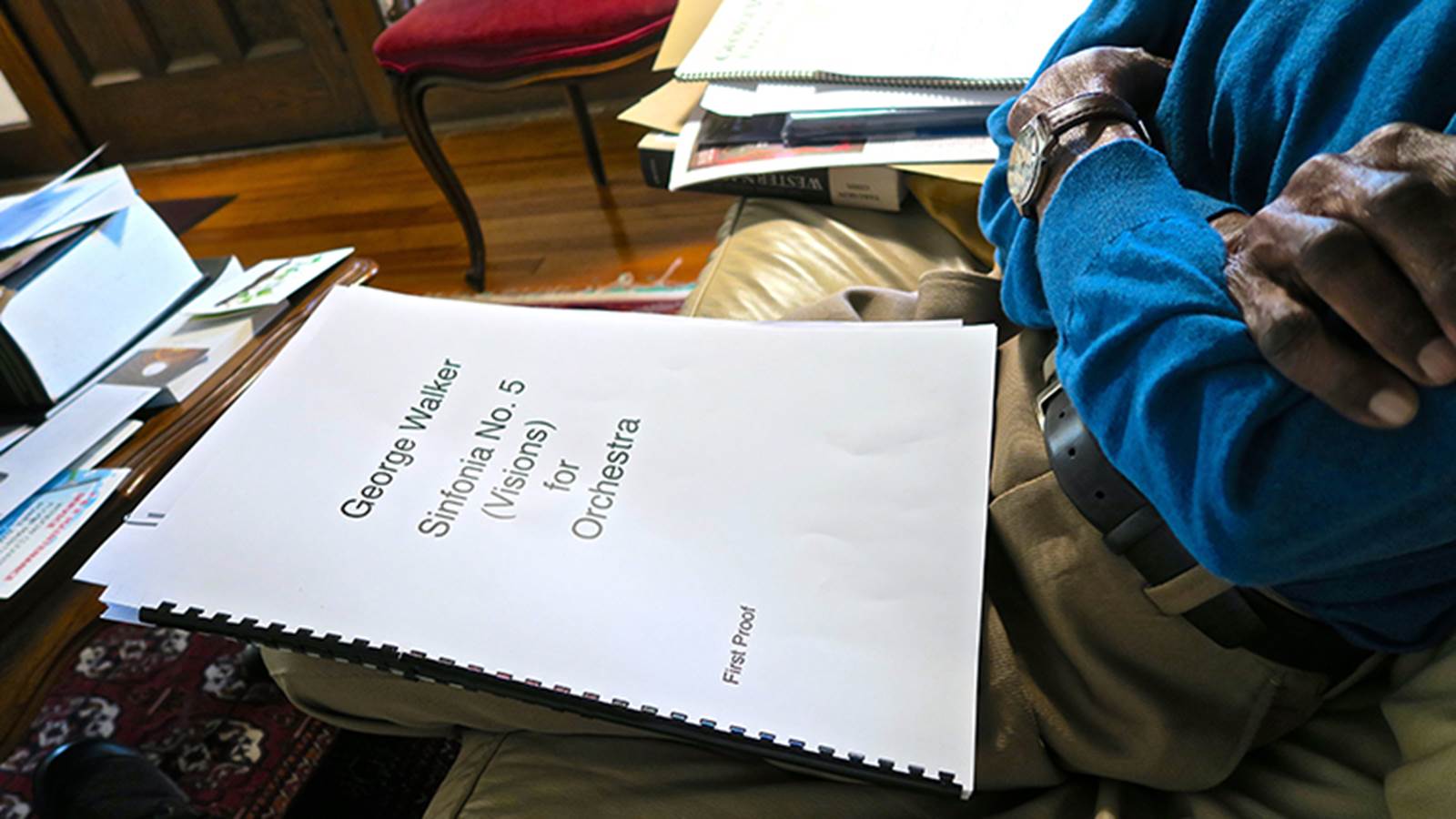
Walker with score. Photographs by Frank Schramm
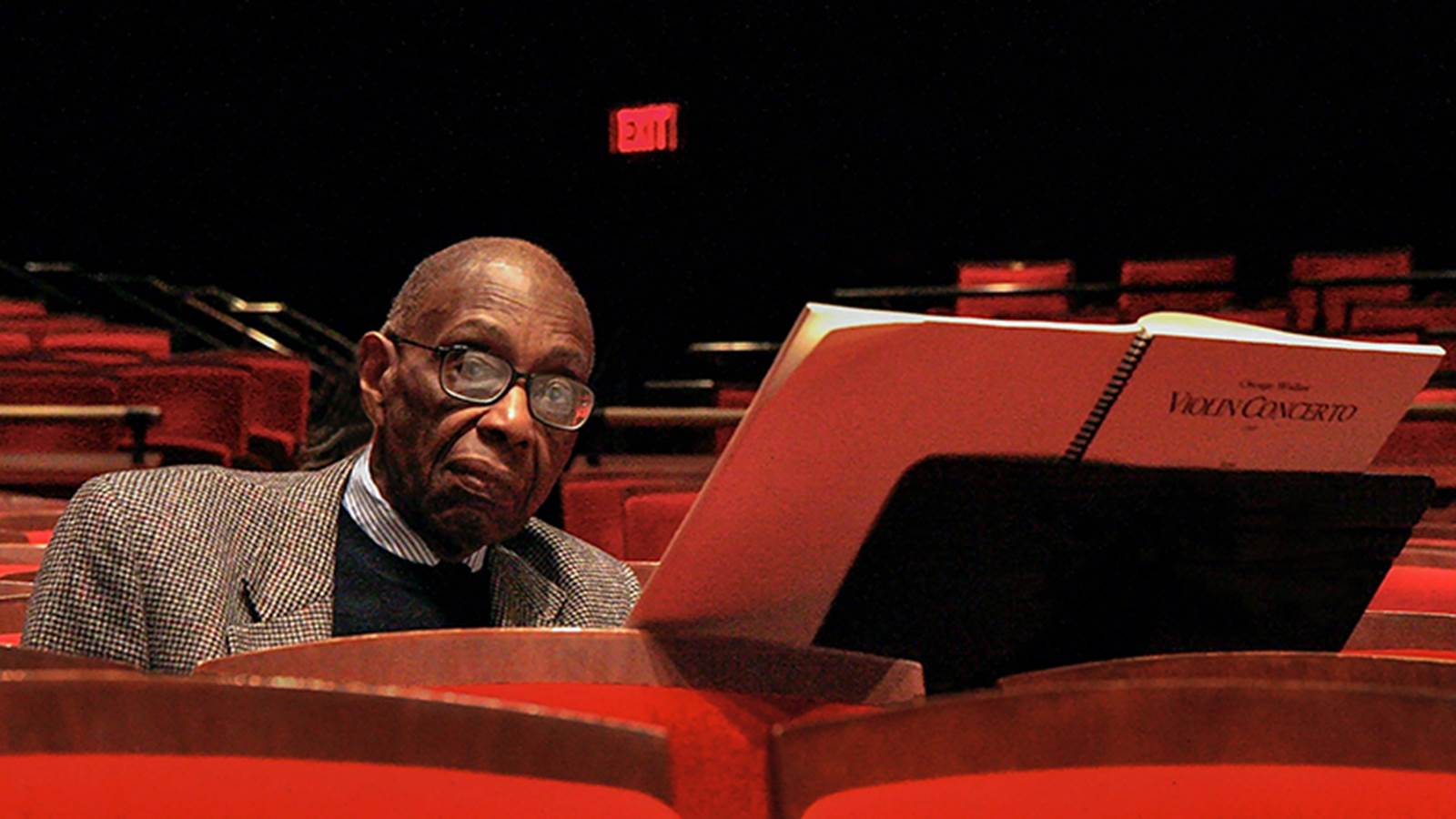
Walker at piano with violin concerto score. Photographs by Frank Schramm
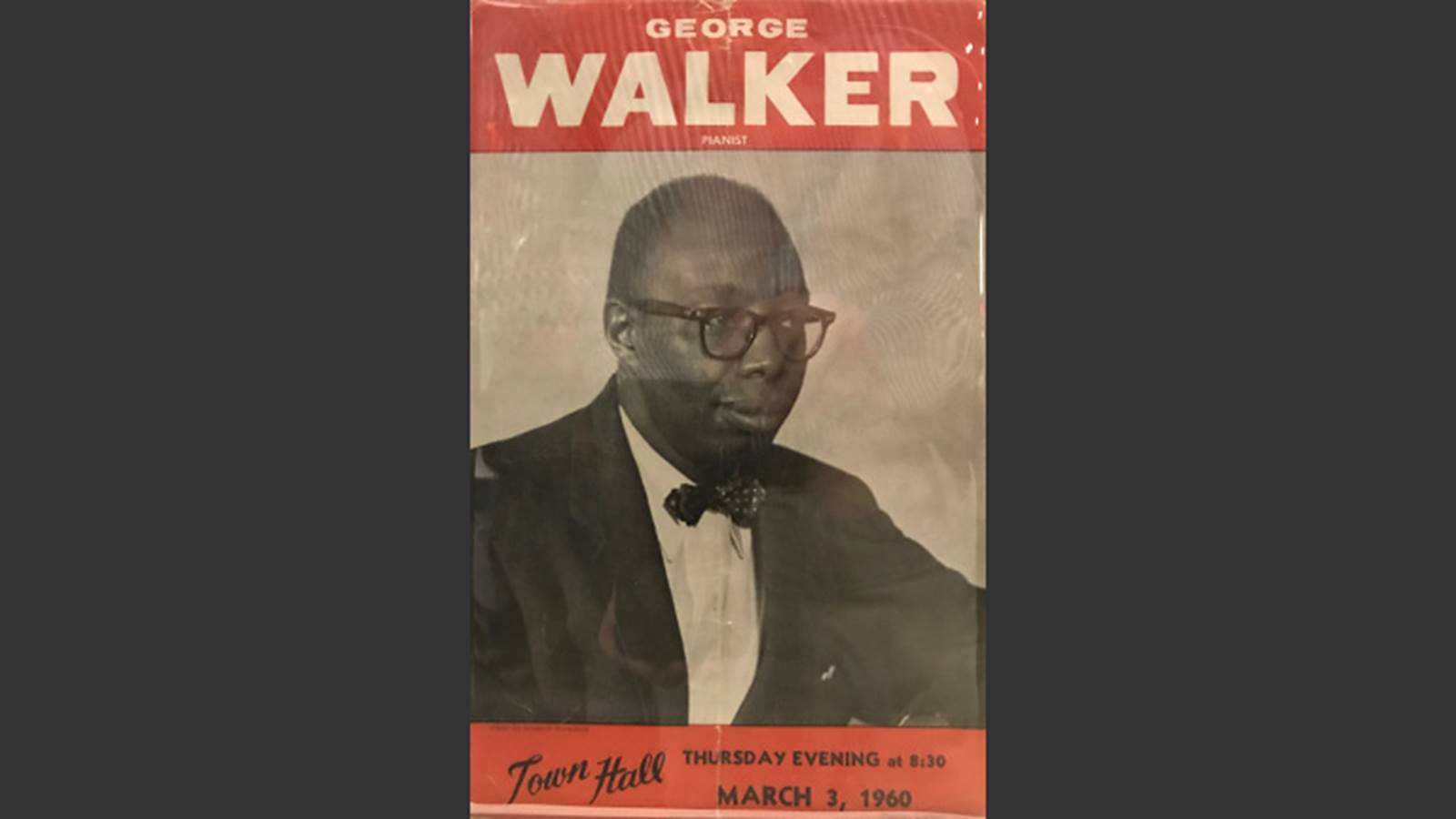
Photo of 1960 Town Hall program. Photographs by Frank Schramm
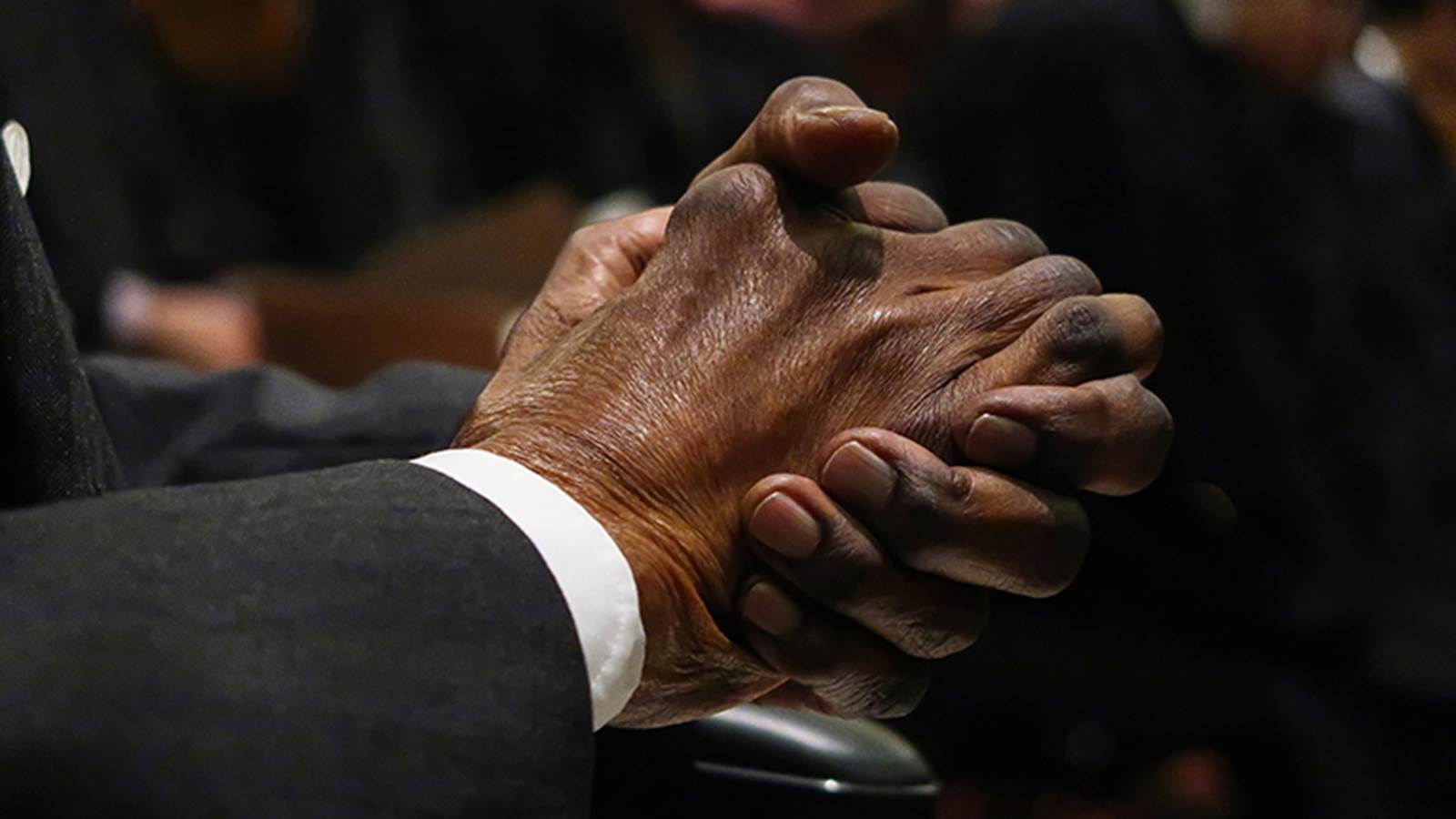
Walker's hands. Photographs by Frank Schramm
Carousel Controls
George Walker's Firsts
First Black graduate of the Curtis Institute
First Black instrumentalist to perform in New York’s Town Hall
First Black instrumentalist to solo with the Philadelphia Orchestra
First Black instrumentalist signed by a major artist manager
First Black recipient of a doctorate from Eastman
First recipient of the Whitney Award
First recipient of the Detroit Symphony Orchestra’s Classical Roots Award for a lifetime of achievement in American Music.
First Black tenured faculty member at Smith College
First Black composer to receive the Pulitzer Prize in Music, for Lilacs for Voice and Orchestra
June 27, 1922 – George Walker is born in Washington, DC.
1936 – Walker graduates from Dunbar High School; Walker presents his first public recital at Howard University’s Andrew Rankin Memorial Chapel.
1937 – Walker is admitted to Oberlin College as a scholarship student, studying piano with David Moyer and organ with Arthur Poiser.
1939 – Walker serves as organist for the Graduate School of Theology of Oberlin College.
1940 – Walker graduates from Oberlin with the highest honors of his Conservatory class.
1940 – Walker is admitted to the Curtis Institute of Music, studying piano with Rudolf Serkin, chamber music with William Primrose and Gregor Piatigorsky, and composition with Rosario Scalero, teacher of Samuel Barber.
1945 – Walker becomes the first Black graduate of the Curtis Institute, the first Black instrumentalist to perform in New York’s Town Hall, and the first Black instrumentalist to solo with the Philadelphia Orchestra.
1946 – Walker performs the 2nd Piano Concerto of Brahms with the Baltimore Symphony; He composes String Quartet no. 1. The second movement of this piece, now entitled Lyric for Strings, later becomes the most frequently performed orchestral work by a living African American composer.
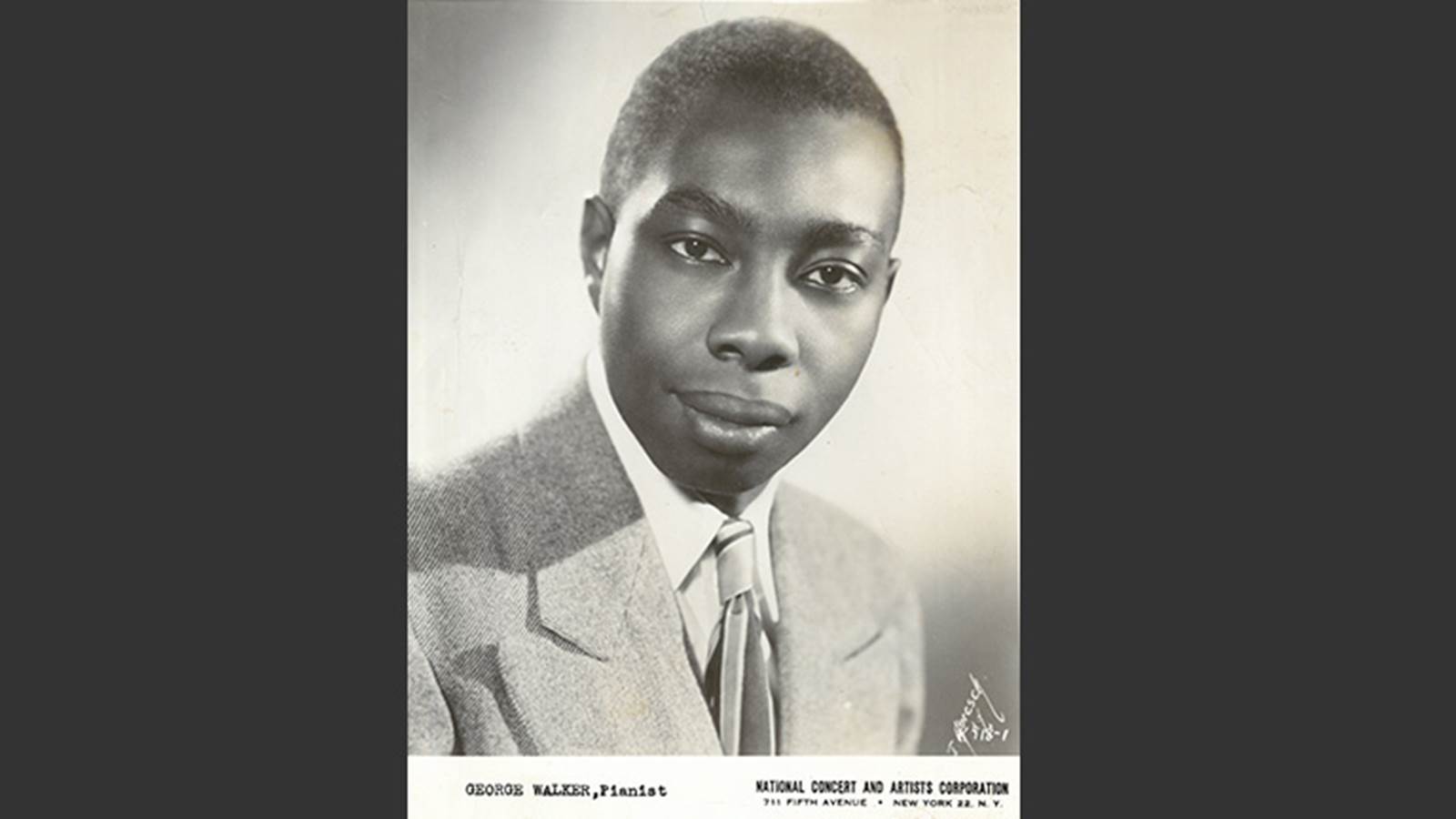
1950 – Walker becomes the first Black instrumentalist to be signed by a major management company, the National Concert Artists.
1954 – Walker embarks upon a seven-country European tour of Sweden, Denmark, Holland, Germany, Switzerland, Italy and England.
1955 – Walker teaches at Dillard University in New Orleans.
1956 – Walker becomes the first Black recipient of a doctorate degree from Eastman School of Music.
1957 – Walker is awarded both a Fulbright Fellowship and the inaugural John Hay Whitney Fellowship.
1957-1959 – Walker studies with Nadia Boulanger in Paris.
1959 – Walker tours France, Holland and Italy.
1960 – Walker obtains faculty appointments to the Dalcroze School of Music, and The New School for Social Research.
1961-1968 – Walker becomes the first Black tenured faculty member at Smith College.
1963 – Walker receives an honorary membership in the Frederic Chopin Society in London.
1968-1969 – Walker receives a faculty appointment to University of Colorado as Visiting Professor. Walker receives a Guggenheim Fellowship.
1969-1992 – Walker teaches at Rutgers University, serving as Chair of the music department.
1971-1972 – Walker receives two Rockefeller Fellowships.
1975-1978 – Walker teaches at the Peabody Institute.
1975-1976 – Walker teaches at University of Delaware, as recipient of the first Distinguished Minority Chair. Walker receives a third Rockefeller Fellowship.
1982 – Walker receives an honorary doctorate degree from Lafayette College.
1983 – Walker receives an honorary doctorate degree from Oberlin College.
1987 – Walker receives a second Guggenheim Fellowship.
1988 – Walker receives a Koussevitsky Fellowship.
1996 – Walker becomes the first Black composer to receive the Pulitzer Prize in Music, for Lilacs for Voice and Orchestra.
June 17, 1996 – George Walker Day is proclaimed in Washington, DC.
1996 – Walker receives the University Medal from the University of Rochester.
1997 – Walker is awarded honorary doctorate degrees from Montclair State University, Bloomfield College, Curtis Institute of Music.
1998 – Walker receives the Composers Award from the Lancaster Symphony, and the Letter of Distinction from the American Music Center. Walker receives a second Koussevitsky Fellowship.
1999 – Walker is elected to the Academy of Arts and Letters.
2000 – Walker is inducted into the American Classical Music Hall of Fame; Walker receives the Dorothy Maynor Outstanding Arts Citizen Award from the Harlem School of Arts.
2001 – Walker is awarded an honorary doctorate degree from Spelman College; Walker receives the Detroit Symphony Orchestra’s inaugural Classical Roots Award for a lifetime of achievement in American Music.
2002 – Walker is awarded the annual A.I. Dupont Award presented by the Delaware Symphony.
2005 – Walker receives a commission from the Eastman School of Music with Foils (Homage to Saint George) for Orchestra; Walker is named Honorary President of Ebb and Flow Arts in Maui, Hawaii; The Borough President of Brooklyn, NY designates April 6, 2005 as “A Celebration for Dr. George Walker”; Albany Records releases a 60th Anniversary Retrospective featuring the Liszt Piano Sonata played by George Walker.
2007 – Walker receives the annual Legacy Award from the National Opera Association.
2009 – Scarecrow Press releases “Reminiscences of an American Composer and Pianist,” an autobiography; The Philadelphia Orchestra gives the New York premiere of Lilacs for Voice and Orchestra in Carnegie Hall as part of Jessye Norman’s “Honor” concert series; Concerto for Violin and Orchestra receives its world premiere with soloist Gregory Walker.
2010 – KUSC FM in Los Angeles presents a five-hour program of the music of George Walker.
2011 – Walker becomes the first Black composer to be performed at the Cabrillo Festival.
2012 – Walker’s Sinfonia No. 4 receives its premiere in the New Jersey Performing Arts Center and is also performed by the Pittsburgh, Cincinnati and National Symphony Orchestras; Walker delivers the Commencement Address at the Eastman School of Music and receives a Doctor of Music Degree; Walker receives the Aaron Copland Award from ASCAP.
2013 – The National Symphony Orchestra performs Walker’s Lyric for Strings on a series of sixteen Young People’s Concerts; Walker’s Movements for Cello and Orchestra receives its premiere by the Sinfonia da Camera conducted by Ian Hobson at the University of Illinois.
August 23, 2018 – George Walker passes away in Monclair, NJ.
George Walker at Curtis Institute.
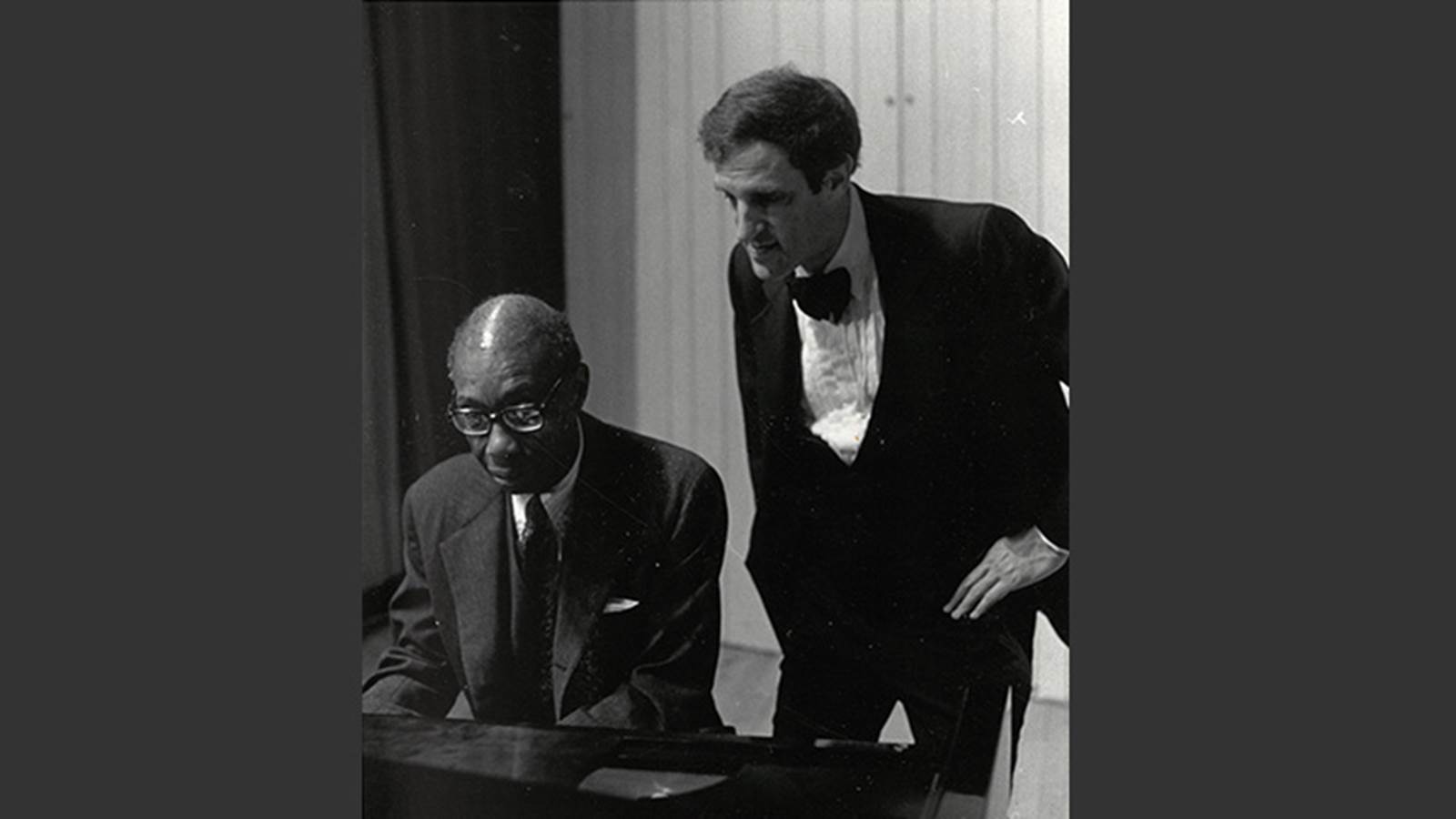
Benjamin Steinberg and Prof. George Walker.
George Walker younger at piano Pulitzer
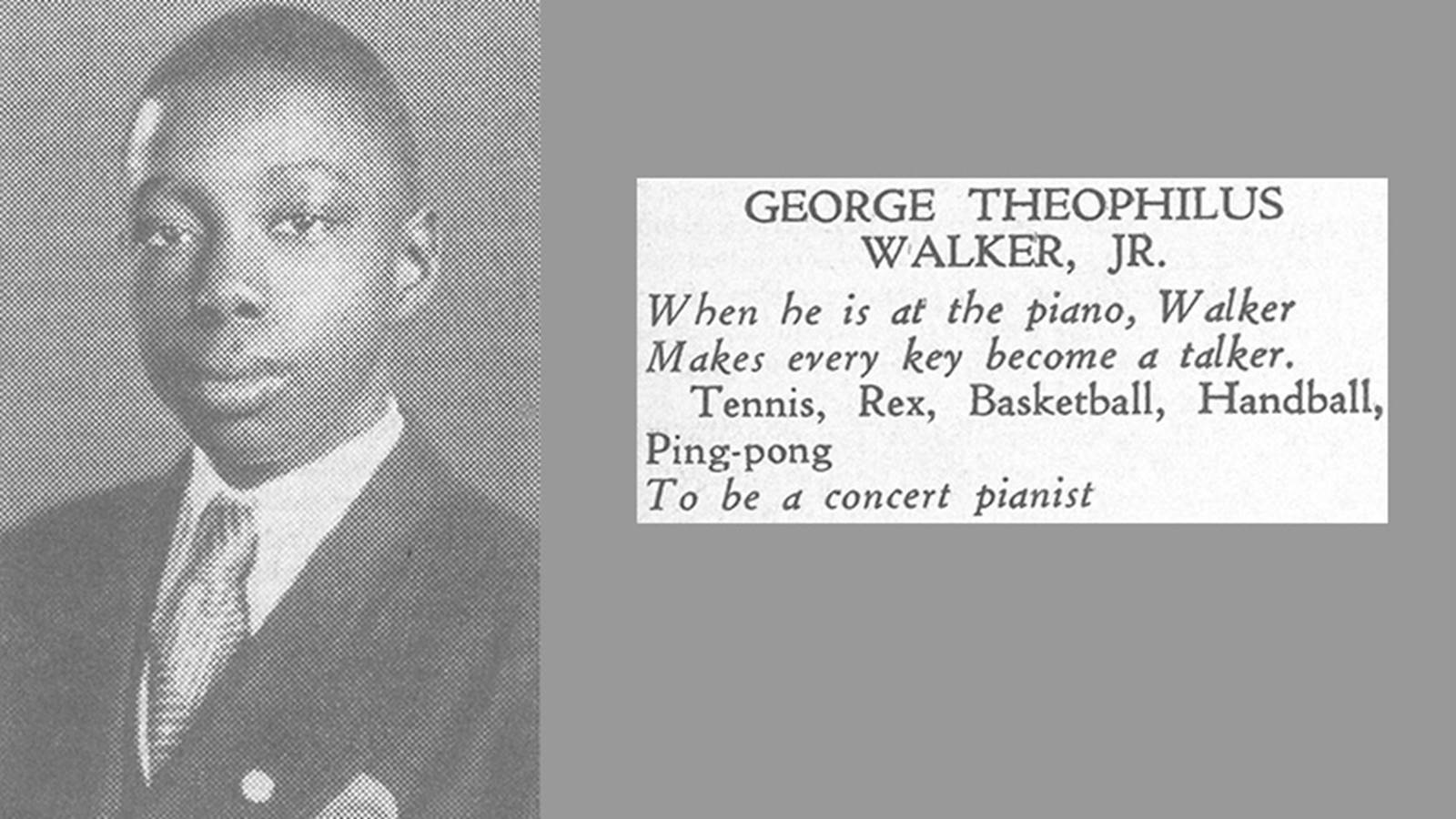
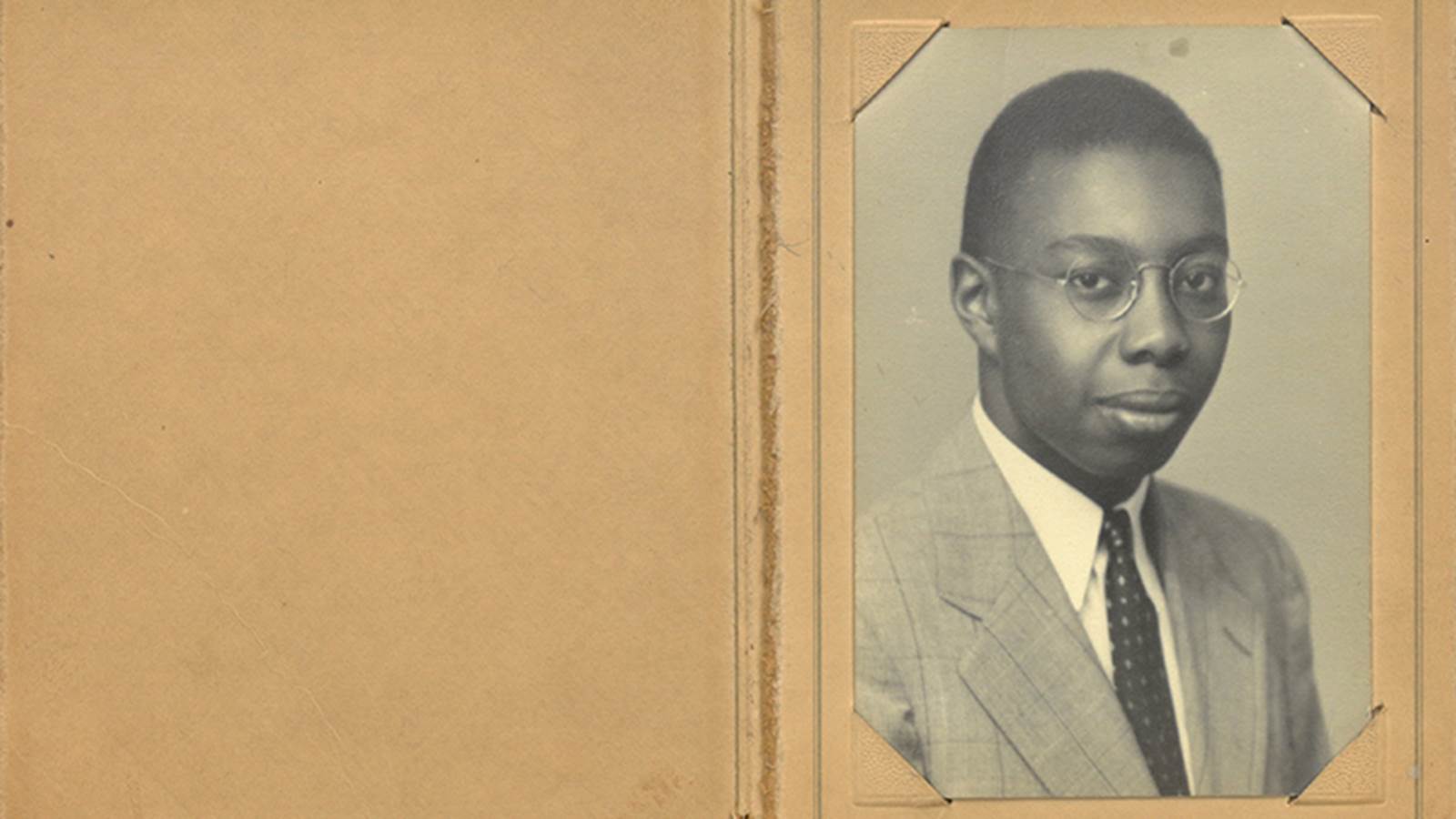
Walker High School Yearbook
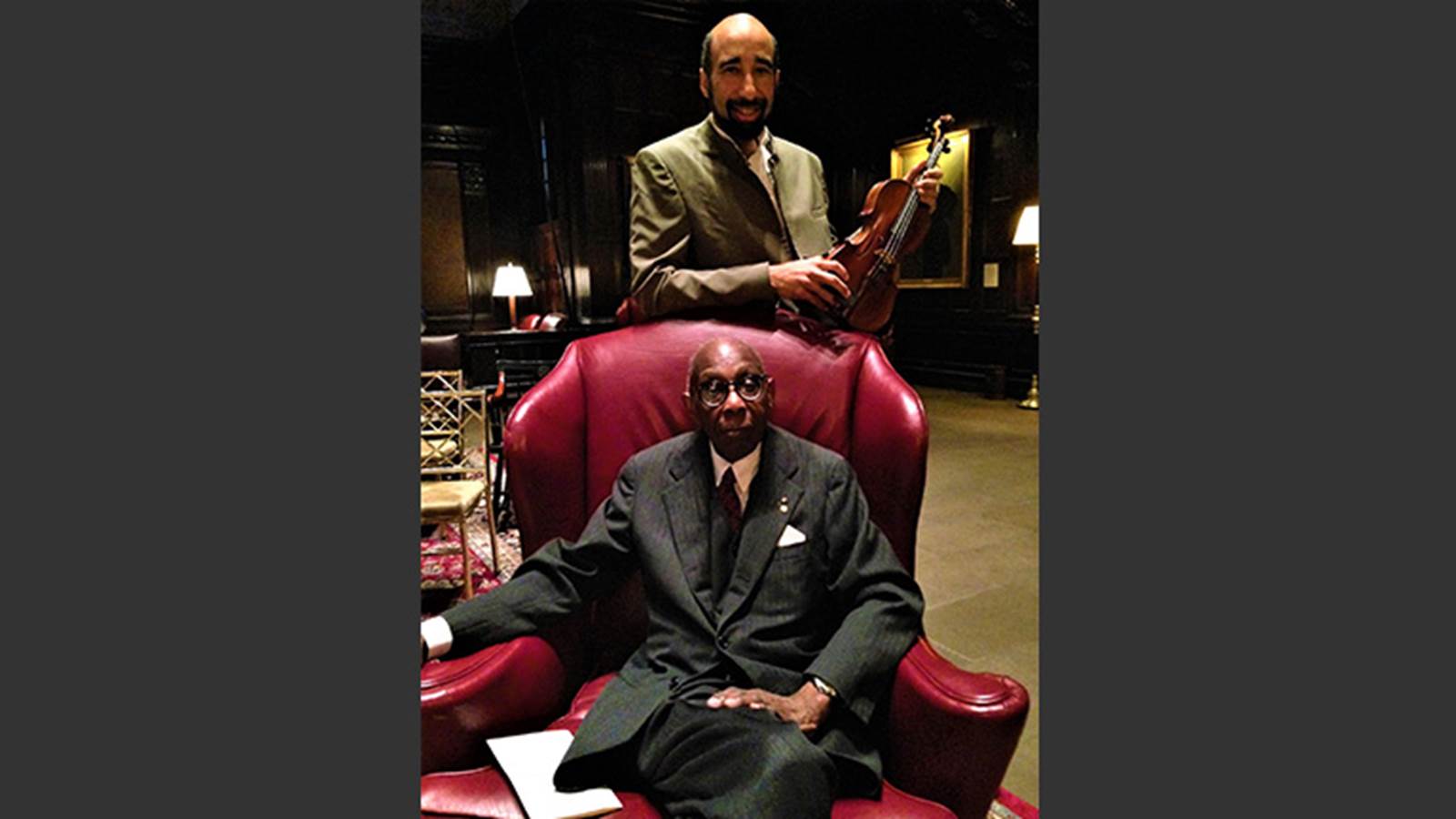
George and Gregory Walker
Lilacs Premiere
Walker with Natalie Hinderas
Walker at Piano ROSE LIBRARY
Walker with Richard Kapp
Walker Oberlin
Walker Portrait
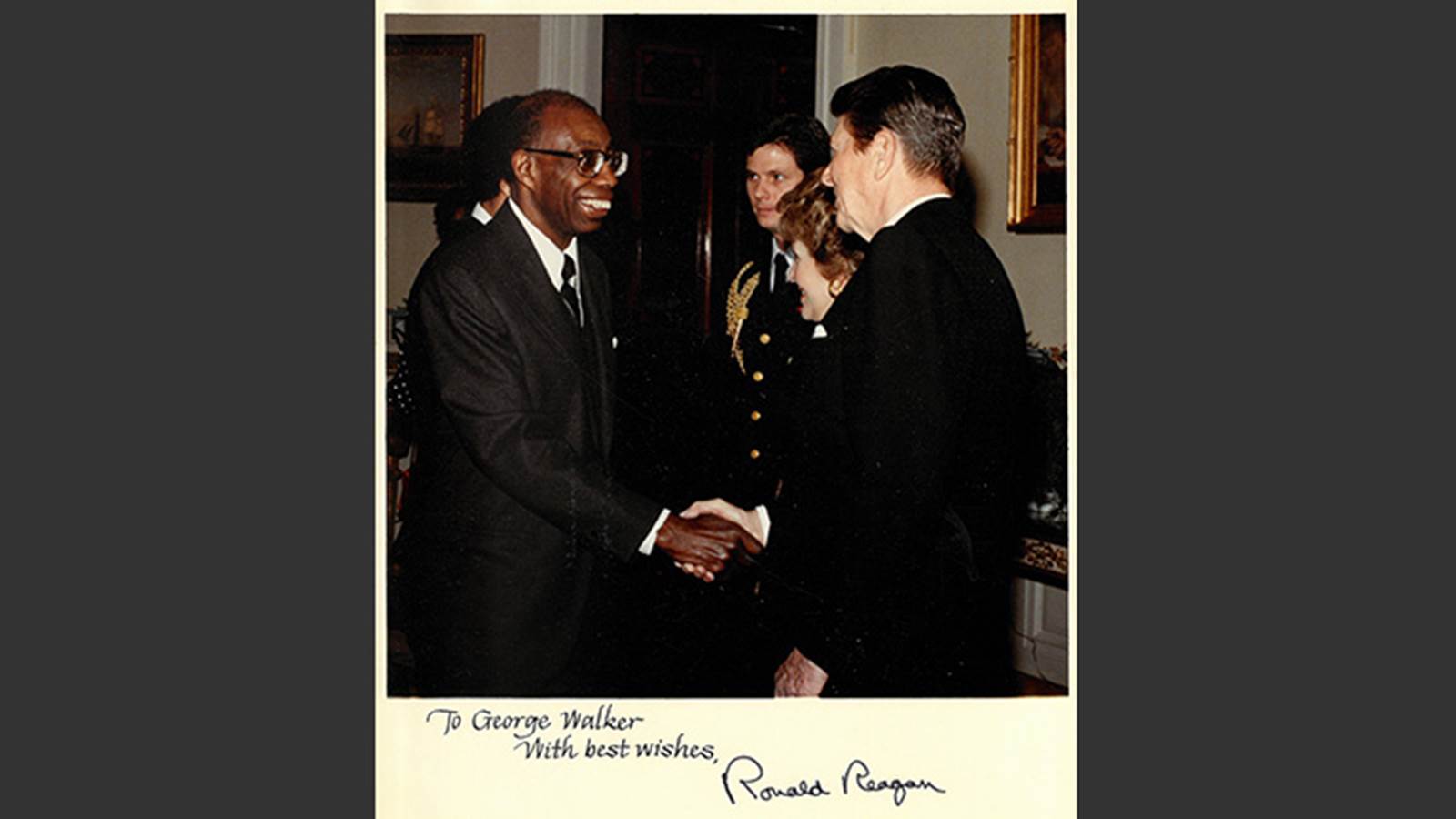
Walker and Reagan
Carousel Controls
Program Notes
by Peter Laki
Sinfonia No. 1 (1984)
by George Walker (Washington, D.C., 1922 – Montclair, NJ, 2018)
“I've always thought in universal terms, not just what is Black, or what is American, but simply what has quality,” George Walker said in an interview on the occasion of his 90th birthday in 2012. British critic Tom Service, writing in The Guardian in 2015, cited Hindemith and Stravinsky as two of Walker's “musical heroes,” but stressed that the American composer “has created a distinctive world that is modernist and multifaceted yet richly communicative.”
This distinguished composer, pianist, and educator, who won the Pulitzer Prize for his orchestral song cycle Lilacs in 1996, published a fascinating memoir in which he recounted a lifetime of successes and honors and also spoke quite frankly about his musical likes and dislikes. He had studied piano with Rudolf Serkin and composition with Samuel Barber’s teacher Rosario Scalero at the Curtis Institute in Philadelphia, and first made his name with the often-performed Lyric for Strings, a creative response to Barber’s Adagio for Strings. His importance as a pianist is best illustrated by the fact that he performed Rachmaninoff’s Third Piano Concerto with the Philadelphia Orchestra under Eugene Ormandy. As a composer, he always remained true to his classical roots and built an oeuvre of symphonic and chamber works that earned him the esteem not only of the profession but of a wide audience as well.
Between 1984 and 2016, Walker composed five Sinfonias (all five will be performed by the NSO during the current season and the next). The first of these, commissioned by the Fromm Foundation, was premiered by the Berkshire Music Center Orchestra under Gunther Schuller at Tanglewood on August 1, 1984. It is a compact work in two movements, in which moments of great energy and powerful outbursts alternate with calm, lyrical sections. There are massive, block-like chords for the brass and wild percussion passages, but also sensitive violin solos and agitated outbursts for the clarinet and the flute, among others. In turn dramatic and tender, the work covers a lot of emotional ground in just over ten minutes, and ends with a climactic statement for the entire orchestra.
Violin Sonata No. 1 (1958)
by George Walker (Washington, D.C., 1922 – Montclair, NJ, 2018)
Armed with a fresh doctorate in composition from the Eastman School of Music, 35-year-old George Walker travelled to Paris to receive the final polish from Nadia Boulanger (1887-1979), one of the greatest composition teachers in the 20th century. Boulanger had taught many of the most prominent American composers since the 1920s, when she worked with a young Aaron Copland. In her classes and private lessons, she insisted on compositional technique, and set the highest standards in harmony and counterpoint. A close friend of Igor Stravinsky's, Boulanger was a proponent of neo-classicism and gave her students a thorough grounding in early music, which she championed throughout most of her seventy-year teaching career.
At the time, Walker already had one of his most successful works, Lyric for Strings (1946) under his belt. He had also spent a summer at the American Conservatory in Fontainebleau a decade earlier. Yet this time he stayed in France for two years, receiving much encouragement from Boulanger. It was around this time that he composed his First Violin Sonata, in which he went considerably beyond the Romanticism of his earlier music. (Walker had written an early violin sonata as his graduation piece from the Curtis Institute in 1943, but he withdrew it from his catalog. Many years later, in 1979, he composed a Second Violin Sonata.)
The 1958 work bears traces of Walker's experiences at the “Boulangerie,” as this exceptional musical workshop was affectionately called by the lucky participants. It is a compact, ten-minute composition in a single movement, subdivided into numerous sections with changing moods and tempos. A quiet opening meditation is followed by a fugato, or section in imitative counterpoint, that soon dissolves in a series of vigorous ostinatos, or “obstinately” repeated rhythmic figures. Then the tempo slows down again, in preparation for the agitated central portion of the sonata, which places high technical demands on both players. As a total contrast, the violin subsequently starts an emotional solo melody in freely flowing, irregular rhythm, with only occasional interjections from the piano. The slow, deliberate final section that ends the sonata sounds like a solemn proclamation.
Sinfonia No. 4 (‟Strands,” 2012)
by George Walker (Washington, D.C., 1922 – Montclair, NJ, 2018)
George Walker celebrated the year of his ninetieth birthday with the premiere of a brand-new work, Sinfonia No. 4 (‟Strands”). The commission came from a consortium of orchestras, including the NSO, the Cincinnati, New Jersey and Pittsburgh Symphony Orchestras, with a grant from Meet the Composer, and was premiered by the New Jersey Symphony in March 2012 under Jacques Lacombe.
The subtitle refers to the “strands” from two spirituals, “There is a Balm in Gilead” and “Roll, Jordan, Roll” that the composer wove into the fabric of his composition. Walker's use of these quotes is rather subtle and somewhat reminiscent of the way Charles Ives worked with church hymns in many of his works:the melodies are fragmented, transformed, and hinted at more than presented in full. Their “strands” are integrated into a rhythmically vibrant and colorfully orchestrated one-movement work, projecting high energy and constant excitement.
Commenting on his piece, Walker offered the following pointers:
The Sinfonia begins with an introduction that consists of several sections before the principal theme is stated. This theme recurs several times. The quotation of the first spiritual provides a pensive relief from the proclamatory nature of the theme that precedes it.
The briefer snippet of the second spiritual is affirmative. The following section consists of a melodic bass line over which fragmented interjections are superimposed. A similar section recurs, combining with the opening phrase of the second spiritual played by the piano during the course of the work. The bass material appears briefly in the coda.
Symphony No. 4 in B-flat major, Op. 60 (1806)
by Ludwig van Beethoven (Bonn, 1770 – Vienna, 1827)
Beethoven’s career as a composer spanned some 40 years, from his youthful essays to the last string quartets. His output, however, was not evenly distributed over those decades. There were years when he composed little or nothing at all; at other times he wrote incredible amounts of great music over a remarkably short period of time. During such periods, it is hard to reconcile Beethoven’s extreme speed with the usual image of the composer toiling endlessly over his sketches.
1806 was one of the most prolific years in Beethoven’s life. He completed his three Razumovsky quartets, the Fourth Piano Concerto, the Fourth Symphony, and the Violin Concerto. He also started work on what would later become the Fifth Symphony (actually, the C-minor work had been begun first, and then laid aside in favor of the symphony in B flat).
The 36-year-old Beethoven was in the middle of his so-called “heroic” period, shortly after the “Eroica” and just before the no-less-heroic Fifth. The Fourth has traditionally been seen as a kind of respite between these two mighty works, in accordance with the old theory that opposed the dramatic “odd-numbered” symphonies to the more lyrical “even-numbered” ones.
As an experiment, let us forget this theory for a moment. We will then find that the Fourth is animated by the same incessant flow of energy and the same irresistible pull to move ahead as its more tempestuous companions. It is just as perfect a representative of the “heroic period” as any other work. The emotions expressed may be lighter and less tragic, but they are expressed with the same force throughout.
The slow introduction to the first movement is certainly one of the most suspenseful Beethoven ever wrote. The idea of starting a B-flat-major symphony with a slow-moving unison theme in B-flat minor may have come from Haydn’s Symphony No. 98, but the polarity is much greater in Beethoven, whose introduction is full of a sense of mystery that was entirely new in music. One finds it hard to believe that Haydn had written his London symphonies only a decade earlier and was still alive in 1806!
Slow introductions are usually linked to the subsequent Allegros by means of some transition that builds a bridge between the two tempos. In Beethoven’s Fourth, there is a clear separation instead of a bridge. A drastic shift of keys and a sudden general rest bring the music to a virtual standstill before the energetic Allegro vivace is launched. Now there will hardly be a moment of pause until the end of the movement. The concise exposition begins with a brisk and vibrant theme, and even the more lyrical moments are full of motion and excitement.
The development section employs one of Beethoven’s favorite musical techniques, namely thematic fragmentation. The first theme is “decomposed” almost to its atoms; for a while, it receives a new lyrical counter-melody that is, however, soon brushed aside by a tutti outburst. The recapitulation is prepared by a long tremolo on the kettledrum, over which the strings gradually put the thematic “atoms” back together for the triumphant return of the theme.
The second movement is the only large-scale lyrical Adagio in a Beethoven symphony before the Ninth. (The other symphonies’ slow movements are all faster, with the exception of the Funeral March of the Third.) In the Fourth Symphony, Beethoven unfolds a beautiful cantabile (“singing”) theme over a characteristic rhythmic accompaniment that eventually rises to the status of a theme in its own right. The cantabile theme returns several times, in a more and more ornamented form, its appearances separated by some rather powerful statements. The movement ends with a timpani solo followed by two concluding orchestral chords.
The third movement is a scherzo, although Beethoven didn’t use that word as a title. The music abounds in playful elements such as subtle interplays of duple and triple meter, sudden modulations (or, rather, jumps) into distant tonalities, and a general mood of exuberant joy. The Trio moves in a slower tempo and has a simpler melody; it is based on the juxtaposition of the orchestra’s wind and string sections. Beethoven added an interesting twist to the usual scherzo form here: he expanded on the standard form (Scherzo - Trio - Scherzo) by means of a second appearance of the Trio and a third Scherzo statement (he was do the same in the Seventh Symphony).
The fourth-movement finale, marked “Allegro ma non troppo,” begins with a theme in perpetual sixteenth-note motion; the flow of the sixteenth is only briefly interrupted by melodic episodes. This movement is light in tone and cheerful in spirit. Like the slow introduction to the first movement, the finale also shows how much Beethoven had learned from Haydn (less during his brief apprenticeship with the older composer than from studying Haydn’s symphonies). But, once again, most of the music sounds like no one but Beethoven. The repeated und unresolved dissonances at the end of the exposition (duly brought back in the recapitulation) sound rather close to a similar passage in the first movement of the “Eroica.” Also, Haydn probably wouldn’t have entrusted the return of the perpetual-motion theme to the solo bassoon, in what is one of the most difficult passages for the instrument in the classical repertoire. In general, Haydn’s cheerfulness has been stepped up to a state of near-euphoria. One feels that this music could go on ad infinitum, but it is suddenly cut short by a hesitant, slower rendition of the main theme in the violins, continued by the bassoons, and abruptly ended by a few energetic chords played by the whole orchestra.
Meet the Artists
Meet the Artists
Gianandrea Noseda is one of the world’s most sought-after conductors, equally recognized for his artistry in both the concert hall and opera house. He is Music Director of the National Symphony Orchestra, General Music Director of the Zurich Opera House, Principal Guest Conductor of the London Symphony Orchestra, and founding Music Director of the Tsinandali Festival and Pan-Caucasian Youth Orchestra.
Noseda’s leadership has inspired and reinvigorated the National Symphony Orchestra, which makes its home at the Kennedy Center. The renewed artistic recognition has led to invitations to leading international concert halls, digital streaming, and a record label distributed by LSO Live. Noseda’s discography numbers over 80, with many of them receiving critical acclaim.
Noseda has conducted the most important international orchestras, opera houses and festivals. The institutions where he has had significant roles include the Teatro Regio Torino (Music Director), BBC Philharmonic (Chief Conductor), Israel Philharmonic Orchestra (Principal Guest Conductor), Mariinsky Theatre (Principal Guest Conductor), Orchestra Sinfonica Nazionale della RAI (Principal Guest Conductor), Pittsburgh Symphony Orchestra (Victor de Sabata Chair), and Rotterdam Philharmonic (Principal Guest Conductor).
A native of Milan, Noseda is Commendatore al Merito della Repubblica Italiana, marking his contribution to the artistic life of Italy. He has also been honored with Musical America’s Conductor of the Year, International Opera Awards Conductor of the Year, OPER! AWARDS Best Conductor and is a recipient of the Puccini Award and the "Ambrogino d'Oro" by the city of Milan.
Since his Philadelphia Orchestra debut, praised by the American Record Guide as a performance of “precision and rapturous immediacy,” violinist and composer Gregory Walker has appeared as soloist with orchestras across the U.S. and abroad including the Detroit Symphony, Poland's Sinfonia Varsovia and the Filharmonia Sudecka, and the Encuentro Musical de los Americas in Havana, Cuba, as well as the Colorado Symphony. With recordings available on the Newport Classic, CRI, Orion, Albany and Leonarda record labels, he has been featured at Beijing's Genesis Concert Series, Great Britain's Lake District Music Festival, Norway's Tromsø Cathedral Series, the Centro Mexicano para la Musica y las Artes Sonoras, the Cork Orchestral Society Concert Series in Ireland, the Chetana International Music Festival in Kerala, India, and at the U.S. Library of Congress.
The son of Pulitzer Prize-winning composer George Walker and African-American women's music scholar Helen Walker-Hill, Walker is an American Academy of Arts and Letters Fellowship recipient, International Musician cover artist, and subject of the internationally-distributed documentary film Song of the Untouchable. Walker's Dream N. the Hood for Rapper and Orchestra was described by the Minneapolis Pioneer Press as "an American masterpiece." His Bad Rapfor Electric Violin and Chamber Orchestra is published by Keiser Music, Global Solstice for Electronic Guitar and Chamber Orchestra has just been released on the Centaur label, and Rock, Pop and Hip-Hop Fantasies for Two Violins are published by Bellegrove. Dr. Walker currently serves as a professor at the University of Colorado Denver.
The 2024–2025 season is the National Symphony Orchestra’s 94th season and Music Director Gianandrea Noseda’s eighth season. Since its founding in 1931, the NSO has been committed to performances that enrich the lives of its audience and community members. In 1986, the National Symphony became an artistic affiliate of the John F. Kennedy Center for the Performing Arts, where it has performed since the Center opened in 1971. The NSO participates in events of national and international importance, including the annual nationally televised concerts on the lawn of the U.S. Capitol, live-streamed performances on medici.tv, and local radio broadcasts on WETA 90.9 FM.
Since launching its eponymous recording label in 2020, the NSO has embarked on ambitious recording projects including the Orchestra’s first complete Beethoven Symphony cycle and the release of the first-ever cycle of George Walker’s Sinfonias, both led by Noseda. Recent projects include a new series of Four Symphonic Works by Kennedy Center Composer-in-Residence Carlos Simon conducted by Noseda, and William Shatner’s So Fragile, So Blue, recorded live with the NSO in the Concert Hall.
The NSO’s community engagement and education projects are nationally recognized, including NSO In Your Neighborhood; Notes of Honor; and Sound Health. Career development opportunities for young musicians include the NSO Youth Fellowship Program and its acclaimed, tuition-free Summer Music Institute.
From Tbilisi, Republic of Georgia, pianist Natalia Kazaryan has been hailed by The New York Sun for her “prodigious ability,” remarking that she “immediately established an atmosphere of strength and confidence.” Kazaryan began studying piano at the age of six, and performed as soloist with the Tbilisi State Chamber Orchestra just one year later. A winner of Astral’s 2016 National Auditions, she has also captured top prizes in numerous international competitions, including the Eastman Young Artists International Piano Competition, the Kosciuszko Foundation Chopin Competition, and the Second New York Piano Competition. In 2012, she was the First Prize winner of the Concours FLAME in Paris and the Second Prize winner of Concours international de piano d’Ile de France.
Passionate about programming works by female composers, she recently curated and performed a recital of all women composers at the Smithsonian Portrait Gallery in Washington, D.C., a performance The Washington Post named “one of the best classical concerts of the summer 2019.” She reprises the program for “All Classical Portland” (OR), and continues to expand her series of lecture-recitals showcasing works of female composers. Her Philadelphia recital debut on Astral’s series in December 2019 includes a commission by Alexandra Gardner. Also upcoming is a solo recital for Chicago’s Dame Myra Hess Memorial Concert Series as well as recitals in Michigan and Florida.
The first Juilliard student to participate in the Carla Bruni-Sarkozy exchange with the Paris Conservatoire, Kazaryan studied piano in Paris with Michel Béroff and chamber music with Valérie Aimard. An active chamber musician, she took part in the Ryoichi Sasakawa Young Leaders Fellowship, dedicated to collaboration between The Juilliard School, the Paris Conservatoire, and the Universität für Musik und darstellende Kunst Wien. She later won both a Fulbright Grant and a Harriett Hale Woolley Scholarship to Paris to continue her studies, with a focus on Olivier Messiaen’s Vingt Regards sur l’enfant Jésus.
Natalia Kazaryan studied in the preparatory division of the Tbilisi Music Conservatory with Alla Nakashidze. She holds both a Bachelor and a Master’s degree from The Juilliard School, where she studied under Jerome Lowenthal and Matti Raekallio. From 2013-2015, she studied at the Escuela Superior de Música Reina Sofía in Madrid, under Dimitri Bashkirov, and in June 2014 received a “Sobresaliente” Award from the hands of Queen Sofía of Spain, for outstanding work and excellence. She completed doctoral studies at the University of Michigan under Logan Skelton and holds an adjunct piano faculty position at Howard University.
Meet the National Symphony Orchestra
Gianandrea Noseda, Music Director, The Roger Sant and Congresswoman Doris Matsui Chair
Steven Reineke, Principal Pops Conductor
First Violins
Nurit Bar-Josef, Concertmaster
Ying Fu, Associate Concertmaster, The Jeanne Weaver Ruesch Chair
Ricardo Cyncynates, Assistant Concertmaster
Jane Bowyer Stewart
Pavel Pekarsky***
Heather LeDoux Green
Joel Fuller
Lisa-Beth Lambert
Jing Qiao
Angelia Cho
Mae Lin**
Regino Madrid**
Second Violins
Marissa Regni, Principal
Dayna Hepler, Assistant Principal
Cynthia R. Finks
Deanna Lee Bien
Glenn Donnellan
Natasha Bogachek
Carole Tafoya Evans
Jae-Yeon Kim
Wanzhen Li
Hanna Lee
Benjamin Scott
Malorie Blake Shin
Marina Aikawa
Peiming Lin
Derek Powell
Violas
Daniel Foster, Principal, The Mrs. John Dimick Chair
Abigail Evans Kreuzer, Assistant Principal
Denise Wilkinson
Nancy Thomas
Jennifer Mondie
Tsuna Sakamoto
Ruth Wicker
Mahoko Eguchi
Rebecca Epperson
Chiara Dieguez**
Andrew Eng**
Cellos
David Hardy, Principal, The Hans Kindler Chair, The Strong Family and the Hattie M. Strong Foundation
Glenn Garlick, Assistant Principal
David Teie
James Lee
Rachel Young
Mark Evans
Eugena Chang Riley
Loewi Lin
Britton Riley
Basses
Robert Oppelt, Principal
Richard Barber, Assistant Principal
Jeffrey Weisner
Ira Gold
Paul DeNola
Charles Nilles
Alexander Jacobsen
Michael Marks
Harp
Adriana Horne, Principal
Flutes
Aaron Goldman, Principal
Leah Arsenault Barrick, Assistant Principal
Matthew Ross
Carole Bean, Piccolo
Oboes
Nicholas Stovall***, Principal, The Volunteer Council Chair
Jamie Roberts, Acting Principal
Harrison Linsey, Acting Assistant Principal
Kathryn Meany Wilson, English Horn
Clarinets
Lin Ma, Principal
Eugene Mondie, Assistant Principal
Paul Cigan
Peter Cain, Bass Clarinet
Bassoons
Sue Heineman, Principal
David Young, Assistant Principal
Steven Wilson
Sean Gordon, Contrabassoon
Horns
Abel Pereira, Principal, The National Trustees’ Chair
James Nickel, Acting Associate Principal
Markus Osterlund
Robert Rearden
Scott Fearing
Wei-Ping Chou**
Trumpets
William Gerlach, Principal, The Howard Mitchell Chair, The Strong Family and the Hattie M. Strong Foundation
Michael Harper, Assistant Principal
Quentin Erickson**
Tom Cupples
Trombones
Craig Mulcahy, Principal
Evan Williams, Assistant Principal
David Murray
Matthew Guilford, Bass Trombone
Tuba
Stephen Dumaine, Principal, The James V. Kimsey Chair
Timpani
Jauvon Gilliam, Principal, The Marion E. Glover Chair
Scott Christian, Assistant Principal
Percussion
Eric Shin, Principal, The Hechinger Foundation Chair
Erin Dowrey, Assistant Principal
Scott Christian
Joseph Connell*
Keyboard
Lambert Orkis, Principal
Lisa Emenheiser*
Organ
William Neil*
Librarians
Elizabeth Cusato Schnobrick, Principal
Zen Stokdyk, Associate
Karen Lee, Assistant
Personnel
Karyn Garvin, Director, Orchestra Personnel
Sufyan Naaman, Personnel and Auditions Coordinator**
Stage Managers
David Langrell, Manager
N. Christian Bottorff, Assistant Manager
The National Symphony Orchestra uses a system of revolving strings. In each string section, untitled members are listed in order of length of service.
* Regularly Engaged Extra Musician ** Temporary Position *** Leave of Absence
Catch Another National Symphony Orchestra Concert
Undergraduate students, catch another National Symphony Orchestra concert for just $10 when you join the Kennedy Center’s MyTix program! Visit TKC.co/MyTix to learn more and sign up—it’s free to join, and you’ll get access to $10-20 tickets to most Kennedy Center performances.
Not a student? Receive $25 tickets to the programs below by using code “454667”
Noseda conducts Bach & Mahler: 2/24, 2/27
Noseda conducts a new Carlos Simon work/James Ehnes plays Beethoven: 3/3, 3/4
Through the universal language of orchestral music, the National Symphony Orchestra performs exhilarating concerts meant to inspire, delight, and captivate audiences here in D.C. and around the world. With Gianandrea Noseda’s visionary leadership, dedications to the NSO, and passion for sharing music, we can raise the Orchestra’s artistic profile locally, nationally, and across the globe during his tenure as Music Director.
The Noseda Era Fund will ensure the success of Noseda’s priorities and will afford future generations of music lovers the opportunities to experience the best in symphonic music. The NSO extends its sincerest appreciation to the following Noseda Era Fund supporters for their extraordinary philanthropic commitments.
Noseda Era Supporters
AARP
Joan Bialek and Louis Levitt, MD
Brian and Sheila Boyle
Ms. Ashley Davis
Ms. Thelma Duggin
The Galena-Yorktown Foundation
Tom and Pamela Green
Dana A. Hearn and Kevin J. McCloskey
Daniel Heider
Mr. Frank F. Islam and Ms. Debbie Driesman
Janet and Jerry Kohlenberger
Cynthia Krus and George S. Corey
The Honorable Jan M. Lodal
Dr. Gary Mather† and Ms. Christina Co Mather
Kathe and Bill McDaniels
Patricia Bennett Sagon†
Michael and Deborah Salzberg
The Honorable† and Mrs.† Leonard L. Silverstein
The Leonard and Elaine Silverstein Family Foundation
Theresa Thompson
Staff
*Represented by ATPAM, the Association of Theatrical Press Agents and Managers.

The box office at the Kennedy Center is represented by I.A.T.S.E, Local #868.
Steinway Piano Gallery is the exclusive area representative of Steinway & Sons and Boston pianos, the official pianos of the Kennedy Center.

The technicians at the Kennedy Center are represented by Local #22, Local #772, and Local #798 I.A.T.S.E., AFL-CIO-CLC, the professional union of theatrical technicians.
National Symphony Orchestra musicians are represented by the Metropolitan Washington, D.C. Federation of Musicians, AFM Local 161-710.
If you are in a dark theater, please be considerate of other audience members before turning off Dark Mode. Thank you!
If you are in a dark theater, please be considerate of other audience members before visiting other parts of the site that may have brighter pages. Thank you!