Recommended for Grades 3-12
In this resource you will:
- Use your five senses to write an original poem
- Notice, describe, and write down observations about the environment around you
Explore our other video-based activities!
In this resource you will:
Explore our other video-based activities!
Vocabulary You Will Learn:
Materials You Will Need:
How to Write Your Own Sensory Poem
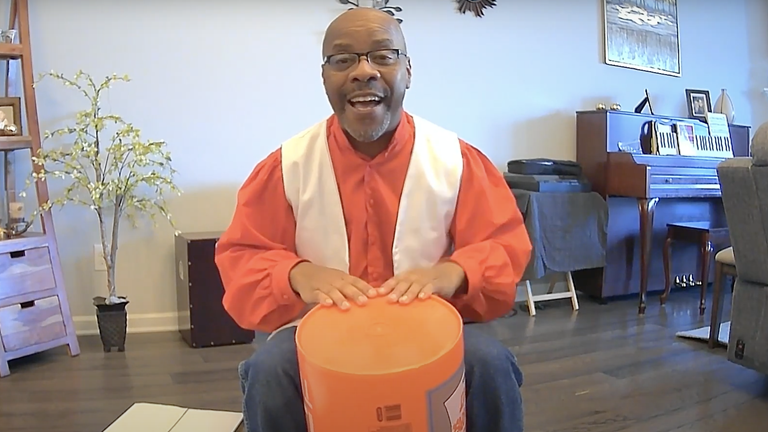
In this video, Donnie demonstrates how to write a poem about the things we are experiencing with our five senses. If you want to go even further, think about these questions:
Accessibility
Don't forget that you can turn on "Closed Captioning" to view the YouTube video with English captions.
More about the Teaching Artist
Donnie Welch (he/him/his) is a teaching artist who runs poetry workshops for students of all abilities. The workshops integrate sensory play and movement, and operate under the belief: movement helps us understand rhythm, rhythm helps us understand poetry, and poetry helps us understand each other. For more on his work visit: DonnieWelchPoetry.com
Resource Production: Kennedy Center Education
Additional Content: Laurie Ascoli
Copy Editing: Sandra Frey; Alyssa Kariofyllis
Revisions: Alice Doré
Teaching Artist
Donnie Welch
Curriculum & Media Development
Kennedy Center Education
Content Editor
Laurie Ascoli
Revised
December 9, 2024
Teaching artists present quick and fun activities that bring the arts to you!
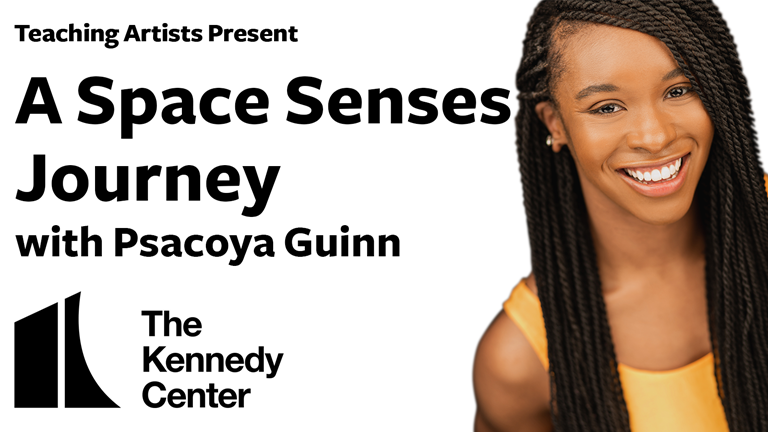
Teaching artist Psacoya Guinn demonstrates how to use the five senses to go on an imaginary journey through outer space, while introducing fun facts about our solar system.
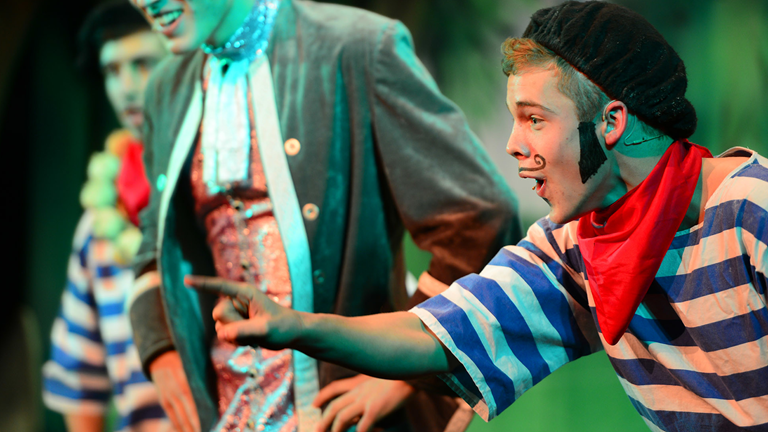
In this 3-5 lesson, students will analyze how a character's personality traits, actions and motives influence the plot of a story. Students will use their senses to create character sketches, then dramatize the character for an audience.
In this 3-5 lesson, students will illustrate self-portraits to identify their senses. They will take a virtual field trip to the ocean to explore a sensory experience. Students will write a haiku poem about the ocean, bringing science and creative writing together as one.

Kennedy Center Education provides resources and experiences that inspire, excite, and empower students and young artists, plus the tools and connections to help educators incorporate the arts into classrooms and learning spaces of all types.


Generous support for educational programs at the Kennedy Center is provided by the U.S. Department of Education.
Gifts and grants to educational programs at the Kennedy Center are provided by The Paul M. Angell Family Foundation; Bank of America; Capital One; The Morris and Gwendolyn Cafritz Foundation; Carnegie Corporation of New York; The Ednah Root Foundation; Genesis Inspiration Foundation; Harman Family Foundation; William R. Kenan, Jr. Charitable Trust; the Kimsey Endowment; The Kiplinger Foundation; Laird Norton Family Foundation; Lois and Richard England Family Foundation; Dr. Gary Mather and Ms. Christina Co Mather; The Markow Totevy Foundation; Dr. Gerald and Paula McNichols Foundation; The Morningstar Foundation; Myra and Leura Younker Endowment Fund; The Irene Pollin Audience Development and Community Engagement Initiatives;
Prince Charitable Trusts; Dr. Deborah Rose and Dr. Jan A. J. Stolwijk; Rosemary Kennedy Education Fund; The Embassy of the United Arab Emirates; The Victory Foundation; The Volgenau Foundation; Jackie Washington; GRoW @ Annenberg and Gregory Annenberg Weingarten and Family; and generous contributors to the Abe Fortas Memorial Fund and by a major gift to the fund from the late Carolyn E. Agger, widow of Abe Fortas. Additional support is provided by the National Committee for the Performing Arts..
The content of these programs may have been developed under a grant from the U.S. Department of Education but does not necessarily represent the policy of the U.S. Department of Education. You should not assume endorsement by the federal government.