Lesson Sunflower Life Cycles
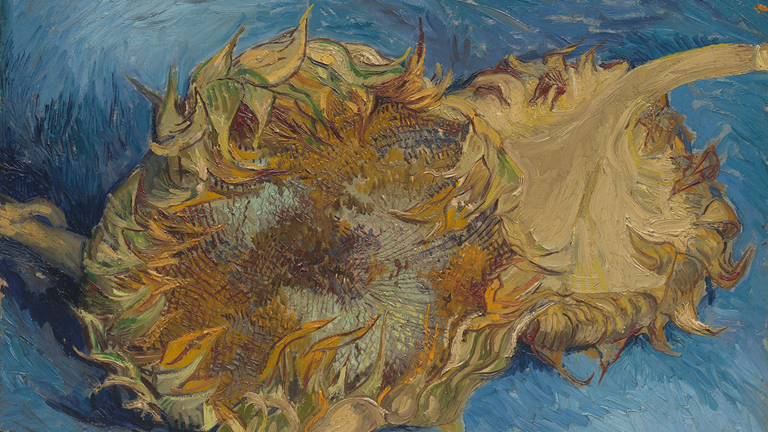
In this 3-5 lesson, students will examine sunflower paintings by Vincent van Gogh. Students will grow and observe the life cycle of a sunflower to inform their own sunflower artwork creation.
In this 3-5 lesson, students use their senses to make observations about nature. Students will capture information and sketches in a personal journal, then use these ideas to create original nature paintings in watercolor.
Students will:
Editable Documents: Before sharing these resources with students, you must first save them to your Google account by opening them, and selecting “Make a copy” from the File menu. Check out Sharing Tips or Instructional Benefits when implementing Google Docs and Google Slides with students.
Teachers should plan for places to observe nature with students. This lesson works in general content area classes and art classes.
Students should be familiar with making observations and painting styles.
Modify handouts and give preferential seating for visual presentations. Allow extra time for task completion.
Original Writer
Daniella Garran
Editor
JoDee Scissors
Updated
March 24, 2022
In this 3-5 lesson, students will examine sunflower paintings by Vincent van Gogh. Students will grow and observe the life cycle of a sunflower to inform their own sunflower artwork creation.
In this 3-5 lesson, students will illustrate self-portraits to identify their senses. They will take a virtual field trip to the ocean to explore a sensory experience. Students will write a haiku poem about the ocean, bringing science and creative writing together as one.
In this 3-5 lesson, students will analyze paintings depicting different types of weather to create an original landscape painting of a weather condition. They will analyze how weather influences culture, daily life, and mood. Students will use the elements of art criteria to discuss and critique paintings.
Ever have a day where you feel frustrated or bored? In this video, teaching artist Donnie Welch acknowledges those big feelings in a sensory poem activity. Take a quiet moment to consider the space around you, engage your senses, and turn your observations into art!

Kennedy Center Education provides resources and experiences that inspire, excite, and empower students and young artists, plus the tools and connections to help educators incorporate the arts into classrooms and learning spaces of all types.


Generous support for educational programs at the Kennedy Center is provided by the U.S. Department of Education.
Gifts and grants to educational programs at the Kennedy Center are provided by The Paul M. Angell Family Foundation; Bank of America; Capital One; The Morris and Gwendolyn Cafritz Foundation; Carnegie Corporation of New York; The Ednah Root Foundation; Genesis Inspiration Foundation; Harman Family Foundation; William R. Kenan, Jr. Charitable Trust; the Kimsey Endowment; The Kiplinger Foundation; Laird Norton Family Foundation; Lois and Richard England Family Foundation; Dr. Gary Mather and Ms. Christina Co Mather; The Markow Totevy Foundation; Dr. Gerald and Paula McNichols Foundation; The Morningstar Foundation; Myra and Leura Younker Endowment Fund; The Irene Pollin Audience Development and Community Engagement Initiatives;
Prince Charitable Trusts; Dr. Deborah Rose and Dr. Jan A. J. Stolwijk; Rosemary Kennedy Education Fund; The Embassy of the United Arab Emirates; The Victory Foundation; The Volgenau Foundation; Jackie Washington; GRoW @ Annenberg and Gregory Annenberg Weingarten and Family; and generous contributors to the Abe Fortas Memorial Fund and by a major gift to the fund from the late Carolyn E. Agger, widow of Abe Fortas. Additional support is provided by the National Committee for the Performing Arts..
The content of these programs may have been developed under a grant from the U.S. Department of Education but does not necessarily represent the policy of the U.S. Department of Education. You should not assume endorsement by the federal government.