Media Billie Holiday + Strange Fruit
The story behind Billie Holiday’s “Strange Fruit” (1939) is one of violence and tragedy, but also bravery in the face of adversity.
Born
February 10, 1905
Died
June 16, 1939
Country
United States of America
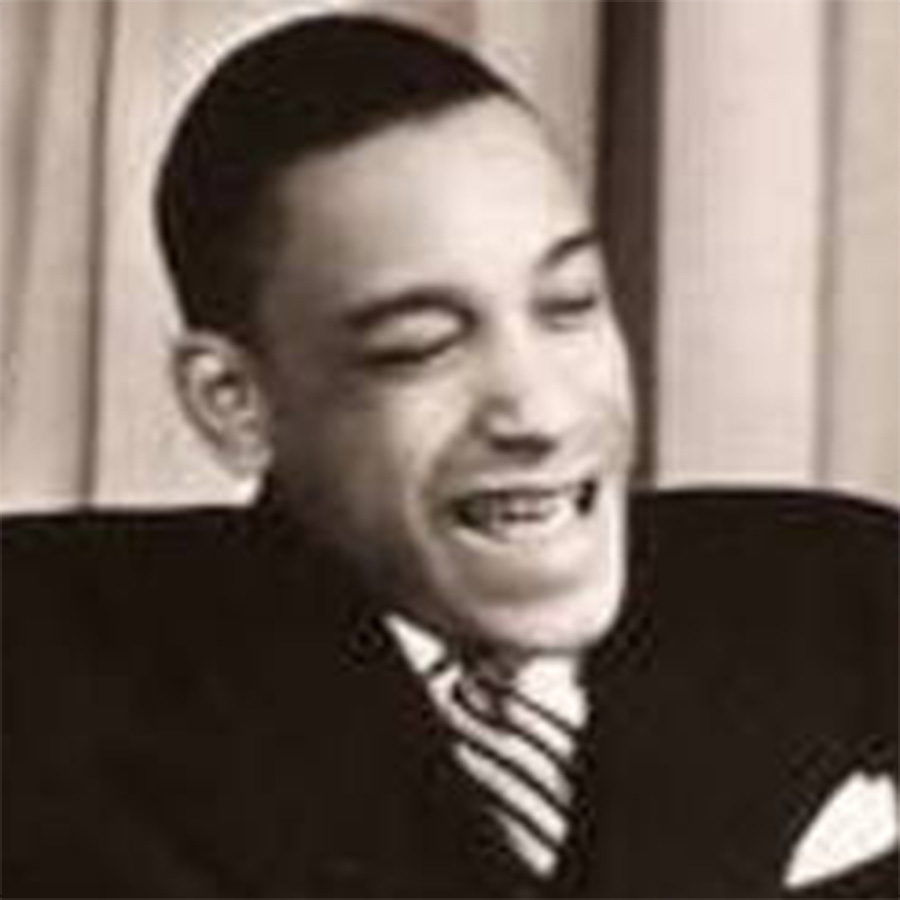
Unable to read sheet music and hunchbacked from tuberculosis of the spine, drummer William Henry “Chick” Webb stood less than five feet tall but towered over his rivals. Webb’s superb memory propelled him to the heights of showmanship, making him a famous and influential musician.
His total recall enabled him to impeccably play just about any musical composition. Webb used custom-made pedals, a 28-inch bass drum, and other modified percussion devices to create powerful, multi-layered drum solos. His impressive technique, imaginative breaks, and sense of swing set the tone (and the beat) for many drummers to follow.
By age 20, he was bandleader at the Savoy Ballroom, where his group regularly bested all comers in the Battle of the Bands. At the 1937 event—an intense showdown before a record-breaking crowd of 4,000—Webb’s band outplayed the Benny Goodman orchestra.
Fellow band members never quite matched Webb’s musical mastery, and the group’s recordings have not endured as well as those of his contemporaries. In the band’s Swing Era heyday, though, Edgar Sampson’s arrangements spotlighted Webb’s drum pyrotechnics in a distinctive style that proved enormously popular.
Webb’s jamming with singer Ella Fitzgerald elevated both of their reputations. In 1935, he backed Ella on her biggest-selling record to date, “A Tisket, a Tasket.”
 |
The Music of
|
 I n t e r s e c t i o n s |
|
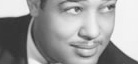 |
Duke Ellington cited Webb as a profound influence on his own music. |
 |
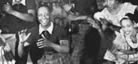
Webb played the drums as audience members danced the Lindy Hop. |
 |
Like George Snowden, he was called the “King of Savoy.” |
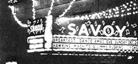 |
He was the bandleader at the Savoy Ballroom. |
 |
|
Video Bio
The story behind Billie Holiday’s “Strange Fruit” (1939) is one of violence and tragedy, but also bravery in the face of adversity.
Learn the basics of jazz music and how the art form works. Along with his band, Jason Moran shows you how jazz is more like skateboarding and football than you would think, as well as plays original and classic jazz standards.
From Fairmont Street to U Street, from the Howard Theater to the Bohemian Caverns, take a tour through jazz history with Billy Taylor and Frank Wess, who lead listeners through their hometown’s music scene in this seven-part audio series.
This series, hosted by Connaitre Miller of Howard University, explores why Swing was the most popular dance music in America and how it is still alive today in dance halls, clubs and movies

Kennedy Center Education provides resources and experiences that inspire, excite, and empower students and young artists, plus the tools and connections to help educators incorporate the arts into classrooms and learning spaces of all types.


Generous support for educational programs at the Kennedy Center is provided by the U.S. Department of Education.
Gifts and grants to educational programs at the Kennedy Center are provided by The Paul M. Angell Family Foundation; Bank of America; Capital One; The Morris and Gwendolyn Cafritz Foundation; Carnegie Corporation of New York; The Ednah Root Foundation; Genesis Inspiration Foundation; Harman Family Foundation; William R. Kenan, Jr. Charitable Trust; the Kimsey Endowment; The Kiplinger Foundation; Laird Norton Family Foundation; Lois and Richard England Family Foundation; Dr. Gary Mather and Ms. Christina Co Mather; The Markow Totevy Foundation; Dr. Gerald and Paula McNichols Foundation; The Morningstar Foundation; Myra and Leura Younker Endowment Fund; The Irene Pollin Audience Development and Community Engagement Initiatives;
Prince Charitable Trusts; Dr. Deborah Rose and Dr. Jan A. J. Stolwijk; Rosemary Kennedy Education Fund; The Embassy of the United Arab Emirates; The Victory Foundation; The Volgenau Foundation; Jackie Washington; GRoW @ Annenberg and Gregory Annenberg Weingarten and Family; and generous contributors to the Abe Fortas Memorial Fund and by a major gift to the fund from the late Carolyn E. Agger, widow of Abe Fortas. Additional support is provided by the National Committee for the Performing Arts..
The content of these programs may have been developed under a grant from the U.S. Department of Education but does not necessarily represent the policy of the U.S. Department of Education. You should not assume endorsement by the federal government.


