Media Dorothea Lange + White Angel Breadline
Dorothea Lange used photography as a way to document the hopelessness felt by Americans during the Great Depression. Learn more about her and her 1932 photograph White Angel Breadline.
Born
June 19, 1886
Died
May 15, 1983
Country
United States of America
A superlative studio photographer, James VanDerZee captured the spirit and energy of life in Harlem for more than 50 years.
Like so many pivotal figures of the Harlem Renaissance, VanDerZee originally embarked on a career totally other than the one in which he ultimately excelled.
Arriving in Harlem as an aspiring violinist in 1906, he formed—and performed with—the Harlem Orchestra. VanDerZee was equally skilled at piano, often tickling the ivories with such jazz giants as Fletcher Henderson.
On regular return visits from Harlem to his hometown of Lenox, Massachusetts, VanDerZee found himself shooting pictures of the beloved place as a hobby. In 1915, he landed a job as a darkroom technician. Within just two years, he had opened his own studio on 135th Street. From that base, he began to document all faces and facets of the local community.
VanDerZee’s work exhibited artistic as well as technical mastery. Thanks to his genius for darkroom experimentation—retouching negatives and creating double exposures—the demand for his portraiture soon skyrocketed.
Many of VanDerZee’s photographs celebrate the life of the emergent Black middle class. Using the conventions of studio portrait photography, he composed images that reflected his clients’ dignity, independence, and material comfort, characterizing the time as one of achievement, idealism, and success. VanDerZee’s photographs portray the Harlem of the 1920s and 1930s as a community that managed to be simultaneously talented, spiritual, and prosperous.
 I n t e r s e c t i o n s |
|
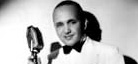 |
VanDerZee often sat in with the Fletcher Henderson Orchestra. |
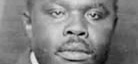 |
Marcus Garvey hired him to shoot pictures for the UNIA. |
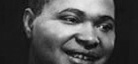 |
He photographed Countee Cullen. |
 |
Hundreds of Harlem residents were caught on film in his GGG Studio. |
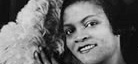 |
His portraits of famed Harlemites include a photo of Florence Mills. |
 |
|

These photographs celebrate the lifestyle of Harlem’s elite and have become some of VanDerZee’s most famous images.
Video Bio
Dorothea Lange used photography as a way to document the hopelessness felt by Americans during the Great Depression. Learn more about her and her 1932 photograph White Angel Breadline.
Learn how Dorothea Lange used the camera as an instrument of democracy through what would become one of the most famous photographs of the 20th century, Migrant Mother.
Shadowing the president is difficult, but White House photographers must capture every moment for history
A portrait is an image, usually of a person. A portrait tells the viewer a story about the person in the image by the choices the portrait’s creator makes. In this media activity, we'll explore the impact of those choices, focusing on the subject, setting, and story of your portrait.

Kennedy Center Education provides resources and experiences that inspire, excite, and empower students and young artists, plus the tools and connections to help educators incorporate the arts into classrooms and learning spaces of all types.


Generous support for educational programs at the Kennedy Center is provided by the U.S. Department of Education.
Gifts and grants to educational programs at the Kennedy Center are provided by The Paul M. Angell Family Foundation; Bank of America; Capital One; The Morris and Gwendolyn Cafritz Foundation; Carnegie Corporation of New York; The Ednah Root Foundation; Genesis Inspiration Foundation; Harman Family Foundation; William R. Kenan, Jr. Charitable Trust; the Kimsey Endowment; The Kiplinger Foundation; Laird Norton Family Foundation; Lois and Richard England Family Foundation; Dr. Gary Mather and Ms. Christina Co Mather; The Markow Totevy Foundation; Dr. Gerald and Paula McNichols Foundation; The Morningstar Foundation; Myra and Leura Younker Endowment Fund; The Irene Pollin Audience Development and Community Engagement Initiatives;
Prince Charitable Trusts; Dr. Deborah Rose and Dr. Jan A. J. Stolwijk; Rosemary Kennedy Education Fund; The Embassy of the United Arab Emirates; The Victory Foundation; The Volgenau Foundation; Jackie Washington; GRoW @ Annenberg and Gregory Annenberg Weingarten and Family; and generous contributors to the Abe Fortas Memorial Fund and by a major gift to the fund from the late Carolyn E. Agger, widow of Abe Fortas. Additional support is provided by the National Committee for the Performing Arts..
The content of these programs may have been developed under a grant from the U.S. Department of Education but does not necessarily represent the policy of the U.S. Department of Education. You should not assume endorsement by the federal government.


